Nigeria’s persistent electricity instability has accelerated demand for reliable, quiet, and fuel-free backup power.
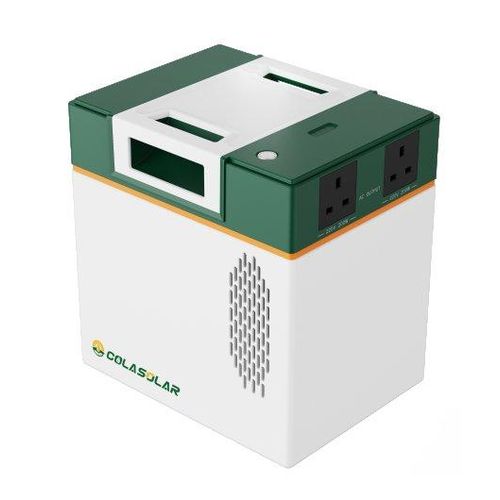
Into this gap steps the Cola1000 Solar Generator (ColaSolar / Cola 1000 / Cola 1000 Pro), a compact, lithium-based 1kWh portable power station that has quickly gained traction in Nigeria.
Marketed as a practical alternative to petrol generators and expensive global brands, the Cola1000 promises silent operation, low maintenance, and real-world usability for homes, shops, and creators.
This in-depth review examines the device through a technical, economic, and real-world lens.
Technical Specifications and Core Architecture
At its core, the Cola1000 is a portable all-in-one solar generator, integrating a battery, inverter, charge controller, and output ports into a single compact unit.
Key Specifications
| Feature | Cola1000 Standard | Cola1000 Pro |
|---|---|---|
| Battery Capacity | 1000Wh (1kWh) | 1000Wh (enhanced cells) |
| Battery Type | Lithium-ion / LiFePO4 variants | Improved lithium (longer cycle life) |
| Output Power | 200W continuous | 300W continuous |
| AC Output | 200–240V, 50Hz | Same |
| Solar Input | 12–36V (XT90 port) | Same |
| Recommended Panels | 300–360W | 300–360W |
| Charging (Grid) | Up to 200W input | Similar |
| Weight | ~8.5 kg | ~8.5 kg |
| Protections | Full BMS (overcharge, overload, short circuit) | Same |
Materials and Lifespan
- Battery chemistry: Some units use LiFePO4 (preferred for longevity), offering 2,000–3,500 charge cycles, while lithium-ion variants may provide 800–1,500 cycles.
- Enclosure: Durable ABS/plastic composite designed for portability.
- Expected lifespan: 3–7 years depending on usage patterns and battery variant.
Real-World Performance: Tested in Nigerian Conditions
Unlike many lab-tested power stations, the Cola1000’s reputation is built largely on field usage across Nigeria, where heat, voltage instability, and frequent outages stress power systems.
Everyday Usage Scenarios
1. Overnight Home Backup
- Fan (≈92W) + phones → 8–9 hours runtime
- Battery typically drops to near 0% by morning
2. Mixed Use (TV + Fan + Devices)
- Sustains 8+ hours
- Suitable for evening-to-morning usage cycles
3. Low-Power Creative Work
- Laptops, LED lights, routers → 1–2 days runtime
4. Small Business Operations
- Shops running lights + fans → full-day + overnight usage reported
Performance Insights
- The 200W–300W output ceiling is the defining limitation
- Handles steady loads well, but struggles with high startup surge appliances
- Performs reliably in hot climates, though ventilation is recommended
Environmental Performance
- Ideal for apartments, kiosks, and small offices
- Solar charging viable but often supplemented with grid charging
Rural / Off-Grid
- Works effectively with 300–360W solar panels
- Can function as a primary power source for low-energy households
Safety Standards and Certifications
While not as globally certified as premium brands, the Cola1000 includes:
- Battery Management System (BMS):
- Overcharge protection
- Over-discharge protection
- Short-circuit protection
- Overload protection
However:
- Limited visibility of international certifications (e.g., UL, CE, IEC) compared to Tesla or LG
- Buyers should verify import batch quality and warranty terms
Cost Analysis: Nigeria Pricing
| Package | Price Range |
|---|---|
| Cola1000 Unit | ₦274,000 – ₦319,500 |
| Cola1000 Pro | ~₦300,000 |
| With 300W Panel | ₦340,000 – ₦390,000 |
Installation & Maintenance
- Installation cost: Minimal (plug-and-play)
- Maintenance: Near zero (no fuel, no oil, no servicing)
- Operating cost: Essentially free when solar-powered
Compared to Petrol Generators
| Factor | Petrol Generator | Cola1000 |
|---|---|---|
| Fuel Cost | High (daily) | Zero |
| Noise | Loud | Silent |
| Maintenance | Frequent | None |
| Lifespan Cost | High | Moderate |
Estimated ROI:
- Users replacing small generators often recover cost within 6–12 months, especially in business settings.
Advantages
- Affordable entry into solar energy
- Silent, fuel-free operation
- Highly portable (8.5kg)
- Easy to use (plug-and-play)
- Strong real-world performance for low-power needs
Limitations
- Limited output (200W–300W)
- Cannot reliably power heavy appliances
- Certification and warranty transparency vary
- Not scalable like full solar systems
Final Verdict: Is the Cola1000 Worth It?
The Cola1000 Solar Generator succeeds by focusing on what many Nigerians actually need: affordable, reliable power for essential devices.
It is not a replacement for a full home solar system or high-capacity inverter. Instead, it serves as a practical, entry-level solution that delivers real value in environments where power reliability is inconsistent.