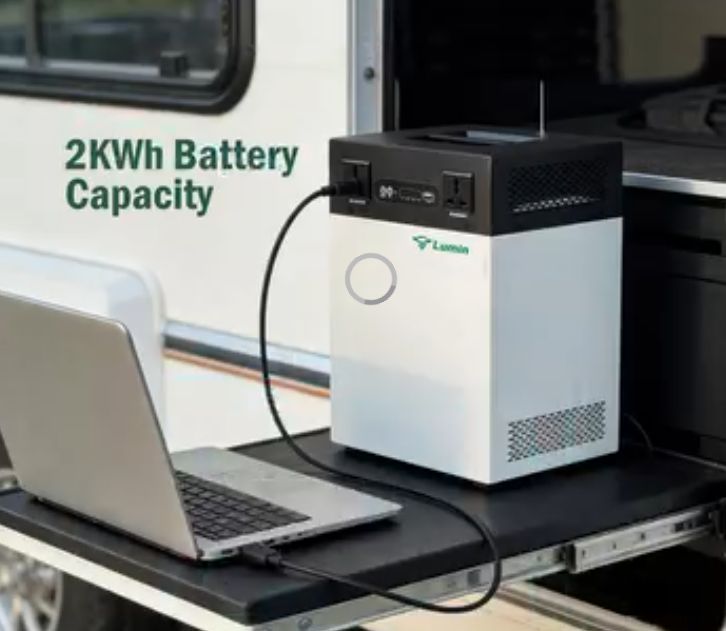
Nigeria’s ongoing power reliability challenges have accelerated demand for portable solar generators that are quiet, fuel-free, and cost-efficient. Among the rising contenders in this space is the Lumin HOT1000, a 500W / 1000Wh LiFePO4-based portable power station that has gained significant traction across Lagos, Abuja, and beyond.
Positioned as an affordable alternative to petrol generators and traditional inverter systems, the HOT1000 is widely promoted for home backup, small business continuity, and off-grid applications.
Overview: What the Lumin HOT1000 Offers
At its core, the Lumin HOT1000 is designed for plug-and-play convenience. Unlike full solar installations, it requires no technical setup, making it particularly appealing in emerging markets.
Key Technical Specifications
| Feature | Specification |
|---|---|
| Battery Capacity | 1000Wh (1kWh) |
| Battery Chemistry | LiFePO4 (Lithium Iron Phosphate) |
| Cycle Life | Up to 6,000 cycles (≈10+ years) |
| Output Power | 500W continuous (pure sine wave) |
| Peak Power | Typically ~1000W surge |
| Charging Time (AC) | 3.5–5 hours |
| Solar Input | Up to ~400W |
| Ports | AC outlets, USB, DC |
| Weight/Portability | Compact, portable design |
Materials and Safety
The use of LiFePO4 chemistry is a significant advantage. Compared to standard lithium-ion:
- Higher thermal stability (reduced fire risk)
- Longer lifespan
- Better performance under frequent cycling
Most units include built-in Battery Management Systems (BMS) with:
- Overcharge protection
- Short-circuit protection
- Temperature control
While global certifications (such as UL or IEC) are not always clearly documented in local listings, the underlying technology aligns with international safety standards for LiFePO4 systems.
Performance in Real-World Nigerian Conditions
In cities, the HOT1000 performs well as a backup solution for essentials:
- TV (100W): ~10–13 hours
- Fan (50W): ~18–20 hours
- Lighting & routers: Full-day coverage
Its silent operation is a major advantage over generators, especially in dense residential areas.
Small Business Use
This is where the product stands out in the Nigerian market.
Real-world demonstrations show it powering:
- 1–3 inverter freezers
- Multiple fans in small shops
- POS systems and lighting
For small businesses (e.g., cold drink vendors), it helps improves profitability.
Rural and Off-Grid Environments
When paired with solar panels:
- Fully off-grid operation becomes viable
- Charging time: ~4–6 hours (with ~300–400W panels)
However, the 500W output limits heavy appliance usage, making it more suitable for:
- Lighting
- Communication devices
- Small refrigeration
Cost Analysis: Is It Worth It?
- Lumin HOT1000: ₦380,000 – ₦385,000
- Larger variants (e.g., HOT2000): ~₦586,000
Compared to alternatives:
- Petrol generator (small): ₦150,000 – ₦300,000
- Full inverter + battery system: ₦700,000+
Operating and Maintenance Costs
| System | Running Cost |
|---|---|
| Petrol Generator | High (fuel + maintenance) |
| Lead-Acid Inverter | Moderate (battery replacement) |
| Lumin HOT1000 | Minimal (no fuel, low maintenance) |
Conclusion
The Lumin HOT1000 is not trying to compete with Tesla or Huawei and that is precisely its strength. It fills a critical gap in the market: affordable, reliable, and portable power for everyday Nigerians.
While it lacks the polish and ecosystem of global brands, it delivers where it matters most—practical performance, cost savings, and ease of use.