Pig Farming in Nigeria: Complete Guide To Start
Pig farming in Nigeria has quietly become one of the most profitable livestock businesses you can start today, but what most people don’t know is that Nigeria is actually Africa’s leading pig producer with over 9.5 million pigs. While some people still think pig farming is only for certain regions, smart farmers across southern and middle belt states are making millions yearly from a business that offers faster returns than cattle or goats.
The demand for pork keeps growing every year. With Nigeria producing about 363,000 tonnes of pig meat annually and demand projected to hit 292 metric tons by 2026, there’s a huge gap between what the market needs and what local farmers are supplying. One pig can sell for ₦80,000-₦150,000 depending on size, and farmers who manage their operations well can see returns of 40-100% on their investment within 6-8 months.
Because there’s still confusion about how to actually start pig farming properly, what breeds work best, the real costs involved, and how to handle the unique challenges of pig farming in Nigeria, many people either never start or lose money from poor planning. That’s why we always research thoroughly, speak with active pig farmers, track industry developments, and verify practical information before writing any guide.
In this guide, I’ll walk you through everything you need to know about starting pig farming in Nigeria, the complete process, costs involved, management practices, common challenges, and how to maximize your profit.
1. Why Pig Farming is Profitable in Nigeria
Pig farming offers several advantages over other livestock:
Fast growth rate – Pigs reach market weight in 5-8 months compared to 12-18 months for cattle.
High reproduction – One sow can produce 20-35 piglets per year with good management.
Efficient feed conversion – Pigs convert feed to meat faster than most livestock.
Multiple income streams – Sell meat, breed and sell piglets, or process into products like sausages and bacon.
Strong market demand – Urban areas consume pork daily, and supply cannot meet demand.
Good profit margins – Well-managed farms can make 40-100% returns on investment.
2. Understanding the Nigerian Pig Market
Nigeria leads Africa in pig production, but per capita consumption is still low at about 9kg per year compared to the global average of 19kg. This gap represents opportunity.
Market demand is strongest in southern states like Lagos, Ogun, Oyo, Delta, Rivers, and middle belt states like Benue, Plateau, and Nasarawa. Northern markets are limited due to religious and cultural factors.
Current pork prices range from ₦1,200-₦1,800 per kilogram, and prices remain stable throughout the year with slight increases during festive periods.
3. Popular Pig Breeds in Nigeria
Large White (Yorkshire) – Most common commercial breed. Fast growth, good meat quality, and produces large litters. Adapts well to Nigerian conditions.
Landrace – Long body, excellent for bacon production. Good mothering ability and produces quality offspring.
Duroc – Reddish-brown color, very hardy, and disease resistant. Excellent meat quality and grows fast.
Hampshire – Black with white belt. Very muscular with lean meat. Good for crossbreeding.
Crossbreeds – Many successful Nigerian farmers use crossbreeds combining the best traits of different breeds. For example, Large White × Landrace produces excellent commercial pigs.
Local breeds – Smaller, more disease resistant, but slower growth. Suitable for small-scale farmers with limited capital.
4. Step-by-Step Guide to Starting Your Pig Farm
Step 1: Get Suitable Land
- You need land for housing, feeding areas, and waste management.
- Minimum requirement – Half plot (250 square meters) can accommodate 20-30 pigs for small-scale farming.
- Location considerations – Choose areas away from residential neighborhoods to avoid complaints about smell. Ensure good drainage and access to clean water.
- Land cost – Renting: ₦50,000-₦200,000 yearly depending on location. Buying: ₦500,000-₦2,000,000 per plot in rural areas.
Step 2: Build Proper Pig Housing
- Good housing is critical for pig health and productivity.
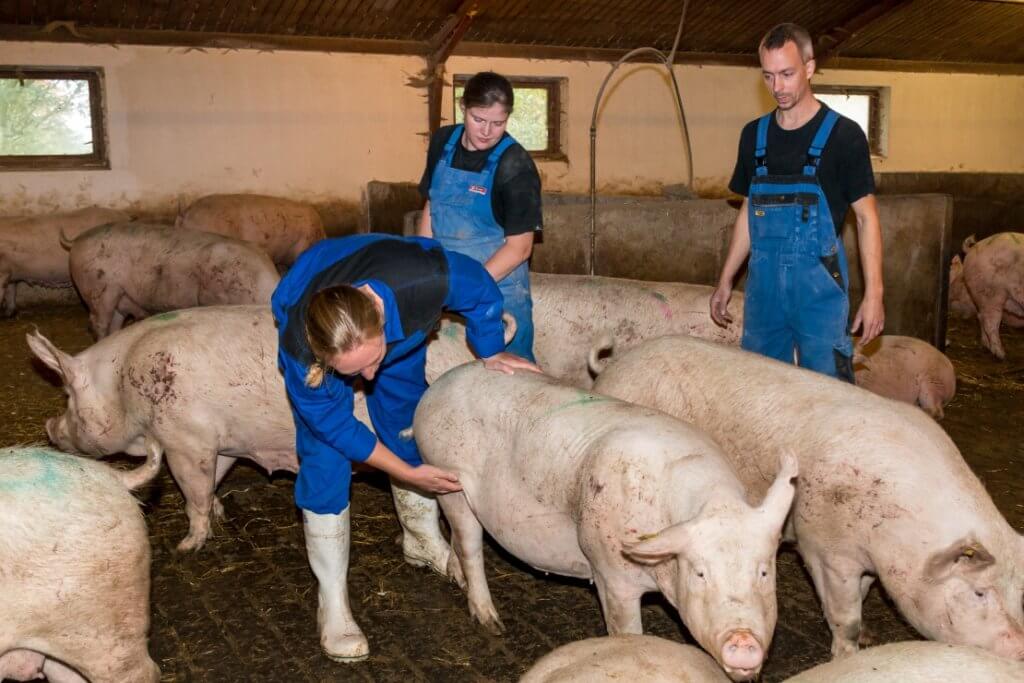
- Design requirements – Concrete floors for easy cleaning, good ventilation but protected from rain and direct sun, separate pens for breeding sows, piglets, fattening pigs, and boars.
- Pen sizes – Breeding sow: 2m × 2.5m, Fattening pigs: 1m × 1.5m per pig, Boar: 2.5m × 3m.
- Roofing – Use zinc or aluminum roofing sheets with good height for ventilation.
- Flooring – Concrete floors with slight slope for drainage. Some farmers use slatted floors for automatic waste removal.
- Construction cost – Basic housing for 20-30 pigs: ₦300,000-₦600,000 depending on materials and location.
Step 3: Provide Clean Water Supply
- Pigs need constant access to clean drinking water. Each pig drinks 5-10 liters daily.
- Water options – Borehole (best for commercial farms), Well water (must be clean), Municipal water supply, Large tanks filled regularly.
- Cost – Borehole: ₦150,000-₦400,000 including installation.
Step 4: Purchase Your Starting Stock
- Start with healthy pigs from reputable sources.
- What to buy – For breeding: 5-10 sows and 1-2 boars. For fattening: 10-20 weaners (8-10 weeks old).
- Where to buy – Government livestock farms, Established pig farms, Agricultural research institutes, Reputable pig farmers in your area.
- Price range – Weaners: ₦15,000-₦25,000 each, Breeding sows: ₦50,000-₦80,000 each, Boars: ₦60,000-₦100,000 each.
- Important – Quarantine new pigs for 2 weeks before mixing with your stock. Check for signs of disease, healthy appetite, active behavior, and clean skin.
Step 5: Set Up Proper Feeding System
- Feed costs account for 60-70% of total production costs, so efficient feeding is crucial.
- Feed types – Commercial pig feeds (most reliable), Self-mixed feeds using maize, sorghum, soybean meal, fish meal, vitamins and minerals.
- Feeding schedule – Piglets (0-8 weeks): Pre-starter and starter feeds, 4 times daily. Growers (8-16 weeks): Grower feed, 3 times daily. Finishers (16 weeks to market): Finisher feed, 2-3 times daily. Breeding stock: Specialized breeding feeds with higher protein.
- Feed consumption – One pig consumes about 2.5-3kg of feed daily from weaning to market weight.
- Feed cost – Commercial feed: ₦8,000-₦12,000 per 25kg bag. Monthly feed for 20 pigs: ₦150,000-₦250,000.
- Cost-saving tip – Many successful farmers integrate their own feed mills to reduce costs by 30-40%.
Step 6: Implement Health Management
- Disease prevention is more important than treatment in pig farming.
- Vaccination schedule – Follow your vet’s recommended vaccination program for common diseases like swine fever, foot and mouth disease, and worm infestations.
- Biosecurity measures – Restrict visitor access to pig pens, Disinfect footwear before entering pig area, Quarantine new pigs for 2 weeks, Keep housing clean and dry always, Control rodents and other pests.
- Common diseases – African Swine Fever (ASF): No cure, prevention through biosecurity is critical. Swine flu: Vaccinate and maintain hygiene. Internal parasites: Deworm every 3 months. Skin infections: Keep environment clean and dry.
- Veterinary care – Partner with a qualified vet. Monthly retainer: ₦20,000-₦40,000 plus medication costs.
Step 7: Manage Breeding Program
- If doing breeding, proper management ensures continuous production.
- Breeding age – Sows: 7-8 months old or 100-120kg. Boars: 8-10 months old.
- Gestation period – 114 days (3 months, 3 weeks, 3 days).
- Farrowing management – Move pregnant sows to farrowing pens 1 week before due date. Provide extra bedding for comfort. Monitor closely during birthing. Ensure piglets suckle colostrum within first 24 hours.
- Weaning – Wean piglets at 6-8 weeks old.
- Target productivity – Aim for 2.2-2.5 litters per sow per year, producing 20-35 piglets weaned annually per sow.
Step 8: Market Your Pigs
- Build relationships with consistent buyers before you’re ready to sell.
- Marketing channels – Hotels and restaurants, Butchers and meat shops, Individual consumers, Meat processors, Other pig farmers (selling weaners).
- Best time to sell – Fattening pigs: 5-8 months old at 80-120kg live weight. Peak demand periods: Christmas, Easter, major celebrations.
- Pricing – Live weight: ₦800-₦1,200 per kg. Dressed weight: ₦1,200-₦1,800 per kg.
- Average sale – One finisher pig at 100kg = ₦80,000-₦120,000.
5. Estimated Startup Costs
Small-scale farm (20 pigs for fattening):
| Item | Cost |
|---|---|
| Land preparation | ₦50,000-₦100,000 |
| Housing construction | ₦300,000-₦600,000 |
| Water supply | ₦100,000-₦200,000 |
| 20 weaners | ₦300,000-₦500,000 |
| Feeds (6 months) | ₦900,000-₦1,500,000 |
| Veterinary care | ₦100,000-₦200,000 |
| Equipment and tools | ₦50,000-₦100,000 |
| Working capital | ₦100,000-₦200,000 |
| Total | ₦1,900,000-₦3,400,000 |
You can start smaller with 10 pigs for ₦1,000,000-₦1,800,000.
6. Profit Potential
Fattening operation example (20 pigs):
Purchase 20 weaners at ₦20,000 each = ₦400,000. Feed for 6 months = ₦1,200,000. Other costs (vet, labor, utilities) = ₦200,000. Total investment = ₦1,800,000.
Sell 20 pigs at 100kg each at ₦1,000/kg = ₦2,000,000. Gross profit = ₦200,000. Return on investment = 11% per cycle (6 months) = 22% annually.
With better management and integrated feed production, profits can reach 40-100% annually.
Breeding operation offers higher long-term returns. One good sow producing 25 piglets yearly at ₦15,000 each = ₦375,000 gross income from one sow.
7. Common Challenges and Solutions
Challenge 1: High feed costs. Solution: Integrate feed production, use local ingredients, buy feeds in bulk during harvest season.
Challenge 2: Disease outbreaks. Solution: Strict biosecurity, regular vaccination, quick isolation of sick pigs.
Challenge 3: Limited market in some regions. Solution: Focus on urban markets, build relationships with processors, consider value addition.
Challenge 4: Waste management and smell. Solution: Proper drainage systems, regular cleaning, convert waste to fertilizer for sale.
Challenge 5: Initial capital requirement. Solution: Start small with 5-10 pigs, reinvest profits to expand gradually.
Frequently Asked Questions
- How long before I see profit? 6-8 months for fattening, 12-18 months for breeding programs to stabilize.
- How much land do I need? Half plot minimum for 20-30 pigs, more for larger operations.
- What’s the best breed for beginners? Large White or crossbreeds adapt well and grow fast.
- Can I start with ₦500,000? Yes, start with 5-10 weaners for fattening.
- Is pig farming allowed everywhere in Nigeria? Yes legally, but market demand is stronger in southern and middle belt regions.
- Do I need special training? Not required but attending workshops and learning from experienced farmers helps significantly.
- How do I handle waste? Use proper drainage, clean daily, convert manure to fertilizer for sale to crop farmers.
- Can I do pig farming part-time? Yes, but you need reliable help to manage daily feeding and care.
Final Words
Pig farming in Nigeria is a profitable business when managed properly with good planning, quality stock, proper feeding, and strict health management. The market is growing, government support is increasing, and the opportunity for serious farmers is real.
Start small if you’re new. Buy 5-10 healthy weaners, learn the management practices, and grow gradually. Focus on biosecurity, efficient feeding, and building strong buyer relationships.
The business requires commitment and attention to detail, but returns can be excellent. Many farmers who started with 10 pigs now run commercial operations with hundreds of pigs and make millions annually. With Nigeria’s growing protein demand and your commitment to proper farm management, pig farming can become a very profitable venture.