How to Start a Tailoring Business in Nigeria (2026)
Starting a tailoring business in Nigeria in 2026 is one of the most practical entry points into entrepreneurship, but it is often misunderstood.
On the surface, it looks simple: get a sewing machine, learn how to sew, and start collecting customers. In reality, the difference between struggling tailors and profitable fashion entrepreneurs lies in structure, positioning, and operational discipline.
This guide breaks down the business from a professional, industry-informed perspective—covering how it actually works, what it costs today, what you can realistically earn, and how to scale beyond survival income.
The Nigerian Tailoring Industry in 2026: Opportunity and Reality
Nigeria’s fashion industry remains one of the largest in Africa, with an estimated value of $4.7 billion, contributing significantly to Sub-Saharan Africa’s broader $30+ billion apparel market. Demand is not speculative—it is cultural, seasonal, and continuous.
From weddings (Asoebi), religious events, school uniforms, office wear, to everyday casual outfits, clothing is not optional in Nigeria—it is identity.
However, 2026 presents a mixed landscape:
- High demand remains consistent
- Inflation pressure affects fabric and equipment pricing
- Power supply instability increases operational costs
- Customer price sensitivity is rising
How a Tailoring Business Actually Works (Operations Breakdown)
At its core, tailoring in Nigeria operates on two primary models:
- Custom Sewing (Bespoke) – Customers bring fabric or pay for full production
- Ready-to-Wear (RTW) – You design, produce, and sell finished clothing
A typical workflow includes:
- Client consultation and measurement
- Fabric sourcing (Ankara, lace, adire, brocade)
- Pattern drafting and cutting
- Sewing and finishing (overlocking, ironing, detailing)
- Fitting and delivery
Daily Operational Capacity
| Business Type | Daily Output | Staff Structure |
|---|---|---|
| Home-based tailor | 3–7 outfits | Solo or 1 apprentice |
| Small shop | 5–15 outfits | 2–4 apprentices |
| Established brand | 20+ pieces | Team + production system |
Beyond sewing, serious operators generate income from:
- Alterations and repairs
- Uniform contracts (schools, companies)
- Training apprentices
- Embroidery and customization
- Fashion consulting
Startup Requirements in 2026 (Updated Costs)
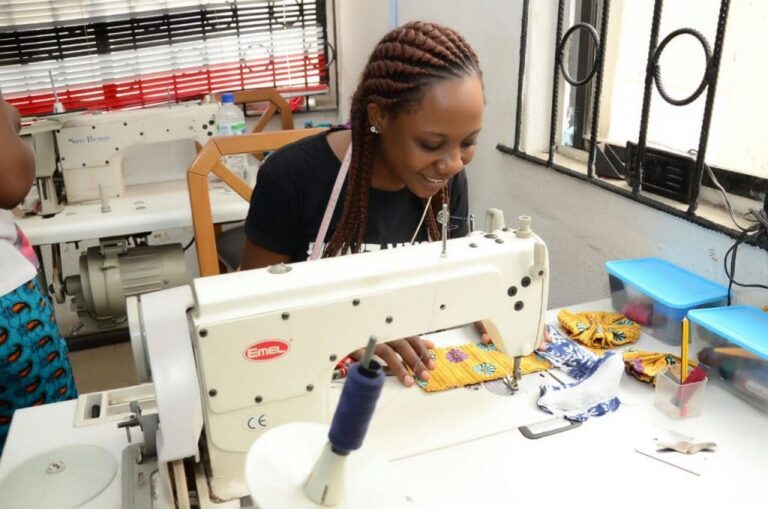
Costs have shifted significantly due to inflation and exchange rate fluctuations. Here is a realistic 2026 breakdown:
Essential Equipment and Costs
| Item | Price Range (₦) | Notes |
|---|---|---|
| Domestic sewing machine | 65,000 – 185,000 | Suitable for beginners |
| Industrial machine (Jack, Emel) | 370,000 – 550,000 | Recommended for scale |
| Overlocker (serger) | 65,000 – 100,000 | Clean finishing |
| Tools (scissors, tape, iron) | 10,000 – 20,000 | Basic setup |
| Generator / Power backup | 210,000+ | Critical in Nigeria |
| Total (starter setup) | 150,000 – 350,000 | Home-based model |
A lean startup is still possible, but expectations must be adjusted—₦50,000 startups now rely heavily on outsourcing, not full in-house production.
Step-by-Step: How to Start (2026 Practical Guide)
1. Acquire Real Skills (Not Just Basics)
Many new entrants underestimate this stage. Sewing straight lines is not tailoring.
You need competence in:
- Pattern drafting
- Fabric behavior
- Fit adjustment
- Finishing techniques
Recommended path:
- 3–7 months apprenticeship (minimum)
- 1–2 years for mastery
Short courses can supplement—but not replace—hands-on learning.
2. Choose a Clear Niche
Trying to sew “everything for everyone” is a fast way to remain average.
High-demand niches in 2026:
- Women’s Ankara casual wear
- Men’s senator/kaftan styles
- Children’s clothing
- School uniforms (high volume, steady income)
- Asoebi and event wear (high margin)
A focused niche allows:
- Faster production
- Better branding
- Repeat customers
3. Start Lean (Smart ₦50K Strategy)
If capital is limited, the smartest entry point is mini ready-to-wear production + outsourcing.
Example model:
- Buy Ankara fabrics in bulk (₦20,000)
- Produce 5–7 simple designs via outsourcing
- Market aggressively on Instagram/Facebook
- Sell at ₦9,000–₦10,000 per piece
Profit potential:
| Units Sold | Profit per Unit | Total Profit |
|---|---|---|
| 5 pieces | ₦4,000 | ₦20,000 |
| 10 pieces | ₦4,000 | ₦40,000 |
The key is speed + visibility, not perfection at this stage.
4. Set Up Location and Structure
You can start:
- From home (lowest cost)
- Roadside shop (higher visibility)
- Shared workspace (emerging trend in cities)
Register your business with CAC (₦10,000–₦15,000) to build credibility, especially for contracts.
5. Marketing: The Real Growth Engine
In 2026, tailoring businesses that ignore digital marketing struggle—regardless of skill.
Effective channels:
- Instagram (visual portfolio)
- Facebook ads (targeted reach)
- WhatsApp (customer retention)
Winning tactics:
- Before-and-after transformations
- Client testimonials
- Progress videos (build trust)
- Tiered pricing (budget vs premium)
Profit Expectations: What You Can Realistically Earn
Tailoring is not a “quick money” business—but it is a high-consistency income model.
Early-Stage Earnings
| Stage | Monthly Profit (₦) |
|---|---|
| Month 1 | 20,000 – 25,000 |
| Months 2–3 | 35,000 – 60,000+ |
Growth Stage (Structured Business)
| Investment Level | Annual Profit |
|---|---|
| Small shop | ₦500K – ₦1.5M |
| Established brand | ₦1.5M – ₦2M+ |
Profit Margins
- Average margin: 30% – 50%
- Higher with RTW and bulk production
Best Time to Start in 2026 (Timing Matters)
Timing significantly affects early cash flow.
Peak Season (Best Launch Window)
- October – November
- Pre-Christmas and wedding surge
- High order volume and faster payments
Secondary Opportunities
- March–April (wedding season)
- Back-to-school (uniform contracts)
Low Season Strategy
- January: Focus on building stock and systems
- Use downtime for marketing and skill improvement
Key Challenges and How to Overcome Them
1. Power Supply Issues
Solution: Invest in generator or solar backup early
2. Fabric Waste
Solution: Standardize patterns and optimize cutting
3. Pricing Pressure
Solution: Introduce tiered pricing and upsell finishing quality
4. Inconsistent Customers
Solution: Build repeat clients via WhatsApp and loyalty offers
Final Verdict: Is Tailoring Still Profitable in Nigeria (2026)?
Yes—but only if approached strategically.
Tailoring in 2026 is no longer just about sewing—it is about:
- Business systems
- Market positioning
- Cost control
- Digital visibility
A sewing machine alone will not generate wealth. However, when combined with discipline, niche clarity, and consistent marketing, it can become a reliable pathway to financial independence within 6–12 months.