How to Become a Solar Installer in Nigeria
Nigeria’s solar industry is no longer a “future opportunity.” It is a present-day economic shift, and 2026 sits right at the center of that transformation. What used to be a niche technical trade has evolved into one of the fastest-growing skill-based careers in the country, driven by rising diesel costs, unreliable grid supply, and aggressive renewable energy policies.
This guide takes a practical, experience-driven look at what it really takes to become a solar installer in Nigeria today. Not theory. Not hype. Just the actual path, costs, expectations, and industry realities.
Nigeria’s Solar Boom: Why 2026 Is the Tipping Point
The numbers tell the story clearly. Nigeria added over 800 MW of solar capacity in 2025 alone, making it one of Africa’s fastest-growing solar markets. Total installed photovoltaic capacity has been growing steadily at over 20 percent annually, with projections pointing toward 5 to 8 GW by 2030.
This growth is not abstract. It is driven by everyday realities:
- Businesses are spending billions of naira annually on diesel
- Fuel prices now exceed ₦1,200 per litre in many regions
- Over 20 million households still lack reliable electricity
- Small and medium businesses are actively seeking cheaper energy alternatives
Policy is also playing a major role. The Electricity Act of 2023 opened the door for private participation, net metering, and long-term renewable contracts. At the same time, initiatives like the World Bank-backed Distributed Access through Renewable Energy Scale-up program are injecting hundreds of millions of dollars into off-grid electrification.
In simple terms, demand is no longer the problem. Supply of skilled installers is.
What a Solar Installer Actually Does
Before diving into training and costs, it is important to understand the job beyond the surface.
A solar installer is not just someone who “mounts panels.” The role combines electrical engineering basics, site assessment, system design, and client advisory.
Typical responsibilities include:
- Conducting energy audits and load assessments
- Designing systems using tools like PVsyst or HelioScope
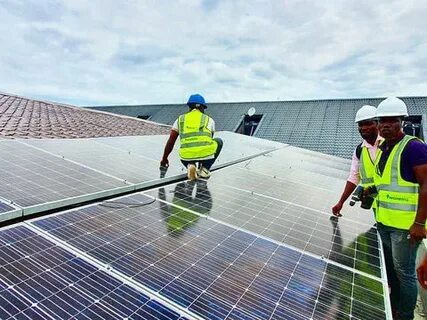
- Installing panels, inverters, and battery systems
- Ensuring proper earthing and protection systems
- Testing and commissioning installations
- Providing maintenance and after-sales support
The difference between an average installer and a top-tier professional often comes down to system design accuracy and safety standards.
Step-by-Step Path to Becoming a Solar Installer
Building a Solid Electrical Foundation
Every successful solar installer starts with basic electrical knowledge. Understanding wiring systems, circuit protection, earthing, and load balancing is non-negotiable.
Many people begin through short vocational programs or by apprenticing under an experienced electrician. Even one to three months of hands-on exposure can make a significant difference.
Enrolling in a Certified Solar Training Program
Formal training is where theory meets real-world application. Nigeria now has several reputable institutions offering structured solar PV programs.
One of the most recognized is Renewable Energy Technology Training Institute, widely known for its hands-on approach and post-training mentorship.
Another option is Gennex Academy, which runs structured training streams with a focus on installation and system design.
There are also industry-backed certification programs tied to Council for the Regulation of Engineering in Nigeria, which provide a more formal credential recognized by government and large-scale clients.
Training typically covers:
- Solar panel installation techniques
- Battery and inverter configuration
- System sizing and load calculation
- Safety protocols and fault detection
- Business fundamentals for solar entrepreneurs
Most programs last between one week and one month, depending on depth.
Gaining Real Installation Experience
Training alone is not enough. The real learning happens on-site.
New installers are expected to participate in at least 10 to 30 installations before positioning themselves as independent professionals. This stage is where you learn practical challenges such as roof structures, client expectations, and troubleshooting under pressure.
Documenting each project with photos, system details, and outcomes becomes your first professional portfolio.
Certification and Industry Recognition
Certification is becoming increasingly important in Nigeria’s solar space. Clients, banks, and even government projects now look for verifiable credentials.
Joining the Renewable Energy Association of Nigeria is one of the most effective ways to establish credibility. Membership signals professionalism and opens access to partnerships and funding opportunities.
Vendor certifications from companies like Huawei or Growatt can also improve your profile and allow you to handle higher-value installations.
Setting Up as a Business (Optional but Strategic)
While many installers start as freelancers, scaling requires structure.
Registering a business with the Corporate Affairs Commission, obtaining a tax identification number, and ensuring compliance with product certification standards are essential steps if you plan to operate at a higher level.
For larger projects, regulatory oversight from the Nigerian Electricity Regulatory Commission may also apply.
The Real Cost of Getting Started
Entry-Level Path
For those starting small, the barrier to entry is relatively low.
Training and basic tools can cost between ₦200,000 and ₦400,000. This includes essential equipment like a multimeter, crimping tools, and safety gear.
Many new installers begin earning within one to two months after completing training.
Full Business Setup
For those aiming to build a solar company, costs increase significantly.
| Category | Estimated Cost (₦) |
|---|---|
| Business registration and compliance | 500,000 – 1,500,000 |
| Tools and equipment | 500,000 – 2,000,000 |
| Initial inventory (panels, inverters) | 5,000,000 – 10,000,000 |
| Branding and marketing | 1,000,000 – 2,000,000 |
| Logistics (vehicle, transport) | 1,000,000 – 3,000,000 |
A realistic starting budget for a full-scale operation ranges from ₦5 million to ₦10 million, though many begin with less by working on a service-only model.
Earnings Potential: What Installers Actually Make
Solar installation is one of the few technical trades in Nigeria where income scales quickly with experience.
A standard 5 kW residential system typically sells for between ₦5 million and ₦8 million. Installation margins can range from ₦400,000 to ₦1 million per project.
Recurring income also comes from maintenance contracts, which can generate steady yearly revenue per client.
| Experience Level | Monthly Earnings (₦) |
|---|---|
| Beginner | 300,000 – 500,000 |
| Intermediate | 500,000 – 1,000,000 |
| Business owner (scaled) | 2,000,000+ |
Top-performing companies handling multiple installations per month can generate tens of millions in annual revenue.
Market Trends and Winning Strategies in 2026
The solar market is evolving rapidly, and installers who understand current trends have a clear advantage.
One major shift is the move toward financing models. Instead of paying upfront, many customers now prefer structured payment systems. Companies offering pay-as-you-go or bank-backed financing close more deals.
Another key trend is targeting commercial clients. Cold storage businesses, telecom operators, and small factories spend heavily on diesel. Solar offers them a clear financial advantage, often paying for itself within a few years.
Digital marketing is also reshaping customer acquisition. Installers who use Instagram reels, Google listings, and before-and-after project showcases consistently generate more leads than those relying on word-of-mouth alone.
Safety and Professional Standards: The Reality Most Ignore
One of the most critical issues in Nigeria’s solar industry is safety.
Improper installations have led to fire incidents, battery failures, and system breakdowns. A major concern is placing batteries and inverters inside living spaces without proper ventilation.
Professional installers now prioritize external enclosures and structured system layouts. Regular inspections and second-level verification by another technician are becoming industry best practices.
In a market with limited emergency response infrastructure, safety is not optional. It is your reputation.
Challenges You Should Expect
Despite the opportunities, the industry is not without its difficulties.
There is increasing competition from untrained installers offering cheap but unsafe solutions. Import delays and fluctuating exchange rates can affect equipment pricing. Customer education is another challenge, as many clients initially underestimate the cost of quality systems.
However, these challenges also create opportunities for professionals who differentiate themselves through quality and transparency.
Final Thoughts: Is Solar Installation Worth It in 2026?
The short answer is yes, but only if approached correctly.
Solar installation in Nigeria is no longer just a side hustle. It is a structured, high-demand profession with strong income potential and long-term relevance.
The key is to start with proper training, gain real experience, and build credibility early. Those who enter the market with the right foundation are not just earning income. They are positioning themselves in one of Nigeria’s most important industries for the next decade.