Ice Block Making Business in Nigeria (2026 Guide)
There are very few small businesses in Nigeria that consistently sit at the intersection of climate demand, infrastructure gaps, and daily cash flow and ice block production is one of them.
Having worked around cold-chain systems, small-scale energy deployments, and informal retail supply networks, I can say this clearly: this is not a hype business but it is a real one. The difference between failure and profitability comes down to power strategy, location intelligence, and operational discipline.
This guide breaks down the true economics, setup realities, energy considerations, and scalability pathways of the ice block business in Nigeria as we move through 2025 into 2026.
Why Ice Block Production Still Works in Nigeria
The continued relevance of this business is not accidental, it’s structural.
Nigeria’s environment creates persistent demand pressure:
- Ambient temperatures regularly exceed 30–40°C
- Grid instability from Power Holding Company of Nigeria (PHCN) outages
- Rapid growth of informal food and beverage vendors
- Weak cold-chain infrastructure outside major supermarkets
In practical terms, ice is not a luxury, it is a daily operational input for:
- Soft drink sellers
- Beer parlours
- Fish/meat traders
- Event vendors
- Motor parks
This means demand is:
- Recurring (daily purchases)
- Bulk-driven (wholesale buyers dominate)
- Seasonally amplified (dry season spikes)
The Real Business Model (Not the Social Media Version)
Across platforms like Nairaland and operator communities, one truth repeats:
“Ice block business is profitable, but only if you solve power and sell in bulk.”
This is not a passive income stream. It is a production business with logistics and energy dependency.
Core Revenue Model
| Segment | Price Range | Buyer Type |
|---|---|---|
| Wholesale | ₦100 – ₦200/block | Vendors, markets |
| Semi-retail | ₦200 – ₦500/block | Small resellers |
| Retail/Event | ₦500 – ₦1,500/block | End users |
Bulk contracts are where serious money is made.
Equipment & Startup Investment (2025–2026 Reality)
The biggest misconception online is startup cost. Prices have shifted significantly due to inflation and FX pressures.
Capital Breakdown
| Component | Estimated Cost (₦) | Notes |
|---|---|---|
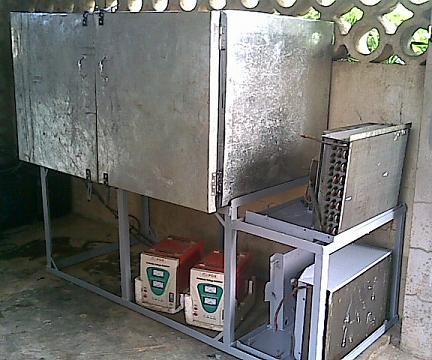
| Ice Block Machine | 1.2M – 3M+ | Local vs industrial |
| Generator (20–60KVA) | 500K – 1.5M+ | Critical |
| Deep Freezers | 400K – 700K | Storage buffer |
| Water System (Borehole) | 150K – 500K | Quality matters |
| Packaging (Nylons) | 50K – 150K | Bulk purchase |
| Chemicals (optional) | 100K – 140K | Faster freezing |
| Misc (labour, setup) | 100K+ | Installation |
Total Startup Range
- Small-scale: ₦1.5M – ₦3M
- Serious commercial setup: ₦3M – ₦5M+
Higher-end manufacturers like Dekoolar offer more reliable systems—but at a premium.
Production Workflow: Where Most People Get It Wrong
On paper, the process is simple:
- Fill water into nylon or molds
- Load into machine
- Freeze (4–12+ hours)
- Harvest and store
But in reality, production efficiency depends on:
- Consistent power supply
- Machine cooling efficiency
- Water purity
- Batch timing discipline
Output Reality vs Advertised Capacity
| Machine Rating | Advertised | Realistic Output |
|---|---|---|
| 70 blocks | 70 | 50–60 |
| 100 blocks | 100 | 70–90 |
| 168 blocks | 168 | 120–150 |
Local fabricated machines often underperform, this is a recurring complaint from operators.
The Energy Problem: Your Biggest Cost Driver
Let’s be direct: this business is an energy business disguised as a food business.
Cost Structure Insight
| Expense | Impact Level |
|---|---|
| Fuel/Diesel | Very High |
| Maintenance | Medium |
| Water | Low |
| Labour | Medium |
Fuel alone can wipe out profits if not controlled.
Solar Ice Production: Trend or Real Solution?
There’s increasing buzz, especially on platforms like X (Twitter), around solar-powered ice machines.
Solar Feasibility Analysis
| Factor | Reality |
|---|---|
| Initial Cost | High (₦3M–₦10M+) |
| Operating Cost | Very low |
| ROI | Strong long-term |
| Reliability | Depends on battery system |
A hybrid model (solar + generator backup) is currently the most practical approach in Nigeria.
Profitability Breakdown (Real Numbers)
Let’s run a realistic scenario using a mid-scale machine:
Example: 150 Blocks/Day
| Metric | Value |
|---|---|
| Daily Output | 150 blocks |
| Wholesale Price | ₦100 |
| Daily Revenue | ₦15,000 |
| Monthly Revenue | ₦450,000 |
Estimated Monthly Costs
- Fuel: ₦120K – ₦200K
- Labour: ₦40K – ₦80K
- Maintenance: ₦20K+
Net Profit Range
₦200K – ₦300K/month (realistic)
Operators scaling to multiple machines can exceed ₦1M/month in peak season.
Seasonality: The Hidden Factor Most Beginners Ignore
This business is not stable year-round.
Demand Cycle
| Season | Demand Level |
|---|---|
| Dry Season (Nov–April) | Very High |
| Rainy Season | Moderate to Low |
Smart operators:
- Maximize production during dry season
- Reduce output or diversify during rainy months
What Actually Makes This Business Work
From field observation and operator insights, success depends on:
1. Location Intelligence
Proximity to:
- Markets
- Motor parks
- Street vendors
Transport cost kills margins quickly.
2. Bulk Sales Strategy
Retail is slow. Wholesale is scalable.
Winning tactics:
- Pre-selling to vendors
- Offering delivery
- Building repeat clients
3. Machine Quality & Maintenance
Cheap machines cost more in downtime.
4. Water Quality
Poor water = cloudy, weak ice = low demand.
5. Operational Discipline
This is a daily routine business, not a “set and forget” hustle.
Common Pitfalls (Based on Real Operator Feedback)
From discussions on Nairaland and field reports:
- Overestimating machine capacity
- Underestimating fuel cost
- Ignoring seasonality
- Starting without confirmed buyers
- Using poor-quality water
- Buying cheap, inefficient equipment
Scaling Strategy: From Small Setup to Real Business
Once stable, expansion is straightforward:
Growth Path
- Start with 1 machine
- Secure consistent buyers
- Add delivery system
- Expand to 2–3 machines
- Introduce cold drinks/snacks
At scale, this becomes a mini cold-chain operation.
Final Verdict: Is It Worth It in 2026?
Yes—but only under the right conditions.
It works if you:
- Solve power efficiently
- Focus on bulk sales
- Operate consistently
- Plan for seasonality
It fails if you:
- Treat it like a quick hustle
- Ignore energy costs
- Depend only on retail buyers
Bottom Line
The ice block business in Nigeria is not new, but it remains structurally relevant and economically viable because it solves a real, daily problem.
From a renewable energy and infrastructure perspective, its future is tied to:
- Better power solutions (solar/hybrid systems)
- Improved machine efficiency
- Smarter distribution models