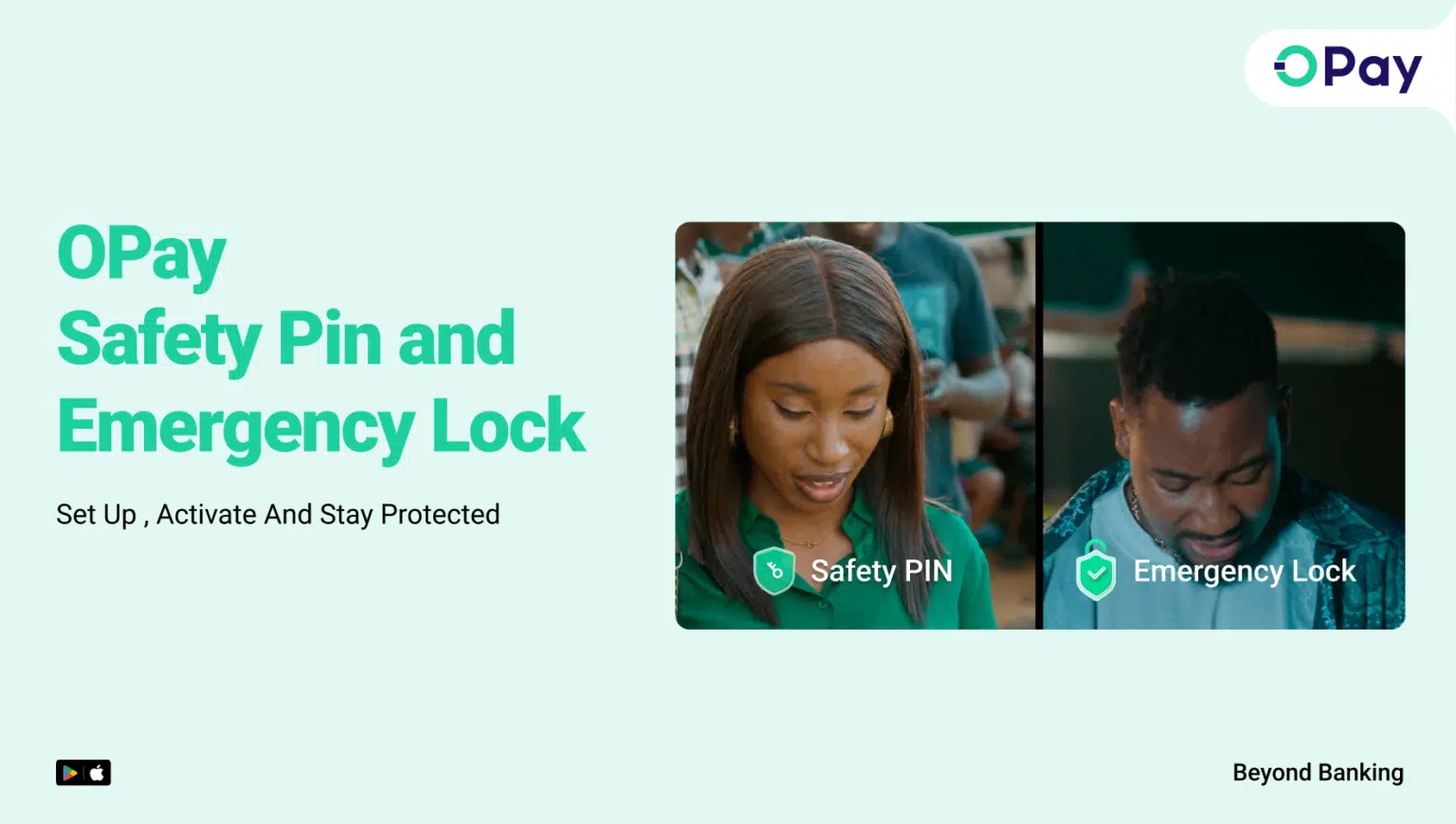
OPay Launches Emergency Lock and Safety PIN Features to Strengthen User Security in Nigeria
As digital banking continues to dominate everyday transactions across Nigeria, concerns over phone theft, account compromise, forced transfers, and financial fraud remain major challenges for millions of users. In response to these growing security concerns, OPay has introduced two new account protection features — Emergency Lock and Safety PIN, designed to give customers greater control over their finances during emergency situations.
The fintech company says the newly launched features are aimed at helping users prevent unauthorized transactions before they happen, rather than relying solely on recovery processes after funds have already been lost.
OPay Introduces New Security Tools for Nigerian Users
OPay, one of Nigeria’s largest fintech platforms, announced the launch of Emergency Lock and Safety PIN, two security innovations developed to protect customers against theft, coercion, suspicious account activity, and other security threats.
According to the company, the features were created after observing the real-life security challenges many Nigerians encounter while using digital financial services.
The launch further reinforces OPay’s commitment to improving customer safety and building greater trust in digital payments across Nigeria.
Emergency Lock Allows Users to Freeze Accounts Instantly
The newly introduced Emergency Lock feature enables customers to freeze their OPay accounts immediately with a single action whenever they suspect that their account or device may be compromised.
Once activated, the account enters a mandatory 24-hour security freeze period during which all outgoing transactions are automatically disabled.
This includes:
- Bank transfers
- Bill payments
- Card transactions
- Other outgoing payment activities
The security freeze takes effect instantly, helping users secure their funds before unauthorized transactions can occur.
Perhaps the most significant aspect of the feature is that the lock cannot be removed manually during the 24-hour period — not by the customer and not even by OPay‘s customer support team. This restriction is intended to maximize protection during high-risk situations.
Emergency Lock Feature Overview
| Feature | Details |
|---|---|
| Activation | One tap inside the OPay app |
| Freeze Duration | 24 hours |
| Transactions Blocked | Transfers, bill payments, card payments |
| Immediate Effect | Yes |
| Manual Removal Allowed | No |
| Customer Support Override | No |
Safety PIN Provides Protection During Forced Transactions
Alongside Emergency Lock, OPay has also launched a new Safety PIN feature designed specifically for situations involving coercion or threats.
Customers can create a separate Safety PIN within the app. If they ever find themselves being forced to make a transaction against their will, they can enter this special PIN instead of their regular PIN.
Rather than completing the transaction normally, the Safety PIN quietly triggers a 24-hour account freeze without alerting the individual applying pressure.
This approach allows customers to discreetly activate account protection during potentially dangerous situations.
Safety PIN Feature Summary
| Feature | Details |
|---|---|
| Purpose | Protection during coercion |
| Setup | User-created PIN |
| Trigger Action | Activates hidden account freeze |
| Freeze Duration | 24 hours |
| User Notification | Discreet activation |
| Account Protection | Immediate |
OPay Shifts Focus from Recovery to Prevention
Many financial institutions traditionally focus on helping customers recover money after fraud incidents occur. OPay says its latest security tools take a different approach by prioritizing prevention.
By combining the immediate protection offered by Emergency Lock with the covert protection mechanism of Safety PIN, the company aims to help customers stop financial losses before they happen.
As digital payment adoption continues to rise across Nigeria, proactive security measures are increasingly becoming a critical part of financial services.
OPay Executive Explains the Company’s Security Strategy
Speaking about the launch, OPay’s Chief Operating Officer and Chief Technology Officer, Dotun Adekunle, explained that the new features were developed in response to real security concerns experienced by customers.
“At OPay, every innovation starts with a simple question: how can we better protect and serve our customers? Emergency Lock and Safety PIN were developed to address real-life situations that many Nigerians face every day. These features are designed to give customers immediate control over their finances during moments of uncertainty, helping them protect what matters most. We believe financial services should not only be convenient, but also provide confidence, security, and peace of mind.”
How Customers Can Access the New Security Features
Customers who wish to use the new security tools can access them directly within the OPay mobile application.
Steps to Enable the Features
| Feature | Location in App |
|---|---|
| Emergency Lock | Security Centre → Emergency Lock |
| Safety PIN | Security Centre → Safety PIN Setup |
Users are encouraged to configure the Safety PIN in advance so it is available whenever needed.
OPay Continues Investment in Financial Security Innovation
Founded in 2018, OPay has grown into one of Nigeria’s leading digital financial service providers, offering services such as money transfers, airtime purchases, bill payments, merchant services, debit cards, and digital banking solutions.
The company states that its latest security innovations represent part of its ongoing investment in customer protection, financial inclusion, and safer digital transactions.
As Nigeria’s cashless economy continues to expand, features such as Emergency Lock and Safety PIN could become increasingly important tools for users seeking greater control and protection over their finances.