China Expands Massive Defensive Network Around Nuclear Missile Silos in Remote Desert
China is constructing an extensive network of military facilities around its nuclear missile silos in the country’s remote northwestern desert, according to newly analyzed satellite imagery reviewed by security experts.
The large-scale project, centered around China’s Hami nuclear missile fields in the Xinjiang region, appears designed to ensure that Beijing maintains the ability to launch a nuclear counterattack even after a potential first strike by an adversary.
Security analysts say the development represents one of the most significant upgrades to China’s land-based nuclear deterrence infrastructure in recent decades and highlights the intensifying strategic competition between China and the United States.
Satellite Images Reveal Vast Military Expansion
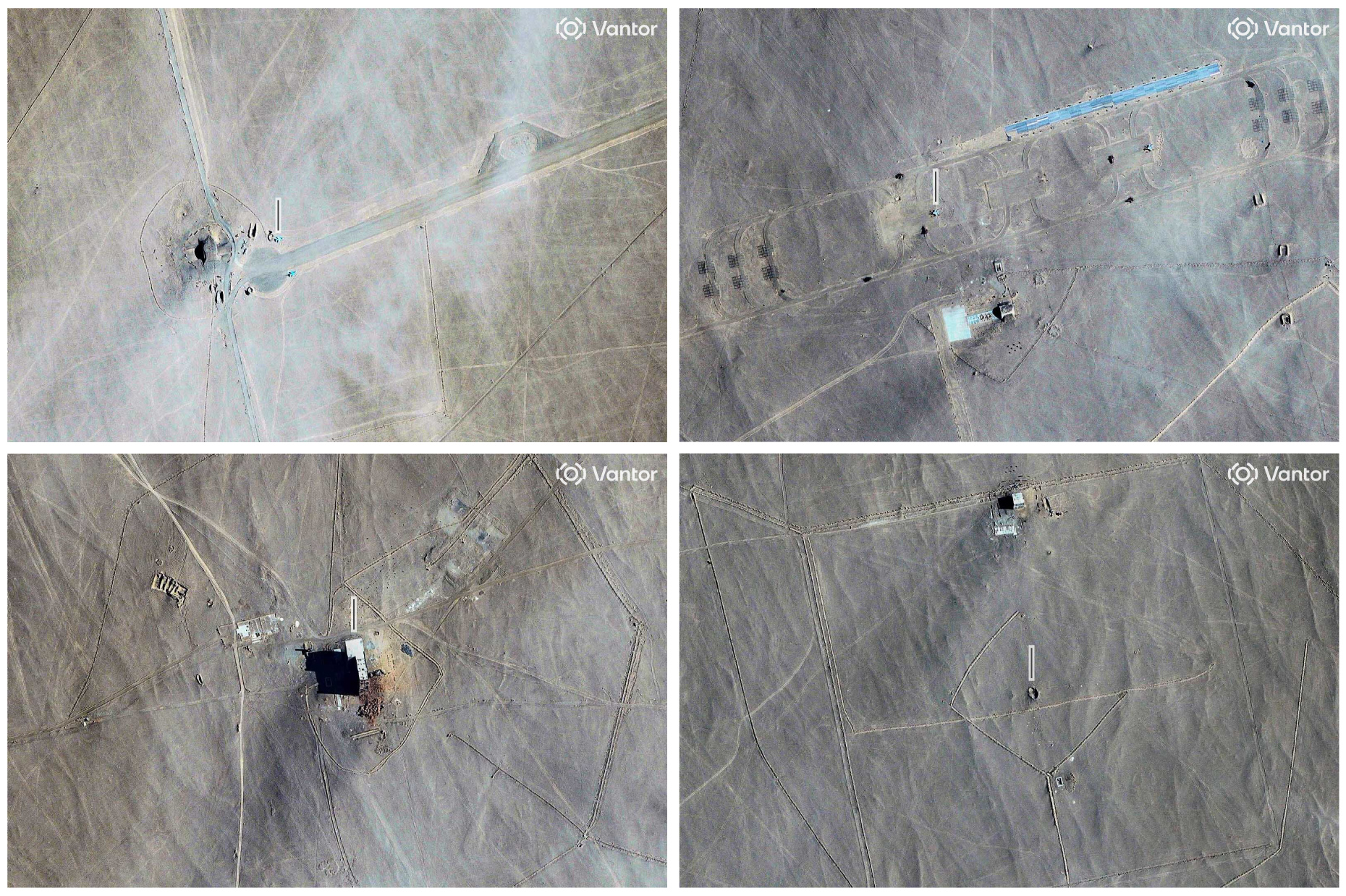
Satellite imagery examined by multiple security experts shows China has built more than 80 concrete launch pads, along with bunkers, communication facilities, transportation networks, and heavily fortified military installations spread across thousands of square kilometers of desert terrain.
Analysts believe the infrastructure could support several military functions, including:
| Military Infrastructure | Possible Purpose |
|---|---|
| Launch pads | Mobile missile launch operations |
| Reinforced bunkers | Weapons storage and protection |
| Communication nodes | Command and control operations |
| Electronic warfare facilities | Military electronic operations |
| Air defense sites | Protection against aerial attacks |
| Satellite communication systems | Strategic military communications |
Experts say the scale of construction suggests Beijing is investing heavily in ensuring its nuclear forces remain operational during any potential conflict.
Alexander Neill, an adjunct fellow at the Pacific Forum, described the project as a major expansion of China’s strategic deterrent capability.
“We can see this infrastructure is being built on a grand scale, covering thousands of square kilometers of desert beyond the silo fields.”
Hami Nuclear Silo Fields Remain Central to China’s Nuclear Strategy
China’s northwestern nuclear silo fields located in Xinjiang and neighboring Gansu province form the backbone of the country’s land-based nuclear arsenal.
Although China also possesses submarine-launched and air-launched nuclear weapons, military experts believe these silo-based intercontinental ballistic missiles (ICBMs) remain the most important component of Beijing’s nuclear deterrence strategy.
The newly discovered infrastructure appears designed to strengthen China’s “second-strike capability” — the ability to retaliate with nuclear weapons after surviving an enemy attack.
This capability forms the foundation of China’s long-standing nuclear doctrine, which officially maintains a “no first use” policy, meaning Beijing claims it would only use nuclear weapons in response to a nuclear attack.
Massive Octagon-Shaped Military Complexes Raise Questions
At the center of the newly expanded military network are two massive octagon-shaped installations constructed over the past six years in eastern Xinjiang.
The complexes are located southwest of the Hami missile fields, with one approximately 140 kilometers away and another around 230 kilometers distant.
Satellite images reveal that these facilities contain:
- Central command structures
- Housing complexes for military personnel
- Storage facilities for large military vehicles
- Fortified weapons storage areas
- Armored bunkers
- Extensive road networks
- Airfield infrastructure
- Railway connections
Security analysts believe these octagonal facilities may serve as command, control, communications, maintenance, and operational hubs for China’s strategic missile forces.
Recent satellite imagery also captured military exercises involving large vehicles near the northern complex during April and May 2026.
New Launch Pad Network Could Support Mobile Nuclear Missiles
One of the most significant discoveries involves the network of more than 80 concrete launch pads scattered throughout the desert landscape.
Military analysts believe these pads could support several types of strategic military assets, including:
- Road-mobile intercontinental ballistic missiles
- Mobile air defense systems
- Electronic warfare platforms
- Strategic communications equipment
The launch pads are connected to the central octagon facilities through extensive networks of dirt roads and underground conduits.
Experts suggest these underground systems may contain fiber-optic communication cables designed to maintain secure command and control links during wartime.
Hans Kristensen, director of the Nuclear Information Project at the Federation of American Scientists, said the purpose of every installation remains unclear but noted the enormous scale of the project.
“It is hard to rule anything out.”
Possible Advanced Command and Communication Systems Detected
Analysts have also identified what may be advanced communications facilities near one of the octagon complexes.
Satellite imagery reportedly shows:
- Large satellite dishes
- Communication towers
- Potential microwave relay systems
- Space communication infrastructure
According to nuclear policy experts, these facilities may form part of a sophisticated command, control, and communications network supporting China’s strategic nuclear forces.
Tong Zhao, a senior fellow specializing in nuclear policy, suggested the facilities could play a critical role in China’s nuclear command structure.
Third Desert Installation Appears To Be Military Target Range
A third octagon-shaped facility located south of China’s Lop Nur nuclear testing area appears to serve a different purpose.
Satellite imagery of the site reveals:
| Observed Feature | Possible Purpose |
|---|---|
| Mock military aircraft | Target practice exercises |
| Damaged structures | Weapons testing |
| Impact craters | Live-fire exercises |
| Simulated enemy equipment | Combat training scenarios |
Analysts believe the facility may function as a military training and weapons testing range.
Some imagery reportedly shows mock-ups resembling Western military aircraft, suggesting the site could be used for combat simulation exercises.
China’s Nuclear Arsenal Continues Rapid Expansion
The latest developments come as international observers increasingly focus on China’s rapidly growing nuclear capabilities.
Recent estimates suggest China is moving toward deploying approximately 1,000 nuclear warheads by 2030, while also expanding its missile silo networks and early warning systems.
Military analysts note that China’s nuclear modernization effort now includes:
- Expanded missile silo fields
- Road-mobile nuclear launch systems
- Improved early warning satellites
- Advanced command and control infrastructure
- Enhanced missile defense capabilities
China’s early warning satellite network reportedly can detect incoming ballistic missiles within seconds and provide enough warning time for retaliatory launches.
Strategic Competition With The United States Intensifies
The expansion of China’s nuclear infrastructure comes amid growing geopolitical tensions between Beijing and Washington, particularly regarding Taiwan.
While China continues to publicly maintain its no-first-use nuclear policy, Western governments and security analysts have expressed concerns about the speed and scale of Beijing’s nuclear modernization efforts.
Experts note that unlike the United States and Russia, which rely heavily on large numbers of hardened silos and deployed warheads, China appears to be pursuing a strategy that combines hardened infrastructure, mobility, advanced communications, and layered defensive systems.