
How Nigerian SMEs Can Start Simple Agentic AI Workflows
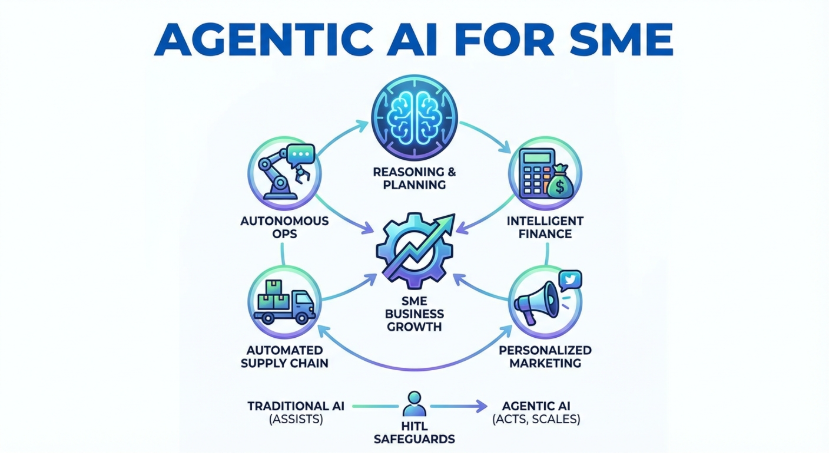
Nigerian small and medium enterprises can start exploring the possibilities of agentic AI, systems capable of planning and carrying out multi-step processes, without requiring complex homegrown infrastructure.
The most accessible initial forays into the technology involve finding an established repeatable process that currently uses staff time but has definable steps that could be codified.
Common entry points include triaging customer enquiries, setting up simple inventory alerts, extracting data from invoices or generating reports.
Once the task has been described in simple terms, off-the-shelf large language model interfaces can be used to build a prototype capable of carrying out the same process.
Providing specific instructions, examples and constraints helps prevent surprises down the line.
Many organisations start with human-in-the-loop processes, where the AI suggests edits or produces a draft that must be approved by a staff member before implementation.
These limitations will reduce risk and allow the company to gain confidence in the technology.
Start Small Before Automating More
Data privacy is a concern, especially with customer information. This should be stripped out or properly anonymized in prompts unless the company has a clear policy about what information can be shared with which third parties.
Locally hosted models may be necessary in some cases.
Keeping costs under control is relatively simple, so long as the company monitors spending and only moves to paid upgrade tiers if and when necessary.
Those who will be interacting with the AI need to be trained not only in how to use it but also in how to get the best results and know when the AI is wrong or needs guidance.
Early wins tend to be small, focused and have a clear metric: reducing the amount of time needed to respond to a customer enquiry, for example, rather than completely automating a department.
Moves towards wider or more complex automation are likely to be incremental, with each new project building on the confidence and experience of the previous one.
Documenting successes and failures alike will be essential in building long-term organisational memory about what works and what doesn’t.
It is also important to establish limitations and constraints for what the AI can and cannot do. Transferring money or making major account changes should always require manual confirmation rather than being fully automated.
With limited resources, it can be tempting for time-constrained managers to rush into automating as many processes as possible, but careful scoping and the inclusion of human oversight will produce better results.
The most important place to start with agentic AI is not with the most sophisticated software but with a single process where the benefits are easily measurable: where the technology is clearly producing time or cost savings, reducing staff workload or improving the quality of customer interactions.