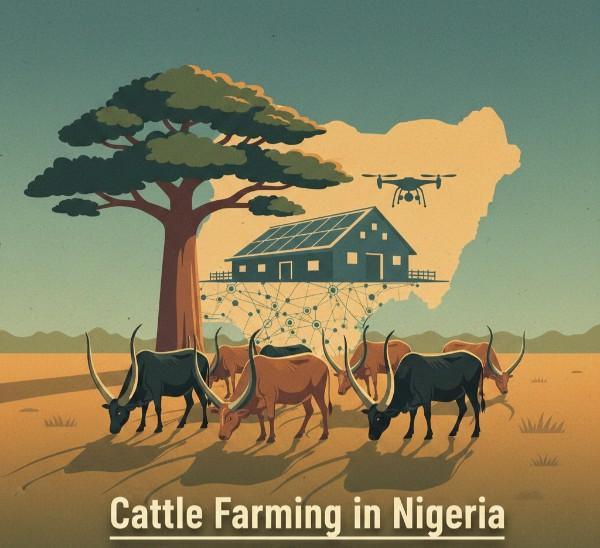
Cattle farming in Nigeria has become one of the most profitable agricultural ventures you can start today, but what most people don’t realize is that the business goes far beyond just selling beef. While some farmers struggle because they only focus on meat production, the smart ones are making money from milk, leather, manure, and even offering breeding services. The cattle industry contributes about 5-7% to Nigeria’s GDP and supports over 20 million people, yet most Nigerians outside the North still see it as a business only for herders.
The truth is that cattle farming offers multiple income streams that can generate consistent profit throughout the year. One cow alone can give you meat worth ₦200,000-₦400,000, produce milk daily that sells for ₦500-₦1,000 per liter, and provide manure that farmers pay good money for. The market is massive because Nigerians consume beef daily, and the country still imports over 90% of its dairy products despite having millions of cattle.
Because there’s so much confusion about how to actually start cattle farming properly, what breeds work best, how much capital you need, and what challenges to expect, many people either never start or lose money from poor planning. That’s why we always research thoroughly, speak with active cattle farmers, track government policies, and verify practical information before writing any guide on here.
In this guide, I’ll walk you through everything you need to know about starting cattle farming in Nigeria, the step-by-step process, costs involved, best practices, common challenges, and how to maximize profit from your cattle business.
1. Understanding Cattle Farming in Nigeria
Cattle farming means raising bulls and cows primarily for meat production, milk production, or both. In Nigeria, most cattle are kept for beef, while dairy production remains underdeveloped despite huge market demand.
Key facts about Nigeria’s cattle industry:
- Nigeria has between 21-50 million heads of cattle (6th largest in Africa)
- Over 20 million people depend on cattle farming for their livelihood
- The industry contributes about $32 billion to the economy
- 99% of cattle are indigenous breeds like White Fulani, Red Bororo, and Sokoto Gudali
- Average milk production is only 2-3 liters per cow daily (compared to 15-40 liters globally)
- Nigeria imports 90% of its dairy needs despite having millions of cattle
Why cattle farming is profitable:
- High demand for beef across all regions
- Multiple income sources (meat, milk, hide, manure, breeding)
- Cattle are relatively disease-resistant compared to other livestock
- Long lifespan means years of productivity
- Growing market with insufficient local supply
2. Types of Cattle Farming
Beef Production
Focus on raising cattle specifically for meat. You buy young cattle, fatten them for 6-12 months, and sell for slaughter. This is the most common type in Nigeria.
Dairy Production
Focus on milk production. Requires specific breeds and more intensive management but offers daily income from milk sales.
Mixed Farming
Combine both beef and dairy. Use cows for milk production and sell calves or older cattle for beef.
Cattle Fattening
Short-term business where you buy lean cattle, feed them intensively for 90-120 days, and sell at higher prices. Popular during festive seasons.
Breeding
Focus on producing and selling young cattle to other farmers. Requires good breeding stock and knowledge of genetics.
3. Popular Cattle Breeds in Nigeria
White Fulani
Most common breed in Nigeria. Medium-sized with good meat quality. Adapted to Nigerian climate and resistant to local diseases.
Red Bororo
Hardy breed popular in northern Nigeria. Good for beef production and adapts well to harsh conditions.
Sokoto Gudali
Large-bodied breed excellent for beef. Slower growth but produces quality meat.
N’dama
Resistant to trypanosomiasis (sleeping sickness). Smaller size but very hardy. Common in southern Nigeria.
Muturu
Smallest Nigerian breed. Very disease-resistant and suitable for small-scale farmers.
Exotic Breeds (Holstein Friesian, Jersey, Brown Swiss)
Used mainly for dairy production. Higher milk yield but require intensive management and better feeding.
4. Step-by-Step Guide to Starting Your Cattle Farm
Step 1: Get Suitable Land
You need grazing land where cattle can feed on natural grasses.
Land requirements:
- Minimum 1 hectare (6-7 plots) for small-scale start
- Must have good grass cover
- Access to water source
- Away from residential areas to avoid conflicts
Location options:
- Rural areas in northern states (cheaper land, better grazing)
- Outskirts of cities if targeting urban markets
- Areas with established cattle farming communities
Step 2: Fence and Secure Your Land
Proper fencing prevents cattle from wandering and protects against theft.
Fencing options:
- Wire mesh fencing (most common)
- Wooden poles with barbed wire
- Live fencing with trees for long-term
Security measures:
- Employ trustworthy herdsmen
- Install basic security if possible
- Register with local authorities
Step 3: Build Cattle Housing
Construct sheds to protect cattle from extreme weather.
Basic requirements:
- Roof for shade and rain protection
- Open sides for ventilation
- Concrete or raised floor for drainage
- Separate sections for calves, pregnant cows, and sick animals
- Storage area for feeds and equipment
Construction cost:
Basic shed for 10-20 cattle: ₦200,000-₦500,000 depending on materials.
Step 4: Provide Water Source
Cattle need constant access to clean water.
Water options:
- Borehole (best for long-term)
- Wells
- Water tanks filled regularly
- Natural water sources if available
Daily requirement:
Each cow needs 20-40 liters of water daily, more in hot weather.
Step 5: Purchase Your Starting Stock
Start with healthy young cattle from reputable sources.
What to buy:
- Young bulls (males) for fattening
- Heifers (young females) for breeding
- Mix of both for long-term business
Where to buy:
- Cattle markets in Kano, Sokoto, Maiduguri, Jos
- Direct from herders
- Government livestock farms
- Established ranches
Price range:
- Young cattle: ₦90,000-₦150,000
- Mature cattle: ₦200,000-₦400,000
- Breeding stock: ₦300,000-₦600,000
Important: Get an experienced person to help you select healthy cattle. Check for clear eyes, healthy coat, good body condition, and no visible diseases.
Step 6: Hire Experienced Herdsmen
You need knowledgeable workers to manage daily operations.
Responsibilities:
- Take cattle for grazing
- Monitor health and behavior
- Assist with feeding
- Report any problems immediately
Salary:
₦30,000-₦50,000 per month depending on experience and location.
Step 7: Get a Veterinary Doctor
Partner with a vet for health management and emergencies.
Services needed:
- Regular health checkups
- Vaccination schedules
- Treatment of diseases
- Breeding assistance
- Emergency care
Cost:
Monthly retainer: ₦20,000-₦50,000, plus costs for medications and procedures.
Step 8: Implement Proper Management
Feeding:
- Natural grazing on pasture (main feed)
- Supplement with hay during dry season
- Provide concentrates for fattening (maize, sorghum, groundnut cake)
- Salt licks for minerals
Health management:
- Regular vaccinations
- Deworming every 3-6 months
- Monitor for diseases daily
- Quarantine sick animals immediately
Breeding management:
- Separate bulls and cows when not breeding
- Give special care to pregnant cows
- Provide extra feeding before and after calving
5. Common Diseases and Prevention
Trypanosomiasis (Sleeping Sickness)
Transmitted by tsetse flies. Symptoms include weight loss, weakness, and anemia. Prevent with regular treatment and avoid tsetse fly zones.
Foot and Mouth Disease
Highly contagious viral disease. Causes blisters in mouth and feet. Prevent through vaccination and quarantine of new cattle.
Brucellosis
Causes abortion in pregnant cows. Vaccinate regularly and test breeding stock.
Internal and External Parasites
Worms, ticks, lice, and mites. Control through regular deworming and use of acaricides.
Tuberculosis
Bacterial infection affecting lungs. Test cattle regularly and isolate infected animals.
Prevention strategies:
- Vaccinate on schedule
- Quarantine new cattle for 2-3 weeks
- Keep housing clean and dry
- Provide balanced nutrition
- Work closely with your vet
6. Estimated Startup Costs
Small-scale farm (10-15 cattle):
| Item | Cost |
|---|---|
| Land lease (1 hectare, yearly) | ₦50,000-₦100,000 |
| Fencing | ₦150,000-₦300,000 |
| Housing/shed construction | ₦200,000-₦400,000 |
| Water source (borehole) | ₦150,000-₦300,000 |
| Purchase 10-15 young cattle | ₦1,200,000-₦1,800,000 |
| Initial veterinary care | ₦50,000-₦100,000 |
| Feeds and supplements (3 months) | ₦150,000-₦300,000 |
| Equipment and tools | ₦50,000-₦100,000 |
| Working capital | ₦100,000-₦200,000 |
| Total | ₦2,100,000-₦3,600,000 |
You can start smaller with 5-7 cattle for ₦1,000,000-₦1,500,000.
7. Profit Potential
Beef production:
- Buy young cattle at ₦100,000
- Fatten for 8-12 months
- Sell at ₦300,000-₦500,000
- Profit per head: ₦150,000-₦300,000 after feeding costs
Dairy production:
- Good dairy cow produces 10-15 liters daily
- Milk sells for ₦500-₦1,000 per liter
- Daily income: ₦5,000-₦15,000 per cow
- Monthly: ₦150,000-₦450,000 per cow
Other income sources:
- Manure sales: ₦5,000-₦10,000 per bag
- Hide and skin: ₦10,000-₦30,000 per cow
- Breeding services: ₦20,000-₦50,000 per service
Realistic projections:
A well-managed farm with 15 cattle can generate ₦2,000,000-₦5,000,000 annually after expenses.
8. Major Challenges
Land conflicts: Open grazing causes disputes with crop farmers. Solution: Use fenced ranches.
Feed scarcity: Natural grasses dry up during dry season. Solution: Store hay and buy supplementary feeds.
Disease outbreaks: Can wipe out entire herds. Solution: Strict vaccination and biosecurity.
High startup costs: Significant capital needed. Solution: Start small and grow gradually.
Market fluctuations: Prices vary by season. Solution: Time sales for festive periods when prices peak.
Frequently Asked Questions
1. How much land do I need to start? Minimum 1 hectare for 10-15 cattle, but more is better for grazing.
2. What’s the best breed for beginners? White Fulani adapts well and is relatively easy to manage.
3. How long before I see profit? 8-12 months for fattening, immediate for dairy if you buy mature cows.
4. Can I start with 5 cattle? Yes, many successful farmers started small and expanded.
5. Do I need special training? Not required but attending workshops helps. Learn from experienced farmers.
6. Is cattle farming legal in all states? Yes, but some states have banned open grazing. Use ranching methods.
7. Where do I sell my cattle? Cattle markets, butchers, hotels, restaurants, and individual buyers.
Final Words
Cattle farming in Nigeria is a profitable business when done properly with good planning, proper management, and patience. The market is huge, demand keeps growing, and multiple income streams make it a solid investment.
Start small if you’re new to the business. Buy 5-10 healthy cattle, learn the management practices, and grow gradually. Focus on proper feeding, health care, and building relationships with buyers.
The business requires commitment and hard work, but the returns are worth it. Many farmers who started with 10 cattle now own herds of over 100 and make millions annually. With the government’s new focus on ranching and modernization, this is a good time to enter the cattle farming business in Nigeria.