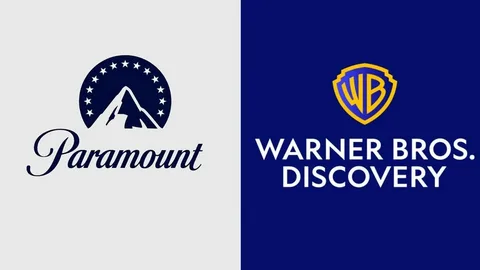
UK Government May Use Paramount-Warner Deal Review to Secure Major Media Commitments Rather Than Block $110 Billion Merger
The British government’s threat to intervene in the proposed $110 billion merger between Paramount and Warner Bros Discovery may be less about stopping the historic media deal and more about forcing the companies to make major commitments to British media, industry experts and legal analysts suggest.
Britain’s Culture Secretary, Lisa Nandy, recently indicated that she is considering launching a public-interest intervention into the merger, citing concerns that the deal could reduce media plurality and limit the diversity of voices available to UK audiences.
However, analysts believe the government may instead be using the possibility of a lengthy regulatory review as leverage to extract guarantees on areas such as independent news, children’s programming, and investment in Britain’s film and television industry.
UK Review Could Increase Pressure on Paramount
The proposed merger, one of the largest media deals in recent years, has already received approval in several countries, including Kuwait, Austria, and Australia. The deal has also cleared review by the U.S. Department of Justice.
Despite those approvals, British regulators could still significantly impact the transaction timeline.
Under the merger agreement, Paramount has agreed to pay Warner shareholders an additional 25 cents per share for every quarter the deal remains incomplete after September 30. Analysts estimate this “ticking fee” could cost Paramount approximately $650 million every three months, increasing the financial pressure to secure swift regulatory approval.
Because of these potential costs, experts believe Paramount may prefer offering concessions rather than risking prolonged regulatory delays.
Media Plurality Concerns May Be Difficult to Justify
Legal experts have questioned whether Britain’s public-interest concerns are strong enough to justify blocking the transaction outright.
The UK’s Competition and Markets Authority is already conducting a standard competition review of the merger and is expected to determine by August 7 whether the deal requires a more extensive investigation.
However, the public-interest review being considered by the government would focus on broader issues, including media diversity, public broadcasting, and cultural investment rather than traditional competition metrics such as market share.
Industry analysts argue that these broader concerns may provide the government with an opportunity to negotiate commitments from Paramount without necessarily opposing the merger itself.
Independent News and Children’s Programming Could Become Key Conditions
Several potential concessions have emerged as possible solutions to satisfy British government concerns.
One major area involves news broadcasting. Paramount currently owns Channel 5 in the UK, while Warner owns CNN International. Analysts suggest the government could seek guarantees that Channel 5 will continue using independent news provider ITN rather than replacing it with internally produced news content.
Children’s television programming has also become a major focus because the merger would combine two of the world’s largest children’s entertainment brands: Nickelodeon and Cartoon Network.
Possible commitments could include:
- Maintaining UK-produced children’s programming.
- Protecting existing children’s content investments.
- Preserving diversity in children’s broadcasting.
- Guaranteeing long-term support for British creative talent.
Britain’s Film Industry Could Benefit From New Commitments
The British government may also seek assurances regarding Warner’s extensive production operations in the country.
Warner owns several major production facilities in Britain, including the world-famous Leavesden Studios, where blockbuster productions such as the Harry Potter films and Barbie were produced.
Industry observers believe Paramount could agree to:
- Maintain current employment levels.
- Expand studio investments in Britain.
- Increase production spending within the UK.
- Commit to long-term support for British film and television production.
Such commitments could help ease political concerns while strengthening Britain’s position as a global entertainment production hub.
Political Changes in Britain May Influence the Deal
The merger review is taking place during a period of significant political uncertainty in the United Kingdom.
Reports indicate that political changes expected later this month could result in a more interventionist government approach toward major international business transactions involving British industries.
Political analysts suggest that taking a tough public stance against one of the world’s largest media mergers could provide political benefits while allowing government officials to demonstrate their commitment to protecting British cultural and media interests.
Several analysts believe that if Paramount offers sufficient concessions over the coming weeks, British authorities could approve the deal without pursuing a prolonged regulatory battle.
Paramount Faces Critical Deadline
Paramount and Warner have been given until July 6 to respond to the British government’s concerns.
Industry observers expect intense negotiations over the coming days, with the companies likely weighing the cost of additional commitments against the potentially massive financial impact of delaying completion of the $110 billion merger.
While Britain’s intervention powers may ultimately never be used to block the transaction, the case demonstrates how governments increasingly use regulatory reviews as leverage to secure economic, cultural, and political concessions from major global corporations.
Paramount-Warner Deal: Key Facts
| Item | Details |
|---|---|
| Deal Value | $110 Billion |
| Companies Involved | Paramount and Warner Bros Discovery |
| UK Concern | Media plurality and public interest |
| Potential Commitments | News, children’s programming, UK investment |
| UK Response Deadline | July 6, 2026 |
| Competition Review Decision | Expected by August 7, 2026 |
| Estimated Delay Cost | About $650 million every quarter |
| Major UK Asset | Leavesden Studios |