Richest Countries in Western Europe Per Capita (2026): GDP Ranking, Wealth Lessons
In 2026, Western Europe remains one of the strongest economic regions in the world when measured by income per person and overall living standards. Countries in this region have built stable systems that support long-term wealth creation through strong institutions, innovation, foreign investment, and disciplined economic planning rather than short-term gains.
But beyond the headlines of “rich countries,” the real story is about structure, consistency, and how wealth is managed over time. While developed economies continue to grow steadily, many people in countries like Nigeria are trying to understand how these global models can be adapted into practical financial strategies that work in naira.
This article breaks down the richest Western European countries per capita in 2026, explains why they remain economically strong, and highlights practical lessons for building income and financial stability in Nigeria’s economy.
Richest Western European Countries Per Capita (2026 Overview)
When we talk about “GDP per capita,” we refer to the average economic output per person in a country. It does not mean everyone is equally wealthy, but it gives a clear picture of overall living standards and economic strength.
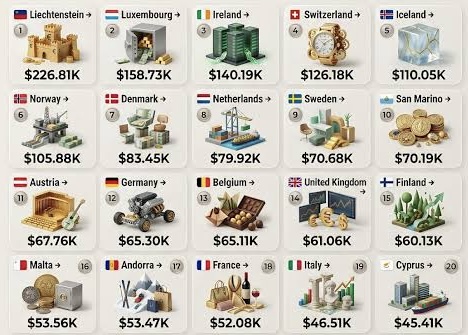
In 2026, the top-performing Western European countries include:
- Luxembourg
- Ireland
- Switzerland
- Norway
- Iceland
These countries consistently rank high due to strong financial systems, innovation, natural resources, and stable governance.
Luxembourg
Luxembourg remains one of the richest countries per capita in the world. Despite its small population, it has a powerful financial sector built on banking, investment funds, and international finance operations. This significantly boosts its national income per person.
Ireland
Ireland continues to perform strongly due to the presence of major multinational companies, especially in technology and pharmaceuticals. Global firms base their European operations there, increasing national output and boosting per capita income significantly.
Switzerland
Switzerland is known for economic stability, high-income jobs, and a strong financial and industrial base. Key sectors include banking, pharmaceuticals, precision manufacturing, and high-end services. Its economy is highly balanced and resilient.
Norway
Norway stands out not just for high income levels but for long-term wealth management. Its oil and gas resources are controlled through a sovereign wealth fund that ensures future generations benefit from national resources. This makes Norway financially secure beyond yearly earnings.
Iceland
Iceland is a small but strong economy driven by tourism, renewable energy, and fishing industries. It also benefits from high human development standards and efficient resource use.
Other strong economies in Western Europe include the Netherlands, Denmark, Germany, and Austria, which all contribute significantly to regional economic strength even if they are not always at the very top of per capita rankings.
Why Western Europe Remains Wealthy in 2026
The long-term success of Western European countries is not accidental. It is built on consistent systems and policies that protect and grow wealth.
1. Strong Institutions
Stable governments, reliable legal systems, and predictable economic policies allow businesses and investors to plan long-term without fear of sudden disruption.
2. Foreign Investment Attraction
Countries like Ireland and Switzerland attract global companies by offering safe, stable environments for business operations, which boosts jobs and tax revenue.
3. Smart Resource Management
Norway is a key example of how natural resources can be managed responsibly through long-term investment funds instead of short-term spending.
4. Innovation and Education
Western Europe invests heavily in research, education, and technology, which improves productivity and keeps their economies globally competitive.
Together, these factors create economies that are structured, not random, and consistently generate wealth over time.
What Nigeria Can Learn From Western Europe’s Wealth System
The goal is not to copy these countries directly, but to understand the principles behind their success.
1. Long-Term Thinking
Wealth in Western Europe is built slowly and consistently. In contrast, many people focus on quick profit, but real financial stability comes from patience and structure.
2. Diversification of Income
No strong economy depends on a single source of income. Individuals should also avoid relying on one business or income stream.
3. Reinvestment Strategy
Countries like Norway reinvest national wealth into future funds. Similarly, business owners should reinvest profits into growth instead of immediate consumption.
4. Skill Development
High-income countries prioritize education and skills. In Nigeria, digital skills, technical skills, and entrepreneurship can significantly increase earning power.
Practical Money & Business Guide in Naira (2026)
In Nigeria’s current economy, the focus should be on both earning and protecting value while building scalable income streams.
Small Capital Businesses
Businesses like POS operations, food services, fashion resale, and logistics remain strong when managed consistently. They may start small but can grow over time.
Digital Income Opportunities
Freelancing, affiliate marketing, content creation, and online services allow individuals to earn in stronger currencies or scale beyond local limits.
Combining Online and Offline Income
Running a physical business alongside social media sales increases visibility, customer reach, and profit potential.
Networking and Access
In Nigeria, many opportunities come through relationships, partnerships, and communities that provide business information, funding, or exposure.
Seyi Tinubu: Influence, Business Presence & Public Attention
In discussions around modern Nigerian entrepreneurship and influence, Seyi Tinubu is often mentioned due to his visibility in business, media-related ventures, and public presence.
Reports suggest his business interests span advertising, real estate, and brand-related ventures, although exact net worth figures vary across different public estimates.
He is also widely discussed due to his family background and political connections, which naturally increases public attention and scrutiny.
Over time, he has been involved in public debates and media discussions, especially around influence, access, and the role of public figures in Nigeria’s business environment.
The key lesson from such profiles is that wealth in today’s world is not only about money but also about visibility, networks, and reputation management.
Conclusion
Western Europe’s richest countries in 2026 show that sustainable wealth is built on systems, discipline, and long-term planning—not luck.
For Nigeria and similar economies, the real lesson is not to compare numbers, but to understand the habits behind them: consistency, reinvestment, diversification, and skill development.