US FCC Moves to Scrap 39% TV Station Ownership Cap, Paving the Way for Bigger Broadcast Deals
The U.S. Federal Communications Commission (FCC) is preparing to vote on a proposal that could significantly reshape the American television broadcasting industry by removing the long-standing 39% national TV ownership cap.
If approved, the move would replace the decades-old restriction with a more flexible case-by-case review process, allowing broadcasters to expand beyond the current ownership limit if the FCC determines the deal serves the public interest.
FCC Plans to Replace 85-Year-Old Ownership Rule
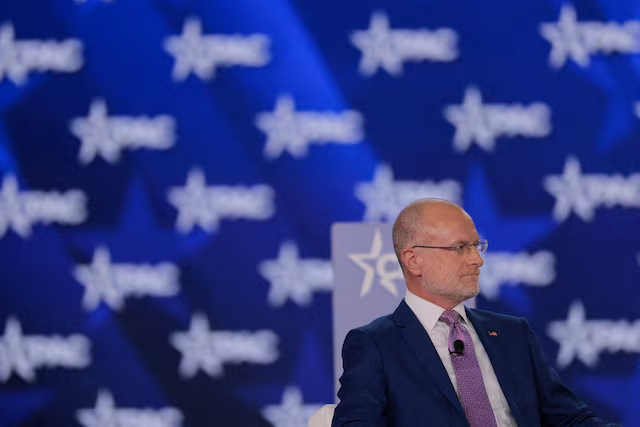
FCC Chairman Brendan Carr announced on Wednesday that the agency will vote on ending the ownership restriction that has prevented television broadcasters from reaching more than 39% of U.S. TV households for roughly 85 years.
Rather than keeping a fixed ownership limit, the new proposal would allow the FCC to review large media acquisitions individually.
According to Carr, broadcasters seeking to exceed the current ownership threshold would only receive approval if regulators determine the transaction promotes the public interest.
The proposal marks one of the biggest potential changes to U.S. broadcast ownership regulations in decades and could open the door for major consolidation across the television industry.
Current Ownership Rules Limit Broadcasters
Under existing FCC regulations, television station owners cannot legally reach more than 39% of American TV households.
The rule also includes technical calculations where stations operating with weaker over-the-air signals are only partially counted toward the ownership cap, reducing how much market reach is attributed to some broadcasters.
Supporters of the proposal argue these rules were created for an entirely different media landscape and no longer reflect today’s competition, where broadcasters compete against streaming services, digital platforms, and social media companies.
Critics Say Congress — Not the FCC — Should Make the Change
The proposal has already drawn criticism from lawmakers and media watchdogs who argue the FCC lacks the legal authority to eliminate the ownership cap on its own.
Opponents maintain that the 39% limit was established by Congress and therefore cannot simply be removed through an FCC vote.
They also warn that allowing broadcasters to own significantly more television stations could reduce competition, weaken local news coverage, and limit the diversity of viewpoints available to viewers.
FCC Commissioner Anna Gomez, one of the agency’s Democratic members, defended the existing rule, saying the ownership cap reflects Congress’ decision that excessive media concentration threatens competition, local broadcasting, and viewpoint diversity.
Nexstar Acquisition Adds Pressure to the Debate
The ownership debate has intensified following the FCC’s approval earlier this year of Nexstar Media Group’s $3.54 billion acquisition of television station owner Tegna.
Although the current ownership cap remains in place, the FCC granted Nexstar a waiver that allowed the transaction to proceed.
If the acquisition survives ongoing legal challenges, Nexstar’s television stations would reach approximately 80% of U.S. TV households—more than double the existing national ownership limit.
However, the deal has not been finalized, as a judge has temporarily halted the acquisition while the legal challenge continues.
Trump Previously Backed the Nexstar Deal
Earlier this year, President Donald Trump publicly expressed support for the Nexstar-Tegna acquisition.
Trump has also repeatedly criticized several major television networks and urged FCC Chairman Brendan Carr to revoke the broadcast licenses of Comcast-owned NBC stations.
Carr additionally ordered an unusually early license review for Disney-owned ABC television stations, a move that attracted criticism from free speech advocates and media organizations.
Critics argue these actions raise concerns about political influence over broadcast regulation and the independence of the FCC.
Broadcasters Welcome the Proposal
The National Association of Broadcasters (NAB) welcomed the FCC’s proposal, arguing that broadcast ownership restrictions have become outdated.
The organization said broadcasters now compete directly with streaming platforms and large technology companies that are not subject to similar ownership limitations.
According to the association, modernizing ownership rules would create a fairer competitive environment and better reflect today’s rapidly evolving media industry.
What the FCC Proposal Means
If approved, the proposal would not automatically eliminate all ownership restrictions. Instead, broadcasters seeking to exceed the current 39% national audience limit would need FCC approval for each transaction.
The agency would evaluate every proposed acquisition individually to determine whether expanding ownership would benefit the public interest.
The vote could mark a major shift in U.S. media regulation, potentially encouraging larger mergers and acquisitions while continuing to fuel debate over competition, local journalism, and media diversity.