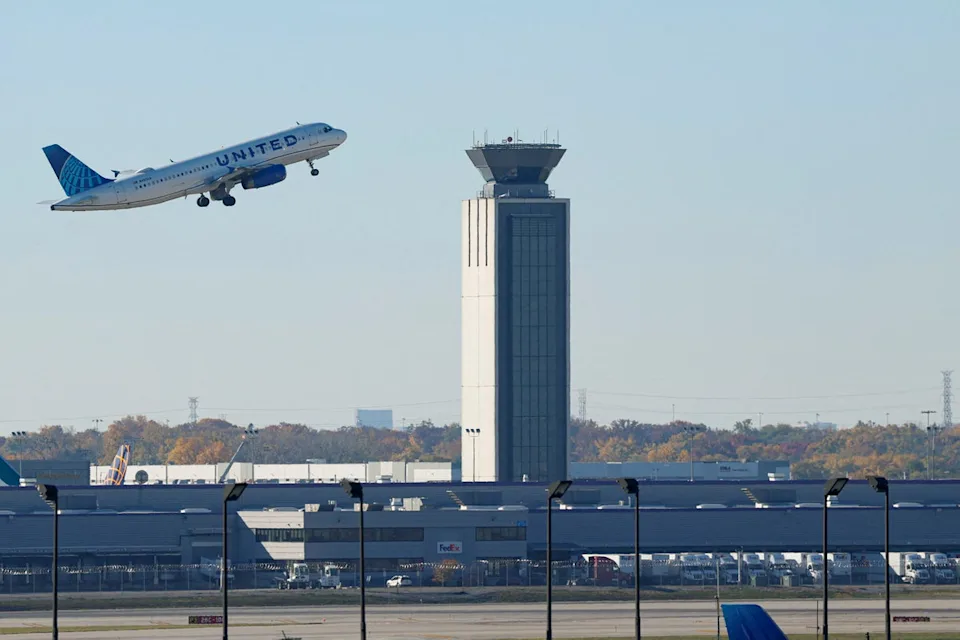
US Aviation Industry Pushes Congress to Approve $20 Billion for Air Traffic Control Modernization
The U.S. aviation industry is urging Congress to approve $20 billion in additional funding to modernize the country’s aging air traffic control system, warning that outdated technology and infrastructure are contributing to flight delays, disruptions, and growing safety concerns.
The request comes from a broad coalition representing airlines, aircraft manufacturers, airports, labor unions, and travel organizations. The group says the investment is essential to replace aging facilities, introduce advanced technology, and improve the efficiency of America’s airspace management.
Aviation Groups Call for Major Infrastructure Investment
The aviation coalition said the proposed $20 billion would fund the replacement or modernization of hundreds of aging air traffic control facilities across the United States.
The funding would also support the deployment of modern equipment for air traffic controllers, improved communications systems, and advanced software designed to manage air traffic more efficiently. Industry leaders believe these upgrades would significantly reduce flight delays while strengthening overall aviation safety.
According to the coalition, America’s aviation system remains one of the country’s most valuable transportation assets but is increasingly struggling under growing passenger demand and outdated infrastructure.
Organizations supporting the funding request include major aircraft manufacturers, airline industry groups, airport operators, pilot unions, and travel associations.
Previous Funding Marked Only the First Phase
Congress previously approved $12.5 billion last year to begin modernizing the Federal Aviation Administration’s (FAA) air traffic control network.
That funding focused on replacing obsolete technology and addressing staffing shortages at air traffic control towers. However, aviation leaders say much more investment is needed to complete the nationwide modernization effort.
A significant portion of the newly requested funding would go toward developing advanced software capable of improving flight routing, reducing congestion, and increasing operational efficiency throughout U.S. airspace.
Transportation Department Previously Sought Additional Funding
U.S. Transportation Secretary Sean Duffy previously indicated that the administration was seeking another round of funding to continue the modernization project.
Earlier proposals initially requested approximately $19 billion, although officials later sought around $10 billion for the next phase while planning to pursue additional funding in future budget requests.
Lawmakers have indicated that more funding could be considered later this year as Congress prepares additional government spending legislation.
Aging FAA Systems Continue to Raise Concerns
The renewed funding request follows several high-profile failures involving the FAA’s air traffic communications systems.
Among the most notable incidents were major outages affecting operations at Newark Liberty International Airport, highlighting the vulnerability of aging telecommunications infrastructure.
For decades, airlines and passengers have experienced delays caused by outdated equipment, congested airports, and staffing shortages at control towers. Industry experts argue that modernizing the system has become increasingly urgent as air travel continues to grow.
A government report released in 2023 found that many FAA communications systems have become so outdated that replacement parts are no longer readily available.
Another assessment determined that 51 of the FAA’s 138 air traffic control telecommunications systems were considered unsustainable, reinforcing concerns about the long-term reliability of the nation’s aviation infrastructure.
FAA Plans Thousands of Technology Upgrades by 2028
The FAA has already outlined an ambitious modernization roadmap that aims to transform the nation’s air traffic control network by the end of 2028.
Planned improvements include:
| Planned Upgrade | Target by 2028 |
|---|---|
| High-speed network connections | 5,000 |
| New aviation radios | 27,000 |
| State-of-the-art radar systems | 612 |
The upgraded infrastructure will rely on a combination of fiber-optic, satellite, and wireless technologies to improve communication between airports, aircraft, and air traffic controllers.
Officials believe the improvements will help create a faster, safer, and more reliable aviation system capable of supporting future passenger demand while reducing nationwide flight disruptions.
As Congress considers additional funding, aviation leaders maintain that completing the modernization project is critical to ensuring the long-term safety, efficiency, and resilience of the U.S. air transportation system.