Airbus CEO Warns Europe Risks Missing Historic Opportunity for Defence Cooperation
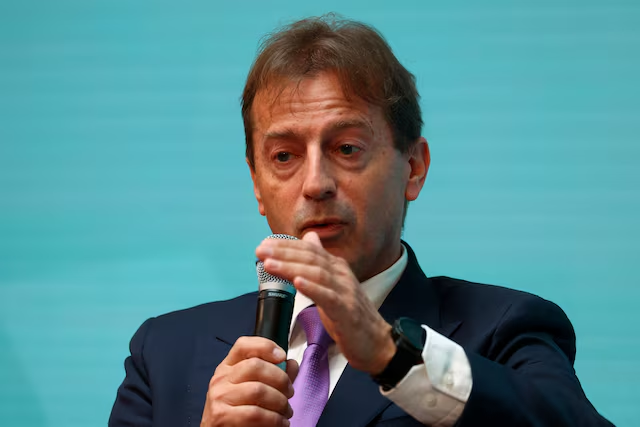
Airbus CEO Guillaume Faury has expressed growing concerns about the future of European defence cooperation, warning that the continent could miss a crucial opportunity to strengthen its military industry if countries fail to work together in the coming years.
Speaking on Friday at the annual economic forum in Aix-en-Provence, France, Faury said he was “not necessarily optimistic” about the current state of defence collaboration across Europe, despite increased government spending and heightened security concerns.
His remarks come just weeks after the collapse of the ambitious Future Combat Air System (FCAS) fighter jet programme, a major defence project involving France, Germany, and Spain. The programme had been viewed as a cornerstone of Europe’s efforts to build a next-generation combat aircraft capable of competing with global rivals.
Collapse of FCAS Programme Raises Questions About Europe’s Defence Strategy
The FCAS project officially fell apart following months of disagreements between industrial partners Airbus and Dassault Aviation over leadership roles and work-sharing arrangements.
The breakdown of the programme has reignited concerns that European countries may return to pursuing separate national defence projects rather than building unified military platforms.
Faury warned that the current moment represents a rare opportunity for Europe to strengthen its defence industry through cooperation.
“If we miss the window of opportunity in the next few years, we’ll end up with fragmented national solutions for decades to come,” he said during the forum.
According to Faury, both France and Germany remain committed to finding new ways to cooperate on defence projects despite recent setbacks.
“We keep believing in European cooperation at Airbus,” he added.
Airbus Continues to Push for Joint European Defence Projects
Despite the failure of FCAS, Airbus maintains that long-term defence cooperation remains essential for Europe’s strategic independence and competitiveness.
The company has consistently argued that joint projects allow European nations to share development costs, avoid duplication, and build stronger industrial capabilities.
Faury’s comments also highlight growing pressure on European governments to balance rising defence budgets with domestic economic challenges while responding to evolving global security threats.
Dassault Signals Openness to Future Partnerships
Earlier this week, Dassault Aviation CEO Eric Trappier indicated that future cooperation between European defence companies remains possible, despite the collapse of the FCAS programme.
Speaking before a French Senate committee, Trappier said that successful partnerships can still be achieved if all parties agree on clear rules and responsibilities from the outset.
“We are capable of cooperating, we have shown it in the past, but we want to cooperate with rules that are accepted from the start,” he said.
His remarks suggest that while the FCAS project may have ended, discussions about future European defence collaborations are far from over.
Europe’s Defence Industry Faces a Critical Turning Point
The failure of one of Europe’s most ambitious military projects has intensified concerns about the continent’s ability to compete with major global defence powers.
Industry leaders now warn that unless European nations overcome political and industrial rivalries, the opportunity to build a unified and competitive defence ecosystem could be lost for decades, leaving countries to pursue costly and fragmented national programmes instead.