LSETF at 10: Lagos Employment Fund Says It Has Disbursed ₦15 Billion and Supported Over 320,000 Jobs
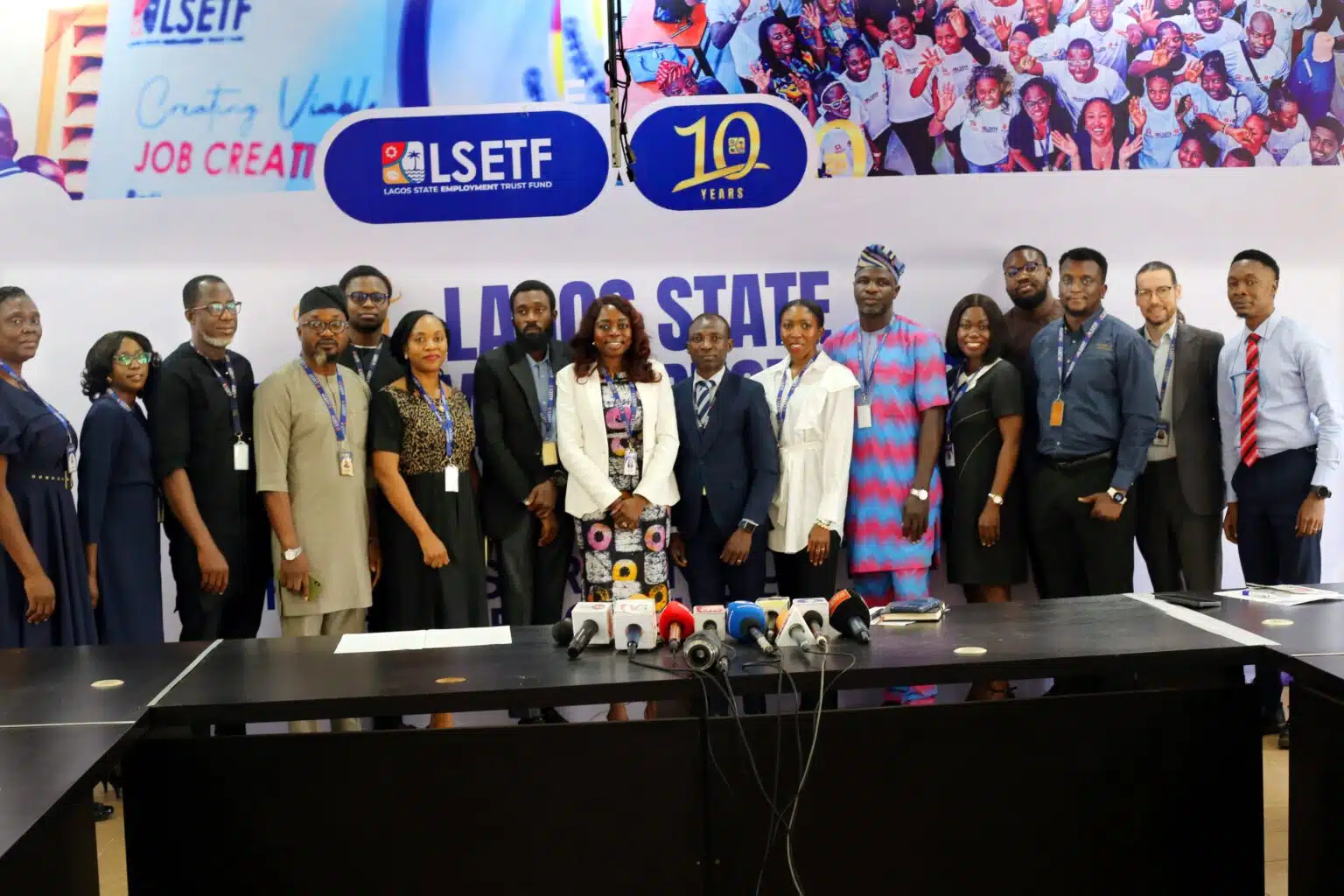
The Lagos State Employment Trust Fund (LSETF) has marked its 10th anniversary, revealing that it has disbursed more than ₦15 billion in loans and interventions while supporting over 320,000 direct and indirect jobs across Lagos State since its launch in 2016.
Established by the Lagos State Government under the Ministry of Wealth Creation and Employment, the fund was created to tackle youth unemployment, support entrepreneurship, and drive economic growth across Nigeria’s commercial capital.
According to LSETF Executive Secretary, Feyisayo Alayande, the agency’s decade-long impact demonstrates the potential of targeted government intervention in empowering entrepreneurs, startups, and job seekers.
LSETF’s 10-Year Impact in Numbers
Over the last decade, LSETF says it has supported businesses and individuals through five major intervention areas:
- Access to finance
- Skills development
- Capacity building
- Market access
- Technology ecosystem support
The organization disclosed that it has:
| LSETF Impact Metrics (2016–2026) | Figures |
|---|---|
| Total funds disbursed | Over ₦15 billion |
| Direct and indirect jobs created | More than 320,000 |
| Jobs preserved | Over 170,000 |
| Young people connected to employment | More than 30,000 |
| Tech startups funded | About 1,200 |
| Tech talents developed | More than 3,000 |
According to Alayande, these achievements reflect the resilience and potential of Lagos entrepreneurs when provided with access to capital and business support.
LSETF Records 94% Loan Repayment Rate
One of the most notable figures shared during the anniversary celebration was the fund’s reported 94% loan repayment rate.
LSETF revealed that out of the more than ₦15 billion disbursed over the years, borrowers maintained a repayment performance that closely aligns with the Central Bank of Nigeria’s benchmark default rate.
| Loan Performance Data | Figures |
|---|---|
| Repayment rate | 94% |
| Default rate | 6% |
| CBN benchmark default rate | 5% |
Alayande argued that this repayment performance challenges common assumptions about lending risks associated with small businesses and startups.
“Lagos entrepreneurs are not a risk; they are an opportunity. The Lagos entrepreneur is credible, and we can bank on them, and we’ll continue to support them,” she said.
Startup Founders Share How LSETF Changed Their Businesses
As part of its assessment of the fund’s impact, several startup founders shared how LSETF’s support influenced their entrepreneurial journeys.
Wakamedics: Funding and Mentorship Provided Early Validation
For Victoria Duru, founder of fertility health startup Wakamedics, receiving support from LSETF represented more than financial assistance.
After leaving a successful career in the air ambulance industry to pursue fertility healthcare innovation, Duru said LSETF became the first institution to validate her business vision.
According to her, the funding helped launch a new product line that increased revenue, while mentorship and capacity-building programs became even more valuable in the long run.
UleHomes Says Institutional Backing Improved Credibility
Chisom Okorie, co-founder of property technology startup UleHomes, credited LSETF’s non-dilutive funding support with helping the company expand operational capacity.
He added that institutional backing from LSETF also strengthened the startup’s credibility among investors, partners, and customers.
“Being backed by an institution like LSETF validates our mission to stakeholders and the wider market,” Okorie explained.
Cubeseed Founder Says Government Validation Built Trust
Mbanefo Chinonyelum, founder of agritech startup Cubeseed, said his participation in the Lagos Innovates programme helped transform an early-stage business idea into an operational company.
After previously losing a farming investment to fraud, Chinonyelum said the 12-week training program provided critical knowledge in operational management and business sustainability.
He noted that government endorsement also created trust among farmers and business partners.
“The government’s validation becomes our validation,” he said.
House of Zibima Benefited From Funding and Mentorship
Fatima Yusuf, founder of sustainable fashion brand House of Zibima, said she discovered the Female Funders and Founders Programme through LinkedIn after receiving encouragement from a mentor.
The entrepreneur explained that LSETF provided access to mentorship, training, business networks, and funding opportunities that significantly contributed to the company’s growth.
House of Zibima specializes in converting waste materials, including plastics, fabric scraps, and used materials, into sustainable footwear products.
Fastamoni Received Workspace Support During Critical Growth Stage
Although fintech startup Fastamoni did not receive direct funding, founder David Jaiyeola said LSETF’s workspace voucher support arrived at a critical point in the company’s development.
According to Jaiyeola, the support reduced operational costs and allowed the business to focus resources on expansion.
Can LSETF Sustain Its Impact Over the Next Decade?
Ten years after its establishment, LSETF positions itself as one of Nigeria’s most active state-backed entrepreneurship support initiatives.
While several beneficiaries credit the agency with helping them scale their businesses through funding, mentorship, training, and institutional validation, questions remain about how sustainable and scalable the program can remain in an increasingly challenging economic environment.