PHP2Shell Explained: Two Critical PHP Vulnerabilities Trigger Urgent Server Patching Worldwide
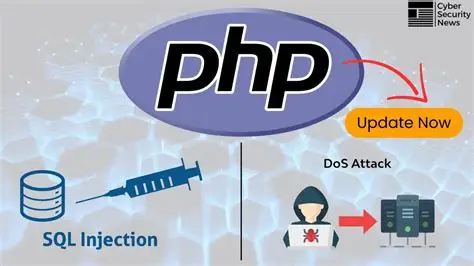
Two critical PHP security vulnerabilities have triggered an urgent response from cybersecurity agencies, technology companies and website administrators worldwide. The flaws, identified as CVE-2026-109618 and CVE-2026-109619, could allow an unauthenticated attacker to execute code on a vulnerable server.
On Wednesday, October, 2026, the PHP project released fixes for the vulnerabilities. Within hours, agencies across the United States and the United Kingdom were urging organisations to address the issue, highlighting the potential risks for internet-facing servers and websites running vulnerable PHP versions.
The urgency is understandable. PHP remains widely used across the internet, powering more than 60% of websites and more than 40% of websites that use WordPress, according to the figures provided in the reporting.
This means the PHP2Shell vulnerability is not simply a problem for developers maintaining a handful of applications. It could affect website owners, hosting providers, businesses and organisations that depend on PHP-based systems to keep their online services running.
The US Cybersecurity and Infrastructure Security Agency (CISA) called for immediate patching and said the vulnerability had not been exploited when it published its alert. Meanwhile, the FBI’s Cyber Division and the UK’s National Cyber Security Centre advised organisations that could not patch immediately to disconnect affected systems until they could be secured.
TechCrunch reported that the National Security Agency was also advising organisations to update or disconnect vulnerable systems. Reuters reported that government agency websites across the world had been disconnected from the internet, while Tom’s Guide reported that Wikipedia, the Internet Archive and Steam took preventive measures while applying the patches. Those reports about the affected services remain unconfirmed in the supplied information.
What Is the PHP2Shell Vulnerability?
PHP is a widely used server-side programming language that helps websites process requests, communicate with databases and deliver dynamic content. When a critical flaw allows an attacker to execute code on a server without authentication, the consequences can extend beyond a single webpage.
The two PHP vulnerabilities are particularly concerning because they could give an attacker a route to execute code without first logging in through a legitimate account.
Remote code execution, commonly abbreviated as RCE, is one of the most serious categories of software vulnerability. Depending on the affected application’s permissions and server configuration, successful exploitation could allow an attacker to run malicious commands, access sensitive information or use the compromised system as a starting point for further attacks.
The actual impact depends on the vulnerable software, the server’s configuration and the privileges available to the process being exploited. Nevertheless, the possibility of unauthenticated code execution explains why security agencies called for urgent action.
How Artificial Intelligence Helped Identify the Flaw
One unusual aspect of the discovery was the reported role of artificial intelligence. OpenAI was credited with using its models to help identify the vulnerability, highlighting how AI-assisted security research may contribute to discovering flaws in widely deployed software.
The PHP Foundation also reported that a possible exploitation path had been theorised as early as 2024. However, the path was never found, and work on the issue was delayed multiple times. The foundation described the situation as a structural failure.
The announcement was subsequently moved forward after exploitation details began circulating on online forums and social media.
This sequence illustrates a difficult problem for software security teams. A vulnerability can remain under investigation for a long time, but once technical details become public, attackers may move quickly to turn that information into working exploits.
For defenders, the time between disclosure, patch availability and actual deployment can be just as important as the severity rating itself.
PHP2Shell Exploitation Timeline: What Happened Before the Announcement?
The timeline surrounding the vulnerability provides an important warning for website administrators.
Amazon Threat Intelligence confirmed an attempted attack against one of its decoy systems on October 17, four days before the public announcement. The attempt came through a commercial anonymisation network.
Amazon said it did not know how the actor had discovered the flaw. A spokesperson described the initial attack as largely a one-time probe.
Further attempts occurred after the announcement, including activity reported hours before the patch was published. Proof-of-concept exploits also became available within hours.
Amazon now believes the vulnerability is being widely exploited.
This is why administrators should not assume that a vulnerability is safe to ignore simply because they have not noticed suspicious activity on their own servers. Attackers can scan internet-facing systems, test potential targets and attempt exploitation without immediately producing obvious signs of compromise.
The reported October 17 activity also makes historical log reviews important. Security teams should look for suspicious requests and unexpected server behaviour around the period before the public disclosure, while recognising that log evidence alone may not establish whether a system was successfully compromised.
How to Fix the PHP2Shell Vulnerability
Updating PHP to a patched release is the primary solution. The PHP project has listed temporary mitigations, including adjustments to memory and upload settings, but these measures do not provide the same protection as installing the official fix.
Although configuration changes may reduce certain risks, they should not be treated as a substitute for patching.
Website owners and administrators should take the following steps:
- Update PHP immediately. Obtain the patched release from the official PHP website at php.net and ensure the version deployed on the server includes the security fixes.
- Check the actual server environment. If your website uses a hosting control panel, container or managed server, confirm which PHP version is running in production rather than relying on the version installed on your personal computer.
- Review server logs. Investigate suspicious requests, unusual processes and unexpected activity, paying particular attention to October 17 and the period surrounding the public disclosure.
- Contact your hosting provider. If you use shared hosting, managed WordPress hosting or another provider-managed environment, ask whether the October 21 PHP security patches have been applied to your specific service.
- Investigate possible compromise. If you find suspicious activity, do not assume that installing the patch alone removes malicious code that may already have been deployed.
- Follow official security advisories. Monitor updates from the PHP project and relevant security agencies for further guidance.
Namecheap, for example, reported that all its public services had been mitigated and were in the final stages of patching.
What WordPress Website Owners Need to Know
WordPress website owners should pay particular attention because WordPress depends on PHP. However, not every WordPress website will necessarily be exposed in the same way. The actual risk depends on the PHP version, hosting environment and whether the provider has applied the necessary updates.
If you manage a WordPress website, contact your hosting provider and ask whether the affected PHP environment has been patched. Do not assume that updating WordPress themes and plugins automatically updates the underlying PHP runtime.
If you operate your own server, check the PHP version directly and install the appropriate patched release. Where possible, avoid exposing unnecessary server services directly to the internet.
Administrators should also review file changes, application logs and unexpected processes if there is any reason to suspect exploitation.
Why the PHP2Shell Security Alert Matters
The PHP2Shell incident highlights the difficulty of protecting widely deployed software when a serious vulnerability becomes public and exploit code follows quickly.
The combination of unauthenticated remote code execution, a large PHP installation base, reported attack attempts before disclosure and rapidly available proof-of-concept exploits makes timely patching essential.
It also demonstrates why organisations need an effective vulnerability management process. Identifying affected systems, applying updates, checking logs and confirming remediation should be routine activities rather than emergency measures carried out only after an alert appears.
For website owners, the message is straightforward: update vulnerable PHP installations, verify that hosting providers have applied the fixes, and investigate suspicious activity instead of relying on temporary configuration changes alone.