ZTE, More Chinese Firms Win U.S. Approval to Buy Nvidia H200 AI Chips as Export Rules Shift
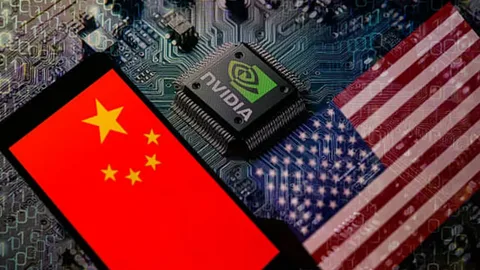
The United States has granted additional Chinese companies approval to purchase Nvidia’s advanced H200 artificial intelligence chips, marking another significant development in the ongoing technology rivalry between Washington and Beijing.
New licensing documents and sources familiar with the matter reveal that telecom equipment manufacturer ZTE, alongside other Chinese technology firms, has secured export approval to acquire high-performance AI processors from Nvidia and AMD.
While the approvals represent progress for several companies, uncertainty still remains over when shipments will begin, as both U.S. export controls and Chinese regulatory reviews continue to influence the process.
More Chinese Companies Receive U.S. AI Chip Export Licenses
The latest approvals expand the number of Chinese businesses allowed to purchase advanced AI hardware under the U.S. export licensing system.
According to the documents, the newly approved companies include:
| Company | Approval Granted | AI Hardware |
|---|---|---|
| ZTE Kangxun Telecom | Approved | Nvidia H200 AI chips |
| Maginfra | Approved | Nvidia H200 AI chips |
| Zhuhai Hengqin Yunxiang Zhisheng Network Technology (Kingsoft subsidiary) | Approved | AMD AI chips comparable to Nvidia H200 |
These companies join a growing list of Chinese firms that have received U.S. permission to acquire advanced AI accelerators despite Washington’s ongoing restrictions on high-end semiconductor exports.
Nvidia H200 Remains at the Center of the U.S.-China AI Battle
Nvidia’s H200 GPU has become one of the world’s most sought-after AI processors.
Designed for training and running large language models, generative AI systems, and enterprise AI workloads, the H200 delivers significantly higher memory capacity and performance than earlier generations.
Because of its advanced capabilities, the chip has become a strategic technology in the intensifying competition between the United States and China over artificial intelligence leadership.
Since 2022, the U.S. government has steadily tightened export restrictions on advanced AI chips, arguing that unrestricted access could strengthen China’s military modernization and advanced computing capabilities.
Approvals Extend Beyond China’s Biggest Internet Giants
The newly approved firms broaden participation in the export licensing program beyond China’s largest technology companies.
Earlier this year, Reuters reported that roughly ten Chinese firms had already received approval to purchase Nvidia H200 chips, including:
- Alibaba
- Tencent
- ByteDance
- JD.com
At the time, however, no deliveries had reportedly been completed because approvals remained subject to additional reviews by authorities in both Washington and Beijing.
The inclusion of ZTE, Maginfra, and Kingsoft’s cloud computing subsidiary signals that the licensing process is gradually expanding to a wider range of Chinese technology companies.
Chinese Cloud Providers Expect AI Chip Deliveries Soon
Sources familiar with the situation say several Chinese cloud service providers have recently informed business partners and customers that they expect access to Nvidia H200 chips in the near future.
That development suggests Chinese authorities may be making progress in reviewing imports that already hold U.S. export approval.
Even after export licenses are issued by Washington, shipments still require compliance with China’s own regulatory procedures, creating an additional layer of uncertainty for technology companies waiting to deploy the hardware.
Nvidia and AMD Remain Silent
Neither Nvidia nor AMD publicly commented on the latest approvals.
Requests for comment also went unanswered by:
- ZTE
- Maginfra
- Kingsoft
- China’s Ministry of Commerce
Meanwhile, the U.S. Bureau of Industry and Security (BIS), the Commerce Department agency responsible for enforcing export controls, had not responded to requests for comment at the time of reporting.
Why the H200 Chip Matters
The Nvidia H200 is among the company’s most powerful AI accelerators and is widely used for:
| AI Application | Purpose |
|---|---|
| Large Language Models | AI training and inference |
| Enterprise AI | Business automation and analytics |
| Generative AI | Chatbots, image generation, coding assistants |
| Cloud Computing | High-performance AI infrastructure |
| Scientific Computing | Large-scale data processing and simulations |
Its computing performance makes it one of the most valuable chips for organizations building advanced AI platforms.
U.S. Balances National Security and Business Interests
Washington’s export policy continues to balance national security concerns with commercial interests.
While the U.S. has imposed strict controls on China’s access to cutting-edge semiconductor technology, the Trump administration has permitted exports of Nvidia’s H200 chips under specific licensing arrangements.
Supporters of the policy argue that allowing carefully regulated sales helps maintain U.S. leadership in AI technology while enabling American chipmakers to continue serving one of the world’s largest technology markets.
Nvidia has consistently advocated for continued access to Chinese customers, describing China as a critical market for its long-term business.
China Continues Investing in Domestic AI Chips
Despite the latest approvals, China continues accelerating investment in locally developed AI processors.
Chinese technology firms have increased funding for domestic semiconductor companies in an effort to reduce dependence on U.S. hardware and build a more self-sufficient AI ecosystem.
As a result, even companies that receive U.S. export licenses may still face shifting regulatory requirements and changing market conditions as Beijing pushes adoption of homegrown alternatives.
What the Latest Approvals Mean
The approval of ZTE Kangxun Telecom, Maginfra, and Kingsoft’s cloud subsidiary marks another sign that the U.S. licensing process for advanced AI chips is slowly expanding despite ongoing geopolitical tensions.
However, obtaining an export license is only one step in a complex process. Actual deliveries will depend on continued regulatory clearance from both the United States and China, meaning companies could still face delays before the powerful AI processors reach their data centers.
For Nvidia and AMD, the approvals offer another opportunity to maintain business relationships in one of the world’s largest AI markets while navigating an increasingly complex landscape of export controls and international technology competition.