Palm Oil Business in Africa (2025–2026): Money Flow, Production System, Opportunities and Risks
The success of most agricultural and agro-processing businesses in Africa is not driven by effort alone. In most cases, it depends heavily on how stable, accessible, and well-structured funding is over time.
Across the continent, many farmers and agro-processors are not failing because opportunities are missing, but because financing is either too expensive, poorly structured, or not aligned with real production cycles.
In recent years, the palm oil sector has become one of the clearest examples of this reality. The difference between small-scale survival and large-scale expansion is usually determined by access to capital, machinery, and understanding of the full production chain.
While many operators still rely on manual methods, more structured players are already using cooperative funding systems, microfinance loans, and mechanized processing to scale production without disrupting cash flow.
At the same time, technology is reshaping agricultural financing. Banks and microfinance institutions now use digital systems to process loans faster, track repayments, and assess risk. In some cases, data-driven and AI-supported models are being used to evaluate farmers based on activity patterns rather than traditional collateral.
This shift is especially important in the palm oil industry, where demand continues to rise faster than supply across Africa.
Africa Palm Oil Industry Overview (2025–2026)
Palm oil production in Africa has evolved beyond farming. It is now a full value chain that includes plantation development, processing, export, industrial use, and emerging biofuel applications.
Key Regional Highlights
- Nigeria remains the largest producer in Africa but still imports heavily due to supply shortages.
- Democratic Republic of Congo (DRC) is emerging as a long-term expansion hub due to large land availability and foreign investment interest.
- Ghana and Côte d’Ivoire continue to face production gaps despite government support programs.
- Cameroon remains active but faces challenges related to land disputes and plantation conflicts.
Nigeria’s Production Gap: The Real Opportunity
Nigeria produces an estimated 1.5 million metric tonnes of palm oil annually, while demand is closer to 2.0 million metric tonnes.
This creates a supply gap of approximately 400,000–500,000 metric tonnes.
This gap is not just a statistic, it represents a massive market opportunity. Any serious investor entering this space is stepping into a system with already guaranteed demand.
This is why palm oil remains one of the most stable agro-investment sectors in West Africa.
Money Flow in the Palm Oil Business
The profitability of palm oil depends heavily on scale and processing method.
Small-Scale Operators
- Earnings: ₦200,000 – ₦300,000 annually
- Challenges: Manual processing, high labour costs, low efficiency
- Limitation: Low scalability and inconsistent output
Semi-Mechanized Operators
- Earnings: ₦1 million+ annually
- Advantage: Better efficiency, improved extraction rate
- Requirement: Access to basic machinery and shared processing facilities
Fully Mechanized Operators
- Earnings: ₦4 million+ annually (depending on scale)
- Advantage: High efficiency, bulk processing, strong market access
- Requirement: Significant capital investment and structured operations
Corporate Level
Large agribusiness companies operate at a completely different scale, generating hundreds of billions of naira annually, driven by export demand and industrial supply chains.
How the Palm Oil Value Chain Works
The palm oil business is not just farming—it is a structured production system:
- Land acquisition and plantation development
- Cultivation and maintenance of palm trees
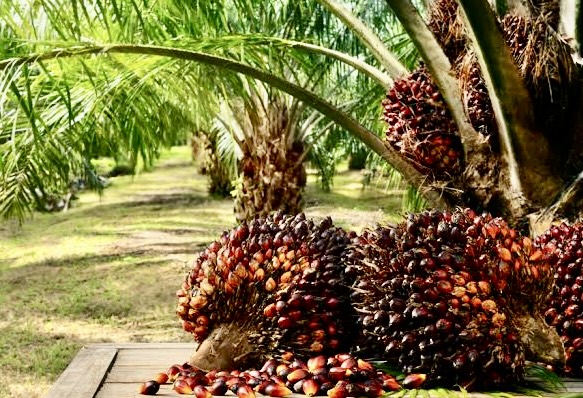
- Harvesting fresh fruit bunches (FFB)
- Processing (manual or mechanized extraction)
- Refining and packaging
- Distribution (local and export markets)
Profitability increases significantly when operators move from manual extraction to mechanized processing, as efficiency and output improve drastically.
Major Risks and Challenges
Despite strong opportunities, the sector has serious challenges:
1. Land Issues
Disputes over land ownership remain common, especially where plantations overlap with community land.
2. Environmental Pressure
Global sustainability standards are increasing pressure on producers to reduce deforestation and adopt responsible farming practices.
3. Financial Constraints
Many small-scale farmers struggle with loan repayment due to poor financial planning and market price fluctuations.
4. Infrastructure Gaps
Poor roads, limited processing facilities, and high transportation costs reduce profitability in rural production zones.
Future Outlook (2026 and Beyond)
The future of palm oil in Africa is closely linked to global demand and energy transitions.
Key Growth Drivers
- Rising global food demand
- Expansion of industrial use cases
- Increasing interest in biofuel production
- Supply gaps in Asia creating new export opportunities
Africa is positioned as a key expansion region due to available land and growing foreign investment interest.
However, producers who adopt modern processing, structured financing, and sustainable practices will have a significant advantage.
Frequently Asked Questions (FAQ)
Is palm oil farming profitable in Nigeria?
Yes. Profitability depends on scale, efficiency, and processing method. Mechanized systems are significantly more profitable than manual operations.
What is the biggest challenge in palm oil production?
The major challenges include funding limitations, land disputes, and outdated processing systems.
How much can a palm oil business make?
Small operators may earn under ₦300,000 annually, while mechanized processors can generate several million naira depending on capacity.
Is there still opportunity in palm oil in 2026?
Yes. The existing supply gap and rising global demand continue to create strong investment opportunities.
Conclusion
Palm oil in Africa is no longer just an agricultural activity. It has become a structured economic system shaped by finance, technology, and global demand.
The key difference between struggling operators and successful investors is no longer land ownership alone, but understanding how the full production and value chain works.
Those who focus on mechanization, financing structure, and scale efficiency are the ones best positioned to benefit from the sector’s long-term growth.