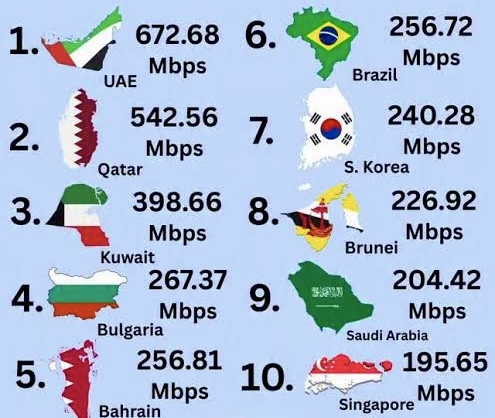
East Asia Internet Speed Rankings (2026): What the Numbers Really Mean for Users, Jobs, and Tech Growth
When people talk about fast internet, they usually just throw out numbers and rankings, but that’s not the full picture. Speed alone doesn’t tell you how a country is actually performing, how people are using the network, or even where the real advantage is. What really matters is how that speed translates into daily life, business growth, remote work, gaming, and even new job opportunities.
Across East Asia, things have moved far beyond basic connectivity. We are now seeing countries competing not just on download speed, but on infrastructure quality, upload performance, 5G strength, and even future technologies already in testing. Some countries look average on paper but are quietly leading in innovation, while others rank high but still face real-world limitations.
East Asia Fixed Broadband Speed Rankings
Looking at the latest data from global testing platforms, East Asia continues to dominate global broadband performance, but each country tells a different story.
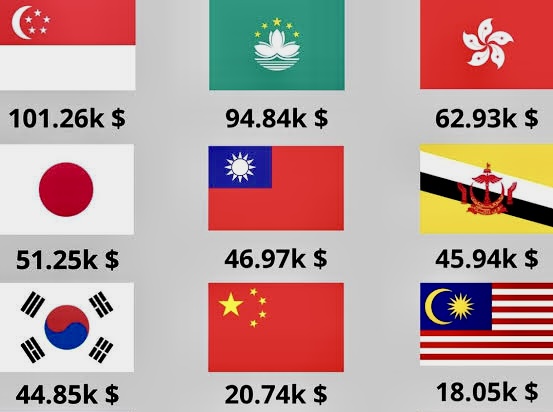
Singapore leads with a median download speed above 400 Mbps, followed closely by Hong Kong and Macau. Taiwan, South Korea, Japan, and China all sit within a strong range between 220 Mbps and 260 Mbps.
At first glance, that looks like a simple ranking, but the deeper insight is this: the gap between countries is not as important as how consistent the speeds are. Some countries maintain stable performance across almost all cities, while others show strong numbers only in major urban areas.
Japan is a perfect example. Even though it ranks lower than expected in median speed, it recently recorded one of the fastest experimental internet speeds ever achieved globally. That tells you the infrastructure potential is there, but everyday usage has not fully caught up.
China also shows a unique pattern where average speeds can look lower due to its massive population, but in major cities, performance can match or exceed top-tier countries.
Mobile and 5G Speed Performance Across the Region
Mobile internet is where things start to shift more clearly.
South Korea stands out as the strongest performer overall, especially in 5G. Its network is not just fast but extremely responsive, which is why it dominates in gaming, streaming, and real-time applications.
Singapore and Taiwan follow closely, offering balanced and reliable mobile performance supported by strong fiber infrastructure. Japan and China, despite their technological strength, show slower average mobile speeds mainly due to rollout strategies and user density.
One surprising development is how countries like Vietnam have managed to outperform larger economies in pure 5G speed. This comes down to deployment strategy, focusing on efficiency and coverage rather than just scale.
The key takeaway here is simple: the fastest network is not always the one with the most users or the biggest economy. It is the one that is planned and deployed properly.
Country-by-Country Breakdown
Singapore: Efficiency Done Right
Singapore remains the benchmark for stable and high-speed internet. Its advantage is not size or population, but how well everything is organized. With full fiber coverage and strong government-backed infrastructure, users enjoy consistent performance across the board.
This directly supports its position as a major hub for fintech, remote work, and digital businesses. Internet reliability here is not a bonus, it is part of the system.
Hong Kong: Density Advantage
Hong Kong benefits heavily from its high-density environment. Because buildings and users are closely packed, deploying fiber networks becomes more efficient and cost-effective.
This allows providers to deliver high speeds without the same level of infrastructure cost seen in larger countries.
South Korea: Built for Real-Time Usage
South Korea’s biggest strength is not just speed, but balance. Its upload speeds are among the best globally, which matters more than most people realize.
For content creators, live streamers, and developers, upload speed is what keeps everything smooth. That is why South Korea leads in gaming culture and real-time digital services.
Japan: High Potential, Slow Rollout
Japan is one of the most interesting cases. It has some of the most advanced research and development in internet technology, yet its everyday speeds do not always reflect that.
The gap comes from gradual rollout and a large number of users still on older connections. However, new ultra-high-speed home internet services are already being introduced, showing where things are heading.
China: Scale Changes Everything
China’s internet performance cannot be judged by averages alone. With over a billion users, congestion naturally affects national statistics.
In major cities, speeds are extremely competitive, and the country is also pushing forward with large-scale 5G and early-stage 6G development. Its biggest strength is scale, and that scale is shaping future global infrastructure trends.
What These Speeds Mean for Real Life
Internet speed is not just about downloads anymore. It affects how people work, earn, and live.
In countries with strong upload speeds and low latency, people can build full careers online, from streaming to remote tech jobs. Businesses can operate globally without physical presence. Even education becomes more flexible and accessible.
On the other hand, countries that focus only on download speed without improving overall network balance may struggle to support advanced digital services.
This is why looking beyond rankings matters.
The Business Side of Internet Speed
Behind all these numbers is a massive industry.
Data centers, undersea cables, and telecom infrastructure are generating billions of dollars across East Asia. Companies are investing heavily in expanding networks, improving reliability, and preparing for future technologies.
This is also creating job opportunities in areas like network engineering, cybersecurity, and cloud infrastructure. For anyone looking into tech-related careers, these regions are becoming strong options.
Key Trends Shaping 2026 and Beyond
Several trends are already clear.
First, upload speed is becoming just as important as download speed. This shift is driven by content creation, AI, and remote work.
Second, hybrid connectivity is rising. Instead of choosing between fiber and 5G, countries are combining both to deliver better coverage and flexibility.
Third, innovation is moving faster than rollout. Some countries already have next-generation technology ready, but it takes time before it becomes widely available.
Frequently Asked Questions
Which country has the fastest internet in East Asia right now?
Singapore currently leads in fixed broadband speed, while South Korea dominates in mobile and 5G performance.
Why does Japan rank lower despite being technologically advanced?
The main reason is slower adoption of newer consumer infrastructure. While the technology exists, many users are still on older systems.
Is 5G better than fiber for home internet?
Not completely. Fiber still offers more stability, but 5G is improving quickly and works well in areas where fiber is limited.
Why are China’s average speeds lower than expected?
Its large population creates network congestion, which affects national averages. In major cities, speeds are much higher.
What matters more, download or upload speed?
Both are important, but upload speed is becoming more valuable for modern internet use like streaming, remote work, and cloud services.
Final Thoughts
East Asia is not just leading in internet speed, it is shaping what the future of connectivity looks like. But the real story is not about who ranks first. It is about how each country is building, scaling, and adapting its network for real-world use.