Richest Countries in Southeast Asia 2026: Full GDP Rankings, Per Capita Insights, Business Opportunities, Jobs, and Real Entry Guide
When you really look at how businesses survive and grow across different parts of the world, one thing always stands out, access to steady money flow and smart financial systems. In Southeast Asia today, that reality is even more visible. Some countries are not just growing fast, they are building systems that allow businesses, investors, and even small startups to operate with structure, support, and long-term vision.
At the same time, not every country in the region operates at the same level. Some dominate because of population and market size, while others lead because of wealth per person and strong financial systems. That difference is where most people get it wrong when they try to understand which country is actually “rich.”
Understanding “Richest” in Southeast Asia
Before going into rankings, it’s important to get this clear.
There are two main ways to measure wealth:
- Total GDP (Nominal): This shows the overall size of a country’s economy. Bigger population usually means bigger GDP.
- GDP Per Capita: This shows how much wealth is available per person. This is what reflects real living standards and personal prosperity.
A country can rank high in one and low in the other. That’s why both must be looked at together.
Southeast Asia’s Largest Economies by Total GDP (2026)
In terms of raw economic power, a few countries clearly dominate the region.
Indonesia
Indonesia remains the largest economy in Southeast Asia with an estimated GDP of over $1.5 trillion. The size comes from its massive population, natural resources, and expanding manufacturing sector. It is the backbone of the region’s economic strength.
Singapore
Despite having a small population, Singapore continues to hold a strong position due to its role as a global financial and trade hub. Its economy is built on high-value services, not population size.
Thailand
Thailand maintains a stable position through tourism, automotive production, and industrial exports. While growth has slowed compared to others, its structure remains solid.
Vietnam
Vietnam is one of the fastest-rising economies in the region. Manufacturing shifts from China, strong exports, and consistent foreign investment have pushed its GDP close to the top tier.
Malaysia
Malaysia sits in a balanced position with strength in electronics, oil, and services. It continues to attract investors looking for stability without extremely high costs.
Philippines
The Philippines is growing steadily, driven by services, remittances, and a young workforce. Its economy is expanding, though infrastructure still needs improvement.
Smaller economies like Cambodia, Laos, Myanmar, Brunei, and Timor-Leste remain far behind in total size.
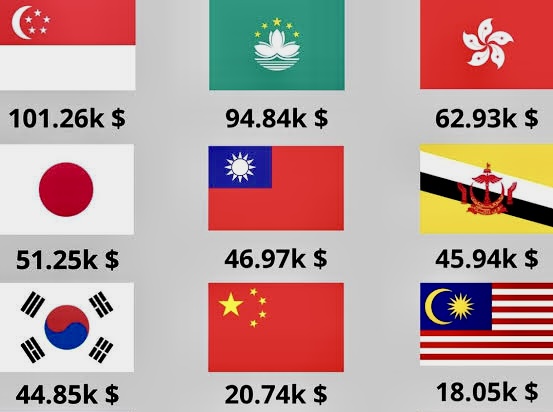
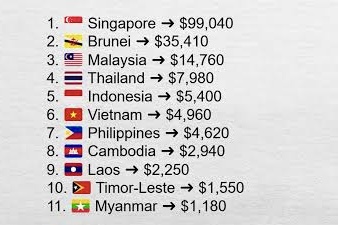
Richest Countries by GDP Per Capita (2026)
This is where the real difference becomes clear.
Singapore
Singapore leads by a very wide margin. With GDP per capita close to or above $100,000, it stands as one of the most advanced economies globally. Strong governance, infrastructure, and business policies make it a top destination.
Brunei
Brunei ranks high due to its oil and gas wealth. The population is small, which makes per-person income very high. However, the economy is heavily dependent on energy.
Malaysia
Malaysia holds a strong middle position. It is more developed than most in the region but still growing. It offers a mix of affordability and opportunity.
Thailand
Thailand has moderate per capita income, supported by tourism and manufacturing.
Indonesia, Vietnam, Philippines
These countries have lower per capita income but higher growth potential. They are still developing but offer strong long-term opportunities due to population and market expansion.
What Is Driving Growth in Southeast Asia
Several key factors are shaping the region in 2026:
- Manufacturing Shift: Many companies are moving production from China to countries like Vietnam and Indonesia.
- Digital Economy Growth: Fintech, e-commerce, and mobile payments are expanding rapidly.
- Tourism Recovery: Thailand, Malaysia, and Indonesia are benefiting strongly.
- Young Population: Countries like the Philippines and Indonesia have a growing workforce.
- Foreign Investment (FDI): Investors are targeting Southeast Asia as a long-term growth zone.
Business Opportunities That Actually Make Sense
Looking at the region from a practical angle, these are the areas where real opportunities exist:
Singapore – High-Level Business and Tech
Best for finance, tech startups, logistics, and international business headquarters. The system is structured, but costs are high.
Vietnam – Manufacturing and Export
Ideal for production, factories, and export-based businesses. Lower costs and strong government support make it attractive.
Indonesia – Large Consumer Market
If the goal is scale and market size, Indonesia stands out. Consumer goods, fintech, and logistics perform well here.
Malaysia – Balanced Entry Point
Malaysia offers a middle ground. It is easier to enter compared to Singapore but still has strong infrastructure.
Philippines – Services and Remote Work
Strong in outsourcing, customer service, and digital roles. English-speaking population gives it an advantage.
Jobs and Career Opportunities
For those looking at employment, the approach matters.
- High-income roles: Singapore and Malaysia (finance, tech, management)
- Mid-level roles: Vietnam, Indonesia (manufacturing, operations)
- Service-based roles: Philippines (BPO, remote work)
Competition is increasing, especially in skilled roles. Digital and technical skills are in high demand across all countries.
Practical Guide: How to Enter the Market
Starting or expanding into Southeast Asia is not complicated if done correctly.
1. Understand the Regulations
Each country has its own rules. Singapore is the easiest for foreign ownership, while others may require partnerships.
2. Start Small
Testing the market through exports or partnerships reduces risk before full expansion.
3. Use Local Support
Working with local partners or Employer of Record services helps with compliance, hiring, and operations.
4. Focus on Demand
Do not assume. Study what people actually need in that country.
5. Plan for Risks
Currency changes, policy shifts, and infrastructure gaps can affect operations.
Important Realities Most People Ignore
- High GDP does not mean everyone is rich.
- Some countries rely heavily on one sector (like oil in Brunei).
- Rapid growth also brings pressure on housing, jobs, and infrastructure.
- Not every opportunity is profitable without proper planning.
Understanding these points helps avoid costly mistakes.
Frequently Asked Questions (FAQs)
Which country is the richest in Southeast Asia in 2026?
It depends on the measure. Indonesia leads in total GDP, while Singapore leads in GDP per capita.
Is Southeast Asia a good place to start a business?
Yes, especially for manufacturing, digital services, and trade. However, success depends on strategy and market understanding.
Which country is best for foreign investors?
Singapore is the easiest, while Vietnam and Indonesia offer higher growth potential at lower costs.
Are jobs easy to get in Southeast Asia?
Not exactly. Skilled roles are competitive. Having in-demand skills increases chances significantly.
What is the fastest-growing economy in the region?
Vietnam is currently one of the fastest-growing, followed closely by Indonesia and the Philippines.
Final Thoughts
There is no single country that is perfect for everything. Each one has its strengths, weaknesses, and opportunities. What matters is understanding where your goals fit best.
Some people wait too long trying to figure out the perfect move. In reality, most progress comes from starting small, learning the system, and adjusting along the way.