Africa’s Biggest Telecom Operators Are Building AI Models in African Languages, Says New GSMA Report
The Global System for Mobile Communications Association (GSMA) has revealed that six of Africa’s largest mobile network operators are actively developing artificial intelligence language models trained on African languages, marking one of the continent’s most ambitious AI projects to date.
According to the Mobile Economy Africa 2026 report released by GSMA on June 17, 2026, the initiative seeks to bridge a major gap in the global AI ecosystem, where most mainstream artificial intelligence systems remain heavily dependent on English and other high-resource languages.
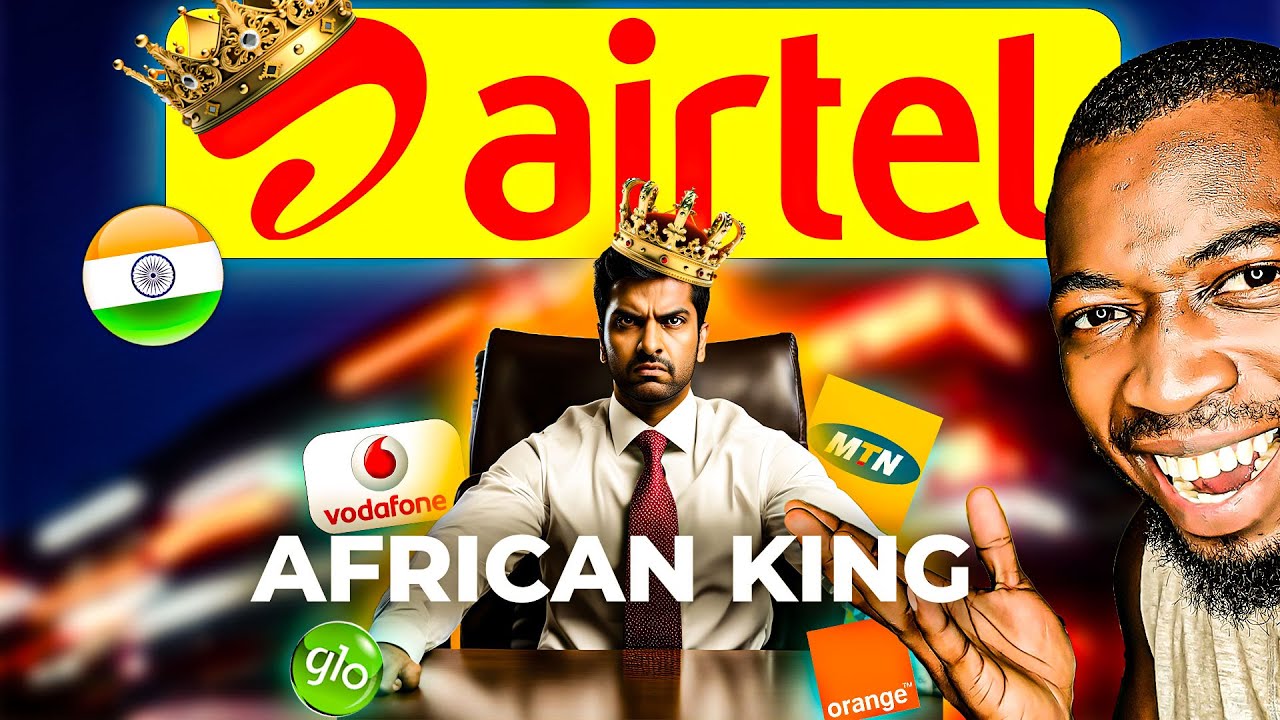
The project, known as the G6 initiative, brings together some of Africa’s leading telecom operators, including Airtel Africa, Axian Telecom, Ethio Telecom, MTN Group, Orange, and Vodacom, alongside researchers, startups, and civil society organizations.
Africa’s AI Language Problem Could Also Be Its Biggest Opportunity
Africa is home to more than 2,000 languages, accounting for over 30% of the world’s languages. However, most large language models (LLMs), including many popular AI chatbots and voice assistants, are primarily trained using English and a handful of other global languages.
This imbalance has left hundreds of millions of Africans unable to fully access AI-powered tools in their native languages, creating a significant digital divide across the continent.
The G6 initiative was first announced during Mobile World Congress (MWC) Kigali 2025 under the slogan:
“AI language models in Africa, by Africa, for Africa.”
The coalition aims to tackle four critical barriers slowing African AI development:
| Key Challenge | Description |
|---|---|
| Data | Limited availability of African language datasets |
| Compute | Lack of affordable AI computing infrastructure |
| Talent | Shortage of specialized AI professionals |
| Policy | Regulatory and governance challenges |
Africa’s First Open Swahili Reasoning AI Model Is Already Operational
One of the project’s first major milestones was unveiled at MWC Barcelona 2026, where developers showcased the continent’s first open Swahili reasoning model.
Developed in partnership with MeetKai Zambia, the AI system can understand, search, browse, and translate online content in Swahili. The model is expected to serve as a blueprint for future AI systems covering hundreds of other African languages.
The successful deployment demonstrates that locally trained AI systems can effectively serve African users while preserving linguistic diversity.
Billions of Dollars Could Be at Stake
According to the GSMA report, closing Africa’s AI language gap extends far beyond cultural inclusion.
The organization estimates that widespread AI adoption across local languages could dramatically expand access to digital services for hundreds of millions of currently underserved users.
GSMA projects that mobile technology’s contribution to Africa’s economy could rise from approximately $240 billion in 2025 to around $290 billion by 2030, with AI expected to play a significant role in driving that growth.
Africa’s Mobile Economy Growth Forecast
| Year | Mobile Economy Contribution |
|---|---|
| 2025 | $240 billion |
| 2030 (Projected) | $290 billion |
New AI Infrastructure Is Emerging Across Africa
The report also highlights growing investment in AI infrastructure throughout the continent.
Cassava Technologies recently launched an AI factory in South Africa, providing GPU computing resources and AI services to developers, businesses, and telecom operators across Africa.
The company is also deploying AI-powered network management systems built using Nvidia Blueprints, enabling operators to automate and optimize telecommunications infrastructure across regions with diverse equipment and inconsistent power supplies.
African Universities Are Helping Build Critical AI Datasets
One of the biggest obstacles to African AI development has been the lack of quality training data.
To address this challenge, Google’s WAXAL project, launched in February 2026 after three years of research, has created one of Africa’s largest open speech datasets.
The initiative involved collaboration with several leading African universities, including:
- Makerere University
- University of Ghana
- Addis Ababa University
The dataset contains speech samples from 27 Sub-Saharan African languages spoken by more than 100 million people, creating valuable resources for speech recognition and voice AI systems.
Key Statistics From Google’s WAXAL Project
| Metric | Figure |
|---|---|
| Development period | 3 years |
| African languages covered | 27 |
| Speakers represented | Over 100 million |
| Primary use | Voice AI and speech recognition |
MTN and Other Operators Are Investing Directly in AI Startups
Africa’s telecom companies are increasingly moving beyond simply consuming AI services and are now investing directly in the infrastructure powering them.
In April 2026, MTN Group participated in a $45 million funding round for ODC, an AI telecom startup developing network technologies specifically designed for Africa’s unique telecommunications environment.
The investment signals a strategic shift, with operators seeking greater control over the technologies expected to shape network performance, operating costs, and AI deployment over the next decade.
Multiple Global Players Are Joining Africa’s AI Language Race
The GSMA-led initiative is part of a broader movement to expand AI capabilities across African languages.
Several major projects are already underway:
| Organization | Initiative |
|---|---|
| Orange | Partnership with OpenAI and Meta to develop African language AI models |
| Investment in AI tools supporting more than 40 African languages | |
| Gates Foundation | $5 million funding for Masakhane’s African language AI research |
| GSMA and Zindi | African Trust & Safety LLM Challenge |
Notably, Orange began collaborating with OpenAI and Meta in 2024 to develop AI systems for languages including Wolof, Pulaar, and eventually Swahili.
Meanwhile, the Masakhane research collective received a $5 million grant from the Gates Foundation to accelerate African language model development.
Africa’s AI Future May Depend on Its Languages
As artificial intelligence becomes increasingly embedded in everyday life, language accessibility is emerging as one of the continent’s biggest technological and economic opportunities.
The GSMA’s latest findings suggest that Africa’s leading telecom operators are no longer waiting for global technology companies to solve the problem. Instead, they are investing directly in building an AI ecosystem designed specifically for African users, African languages, and African markets.
If successful, the initiative could reshape not only how Africans interact with artificial intelligence, but also how the continent participates in the next generation of the global digital economy.