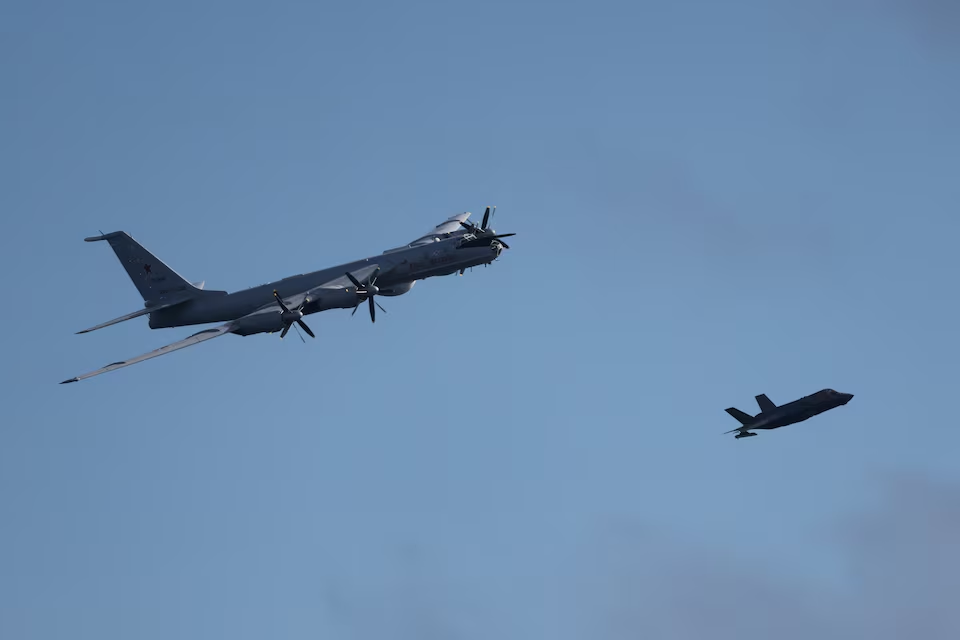
UK Condemns Russian Military Aircraft for Flying Close to HMS Prince of Wales in Norwegian Sea
Britain has accused Russia of carrying out an “unsafe and unprofessional” military maneuver after a Russian patrol aircraft repeatedly approached the UK’s flagship aircraft carrier, HMS Prince of Wales, while it was operating in the Norwegian Sea under NATO command.
The incident, which took place on July 2, has added to growing tensions between NATO and Russia in northern European waters and comes just ahead of a major NATO meeting scheduled to take place in Ankara on Tuesday, where member states are expected to discuss increased military support for Ukraine.
Russian Aircraft Flew Unusually Close to British Carrier Group
According to the UK Ministry of Defence, a Russian Tupolev Tu-142 “Bear-F” maritime patrol aircraft approached the HMS Prince of Wales carrier strike group multiple times while it was operating northwest of Norway.
British officials said the Russian aircraft flew at a low altitude and passed “unnecessarily close” to the carrier strike group, raising concerns about operational safety and the risk of miscalculation between NATO and Russian forces.
The HMS Prince of Wales is currently leading a British-led carrier strike group deployed in the High North region as part of NATO’s efforts to strengthen security across the North Atlantic amid continued concerns over Russian military activities.
Royal Navy F-35 Fighter Jets Scrambled to Intercept Russian Plane
The UK military confirmed that two Royal Navy F-35B Lightning fighter jets were immediately launched from HMS Prince of Wales to intercept and monitor the Russian aircraft.
British authorities said the fighter jets escorted the Russian plane until it departed the operational area.
Officials also revealed that the Russian Bear-F aircraft deployed several sonobuoys close to the carrier group during the encounter. Sonobuoys are specialized devices used by military forces to detect and track submarines underwater.
The UK government described the action as both unsafe and unnecessary.
NATO Increases Focus on Arctic and North Atlantic Security
The latest incident highlights the growing strategic importance of the Arctic, Norwegian Sea, and North Atlantic regions, where NATO and Russia have increasingly operated in close proximity.
Britain’s carrier strike group is currently operating under NATO command in the High North as part of a broader mission aimed at strengthening allied military presence and deterring potential threats in the region.
Military analysts have repeatedly warned that close encounters between NATO and Russian forces increase the possibility of accidents or unintended escalation.
Britain Continues Monitoring Russian Naval Activities
The UK government has stepped up military surveillance activities over the past year amid growing concerns about Russian naval operations near British waters and critical infrastructure.
Earlier in 2026, Britain deployed military assets to help protect undersea communication cables and energy pipelines after reports of increased Russian submarine activity around UK territorial waters.
Meanwhile, UK defence minister Dan Jarvis recently visited British forces aboard HMS Prince of Wales during operations near Iceland, underlining the government’s commitment to maintaining a strong military presence across the North Atlantic.
Rising Tensions Ahead of NATO Meeting
The incident comes at a sensitive moment for the NATO alliance, as member countries prepare to meet in Ankara to discuss security challenges posed by Russia and additional military assistance packages for Ukraine in 2026.
With military activities intensifying across northern Europe and the Arctic region, encounters between Russian and NATO forces continue to draw international attention due to the potential risks of escalation.