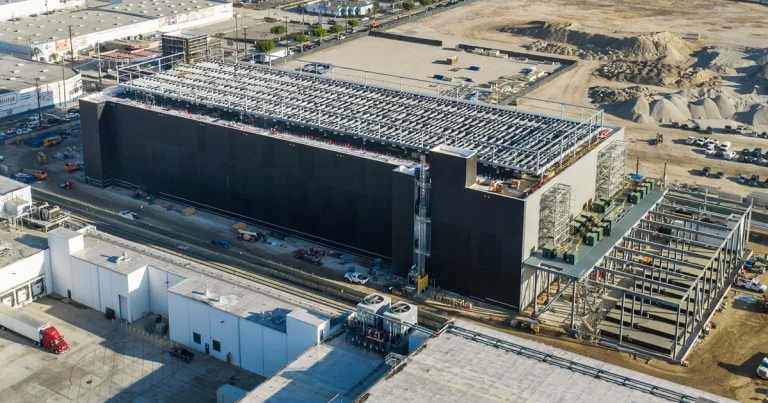
Big Tech’s AI Data Centers Are Driving Up Electricity Costs for U.S. Manufacturers
The rapid expansion of artificial intelligence (AI) data centers across the United States is creating an unexpected challenge for traditional manufacturers. As tech companies continue building massive facilities to power AI services and cloud computing, electricity demand is rising sharply, driving up energy costs for factories throughout America’s industrial heartland.
Manufacturers in states such as Ohio and Pennsylvania are already feeling the financial impact, with some companies reporting electricity bills that have nearly doubled over the past year. Industry leaders warn that the trend could weaken domestic manufacturing unless power infrastructure expands quickly enough to meet growing demand.
Ohio Manufacturer Sees Electricity Costs Nearly Double
One company feeling the pressure is Belden Brick Company, a 141-year-old brick manufacturer based in Sugarcreek, Ohio.
The company, known for supplying bricks used in historic landmarks such as the Texas Alamo and Notre Dame University, experienced a dramatic rise in electricity expenses during the past year.
Its monthly electricity capacity charge increased from approximately $1,600 to $12,000, contributing to an overall 90% increase in power costs.
Company President Brad Belden said the sharp increase has become one of the biggest financial challenges facing the business.
Although Belden Brick raised product prices by around 4%, the company says the increase has not been enough to offset higher electricity expenses, leading to shrinking profit margins.
If power costs continue climbing, Belden believes many manufacturers could soon reach the limit of what they can absorb through higher prices or operational savings.
AI Data Centers Are Increasing Pressure on the Power Grid
The main driver behind the surge in electricity costs is the explosive growth of AI-focused data centers.
Large technology companies continue investing billions of dollars into facilities that support artificial intelligence, cloud services, and machine learning workloads. These data centers consume enormous amounts of electricity—sometimes as much as an entire mid-sized city.
As demand rises faster than new power generation can be added, electricity providers are forced to purchase additional capacity to maintain grid reliability.
That added cost is eventually passed on to customers, especially industrial users that consume large amounts of electricity.
Capacity Prices Have Increased by More Than 1,000%
The impact is especially visible in the service area managed by PJM Interconnection, the largest regional power grid operator in the United States.
PJM supplies electricity across 13 states stretching from New Jersey to Illinois and Tennessee, covering many of America’s largest manufacturing regions.
Capacity prices within the PJM market have climbed dramatically.
| Electricity Capacity Market | 2024 | Current | Increase |
|---|---|---|---|
| Price per megawatt-day | $28.92 | $329.17 | 1,038% |
The increase reflects rapidly growing electricity demand, largely fueled by the expansion of AI data centers while new power generation has struggled to keep pace.
Industrial Electricity Prices Are Rising Faster Than Residential Bills
Manufacturers are seeing much steeper electricity price increases than residential customers in several states.
Recent figures show:
| State | Industrial Electricity Price Increase | Residential Increase |
|---|---|---|
| Pennsylvania | 31% | 14% |
| Ohio | 26% | 9% |
| U.S. National Average (Industrial) | 7% | — |
For many manufacturers operating on thin profit margins, even small increases in electricity costs can significantly affect profitability.
Manufacturers Explore Alternative Energy Options
Several industrial companies are already changing how they operate to reduce rising electricity expenses.
Plaskolite, a plastics manufacturer with facilities in Ohio and Pennsylvania, reported that its annual capacity charges increased from around $200,000 to $1.2 million in just one year.
The company is now evaluating whether switching part of its operations to direct natural gas could lower long-term costs.
Meanwhile, Tosoh SMD, an electronics materials manufacturer based in Grove City, Ohio, is considering shifting more production to overnight hours when electricity rates are lower.
Manufacturers say they are becoming increasingly creative in managing energy costs while trying to remain competitive.
New Regulations Could Create Additional Challenges
Federal and state regulators are also considering new policies designed to ensure data centers contribute more toward maintaining the electric grid.
However, manufacturers are concerned that some proposed rules could unintentionally affect factories because both industries are often grouped under similar electricity-rate classifications.
One proposal under consideration would require companies with their own on-site power generation to pay additional transmission charges, even when using self-generated electricity.
Manufacturing groups argue that factories should not be treated the same as AI data centers, whose energy demands are substantially larger.
Several organizations are urging regulators to provide exemptions for traditional industrial businesses.
Data Center Growth Sparks Debate Over America’s Energy Future
Technology industry representatives acknowledge that AI data centers are increasing electricity demand but argue they are not the only reason costs are rising.
They point to aging power plants, limited transmission infrastructure, and years of underinvestment in the electric grid as additional factors contributing to higher prices.
Supporters also argue that the rapid growth of AI infrastructure is encouraging long-overdue investment in America’s electricity network, which could benefit consumers and businesses over the long term.
Still, manufacturers warn that the transition period could be difficult if energy costs continue rising faster than businesses can absorb.
Manufacturing Faces a New Cost Challenge
As AI continues reshaping the technology industry, its effects are spreading far beyond Silicon Valley.
Across America’s manufacturing regions, companies are now facing one of their biggest operational challenges in years: keeping electricity costs under control while remaining competitive.
Without faster expansion of power generation and grid infrastructure, manufacturers fear rising energy bills could slow production, reduce investment, and place additional pressure on businesses already operating with tight margins.
For now, many factories are responding by raising prices, adjusting production schedules, investing in alternative energy sources, and searching for new ways to reduce dependence on an increasingly strained power grid.