Nigeria-China Technology Partnership: Scholars Push for Skills Transfer and Local Manufacturing
Scholars at Modibbo Adama University (MAU), Yola, have called for a stronger Nigeria-China technology partnership that prioritises skills development, knowledge sharing and technology transfer to boost local manufacturing.
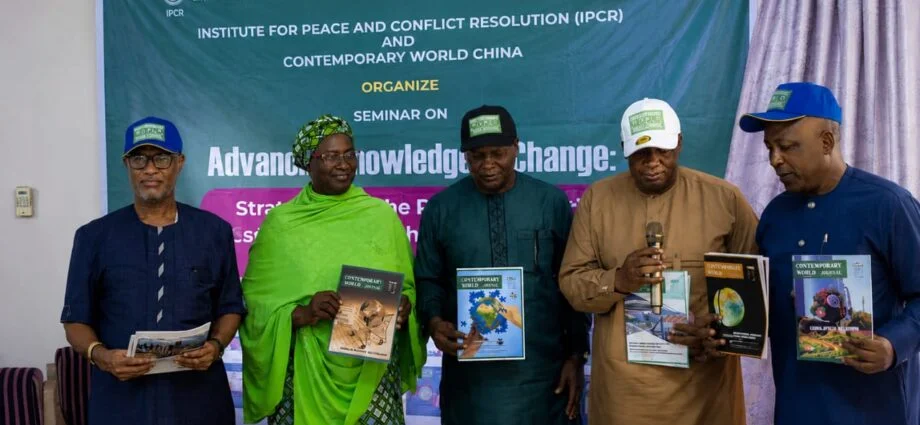
The call was made during a seminar in Yola organised by the Institute for Peace and Conflict Resolution (IPCR) in partnership with Contemporary World Nigeria magazine.
Themed “Bridging Africa-China Dialogue Through Scholarly Exchange,” the event formed part of IPCR’s Advancing Knowledge Exchange Seminar Series across Africa and brought together academics, journalists and civil society representatives.
MAU Scholar Calls for Deeper Academic and Research Cooperation
The Deputy Vice-Chancellor (Academics) of MAU, Prof. Iliya Audu, praised the initiative, saying stronger academic exchanges could help African scholars contribute to solutions to major global challenges.
He highlighted areas including climate change, food security and conflict, stressing that scholarly engagement should go beyond discussions and encourage practical knowledge sharing.
Delivering the keynote address, Dr Ubale Jibrin, an Assistant Professor of International Relations, examined the potential for stronger research cooperation between African and Chinese academics.
Jibrin described “knowledge diplomacy” as an important tool for deepening Africa-China relations through academic exchanges, innovation and the movement of researchers and students.
According to him, partnerships should support joint research and higher education initiatives focused on pressing challenges such as public health, food security and climate change.
He also argued that African institutions must become active producers of knowledge rather than remaining dependent on foreign expertise.
Experts Question Nigeria’s Approach to Technology Transfer
While several speakers highlighted the opportunities offered by closer cooperation with China, Prof. Abraham Okolo, a former Deputy Vice-Chancellor of MAU, raised concerns about the way Nigeria approaches technology transfer.
Okolo argued that Nigeria must develop its own technological capacity through skills acquisition, research and industrialisation instead of relying heavily on foreign countries to provide solutions.
He called for the establishment of practical training centres across Nigeria’s geopolitical zones where graduates could acquire technical skills and move from being consumers of technology to becoming producers.
He also proposed sending Nigerian graduates to China for short-term technical training before bringing them back to apply their skills within the Nigerian economy.
Scholars Want China to Support Local Production
Dr Madi Abba, Head of the Department of Political Science, said China’s engagement with Africa had already produced visible development benefits.
He urged Nigeria to negotiate partnerships that would deliver technology and knowledge transfer, particularly in sectors where the country’s large consumer market could support domestic manufacturing.
Abba said Nigerians should study China’s development experience while negotiating agreements that promote technology acquisition, skills development and local production.
He also called for China to establish skills-training centres across Nigeria’s geopolitical zones to give young Nigerians access to practical technical education.
According to him, addressing graduate unemployment must remain a priority because prolonged unemployment could contribute to wider social instability.
‘Strategic Partnerships’ Needed to Bridge Africa-China Gap
Dr Jamila Suleiman, Head of the Adamawa State Peace Commission, urged African scholars and policymakers not to allow the power imbalance between Africa and China to prevent meaningful engagement.
She said the focus should instead be on building strategic relationships that create opportunities for both sides.
The discussion reflects a growing debate over how Nigeria can get more value from its international partnerships by ensuring that major agreements contribute not only to infrastructure development but also to domestic skills, research and industrial capacity.
IPCR Calls for More Strategic Foreign Relations
Representing the Director-General of IPCR, Dr Joseph Ochogwu, Dr Olalekan Babatunde, Coordinator, Editorial, Contemporary World Nigeria magazine, stressed the importance of strategic approaches to Nigeria’s bilateral and multilateral relationships.
He said Nigeria needs to maximise the benefits of its international partnerships across different sectors while ensuring that such relationships support the country’s long-term development goals.
Babatunde explained that Contemporary World Nigeria magazine was established to encourage scholarly dialogue involving African, Chinese and international researchers.
The quarterly publication, launched in Abuja in 2022, accepts research contributions of about 3,000 words, with published articles attracting honoraria after peer review.
He encouraged Nigerian scholars to submit research that offers practical solutions to challenges such as climate change, food security, public health, insecurity and youth unemployment.
The seminar ultimately placed technology transfer, technical training and knowledge exchange at the centre of discussions about Nigeria-China relations, with participants stressing that stronger partnerships should translate into greater local expertise, manufacturing capacity and opportunities for young Nigerians.