British Pound Ends Seven-Day Winning Streak as U.S. Dollar Rebounds After Weak Jobs Report
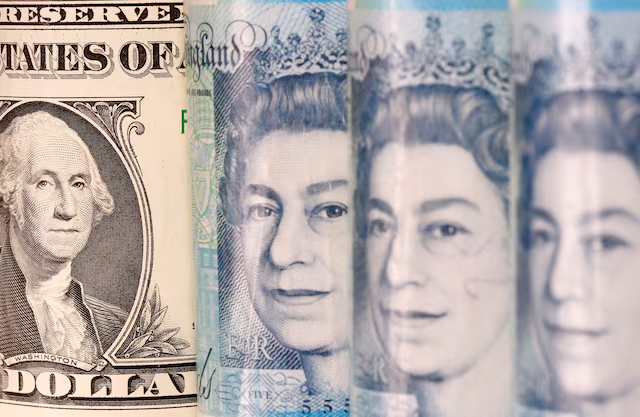
The British pound slipped against the U.S. dollar on Monday, ending a seven-day rally as investors returned to the greenback following last week’s sharp selloff triggered by weaker-than-expected U.S. employment data.
Sterling fell 0.1% to trade at $1.3338, while remaining largely unchanged against the euro at 0.8055 pounds per euro. The decline comes after the pound recorded its strongest weekly performance in three months, gaining 1.1% against the U.S. currency last week.
Weak U.S. Jobs Data Continues to Shape Currency Markets
Currency markets remain focused on the latest U.S. labour market figures, which showed that job creation in June came in significantly below expectations. Revisions to payroll data for April and May also pointed to a softer employment picture, prompting investors to reduce expectations that the U.S. Federal Reserve could resume interest rate hikes in the near term.
The disappointing employment figures triggered a broad selloff in the dollar last week, allowing major currencies, including the British pound, to post strong gains. However, traders began buying back the U.S. currency on Monday as markets reassessed the outlook for global interest rates.
| Currency Performance | Latest Level |
|---|---|
| GBP/USD | $1.3338 |
| GBP/EUR | 0.8055 |
| Pound Weekly Gain vs Dollar | +1.1% |
Falling Oil Prices Ease Pressure on Central Banks
Another major factor influencing market sentiment has been the recent decline in global oil prices, which have moved back toward the $70-per-barrel mark.
The drop in energy prices has reduced inflation concerns and lowered expectations that central banks, including the Bank of England, will need to continue raising borrowing costs aggressively.
Financial markets are now pricing in roughly a 70% probability that the Bank of England will implement only one additional interest rate increase this year. Just weeks ago, investors had been expecting at least one rate hike, with a strong possibility of a second increase.
Despite easing market expectations, Bank of England Governor Andrew Bailey recently stated that policymakers are not yet in a position to consider interest rate cuts.
UK Inflation Pressures Remain Persistent
Fresh survey data from the Bank of England highlighted that inflationary pressures within the UK economy remain stubborn.
The survey showed that British businesses expect prices to rise by 4.1% over the next year, up from 4.0% in the previous month and marking the highest reading since early 2024.
The findings suggest that the impact of previous energy price shocks continues to affect corporate pricing decisions, creating challenges for policymakers attempting to bring inflation back to target levels.
Political Uncertainty Adds Pressure to Sterling
Political developments in the United Kingdom also remained a major focus for investors.
With Prime Minister Keir Starmer preparing to step down, attention has shifted to the leadership transition process and the selection of the country’s next finance minister.
Current frontrunner Andy Burnham has yet to announce who he would appoint as Chancellor, creating uncertainty among investors concerned about Britain’s fiscal outlook.
Online prediction markets currently assign former Energy Secretary Ed Miliband a 55% probability of becoming finance minister. Miliband is widely regarded as favouring more expansionary government spending policies, raising concerns among some market participants about the future direction of UK fiscal policy.
Only a few weeks ago, former Health Secretary Wes Streeting was considered the leading candidate for the position, highlighting how quickly political expectations have shifted.
The combination of political uncertainty, changing interest rate expectations, and ongoing inflation concerns is likely to keep the British pound under pressure in the coming weeks as investors await further economic and political developments.