
MTN Adds AI-Powered Job Board to Skills Academy Across 11 African Markets
MTN has expanded its Skills Academy with a new job board designed to help young people move from digital training into employment.
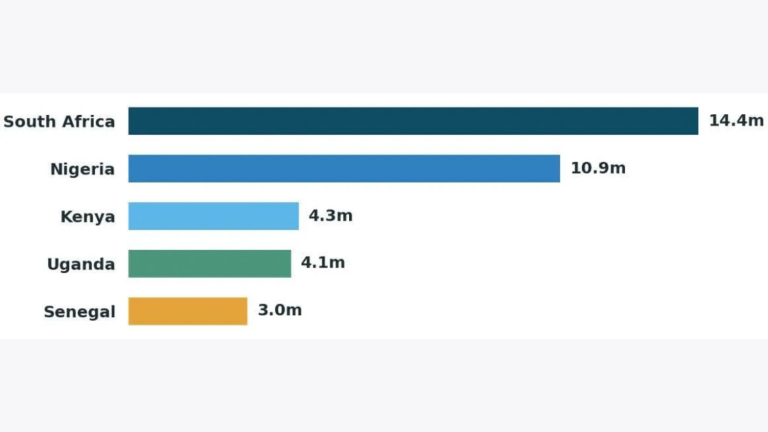
The telecommunications company said the platform has recorded 526,000 enrolments since its launch in 2022, with 192,000 learners completing at least one course. The new feature is aimed at helping those who complete their training discover relevant employment opportunities.
The job board was launched on August 12, 2026, to coincide with International Youth Day. It is available across all 11 African markets where MTN’s Skills Academy currently operates and is built directly into the existing Skills Academy platform.
How MTN’s New Job Board Works
The job board uses a learner’s skills, location and career interests to recommend potentially suitable vacancies. Users can also search for available positions, filter listings and monitor their applications as they progress through stages such as interviews and offers.
One of its notable features is the connection between job searches and training. When a learner lacks a skill required for a particular position, the platform can direct them to relevant free courses available through the Skills Academy.
That creates a direct path between identifying a career opportunity and gaining the skills needed to pursue it. Instead of simply showing users jobs they may not qualify for, the platform can point them towards training that could help close the gap.
MTN describes the job board as AI-enabled, although the company has not provided details about the specific artificial intelligence technology behind its recommendations or how its matching system works.
Skills Academy Faces a Bigger Challenge Beyond Enrolment
MTN’s enrolment figures show both the reach of the Skills Academy and the challenge that remains.
Of the 526,000 enrolments recorded since 2022, 192,000 resulted in course completions. That puts the completion rate at roughly 36%.
The platform has also recorded 1,122 completed specialisations, which involve multiple courses and represent a deeper level of training.
The new job board could give learners a stronger reason to complete their courses by making the connection between training and actual employment more visible. Someone who sees a specific job they could qualify for after completing additional training may have more incentive to finish than someone simply browsing a catalogue of courses.
Whether that happens will depend on how effectively the new feature influences learner behaviour. MTN has access to the data needed to determine whether job opportunities lead to higher completion rates over time.
Employers Will Determine How Useful the Platform Becomes
The availability of jobs will ultimately be just as important as the technology behind the job board.
MTN has not disclosed how many vacancies are currently available, how many employers are contributing positions or how broad the participating employer network is. It is also unclear how much of the job supply comes from MTN, its partners or independent employers.
Those details will be important in determining whether the feature develops into a genuine employment marketplace or remains primarily a job directory attached to a training platform.
MTN has pointed to an International Finance Corporation estimate that sub-Saharan Africa will require more than 230 million jobs involving digital skills by 2030. With more than 60% of the region’s population under the age of 25, the company sees a large potential audience for digital training and employment services.
“Young people start from different circumstances, but they share the need for relevant skills and clearer routes to opportunity,” said Marina Madale, MTN Group executive for sustainability and shared value.
The cost of accessing the service could also influence its impact. MTN has not stated whether users on its network will be able to access the job board without using their regular data allowance.
For young people in markets where internet costs can limit access to online education and employment opportunities, that could become an important factor in how widely the service is used.