

Plex2Shell Explained: Hackers Target Home Media Servers for Crypto Mining and Proxy Backdoors
Home media servers are becoming an increasingly important part of everyday digital life, allowing people to organise and stream their personal media libraries across devices. However, leaving a media server vulnerable or exposed to the internet can create security risks that are easy to overlook.
Hackers began exploiting a chain of four Plex Media Server vulnerabilities nicknamed Plex2Shell on October 17, 2026, one day after technical details and a proof-of-concept exploit became public on October 16.
When chained together, the vulnerabilities allow an unauthenticated attacker to achieve remote code execution on a vulnerable server.
The vendor had released a fix well before the reported attacks. Plex Media Server version 1.43.3.10861, released on August 3, 2026, addressed the chain following a private disclosure by researcher Zach Main on July 27.
Observed attacks reportedly used shell scripts to download malicious payloads, including an XMRig cryptocurrency miner and a Linux reverse proxy.
The incident highlights an important cybersecurity lesson for home users and server administrators: even a device primarily used for entertainment can become a target when it runs vulnerable software and is accessible to attackers.
What Is the Plex2Shell Vulnerability?
Plex2Shell is the name given to a chain of Plex Media Server security flaws that can be combined to achieve remote code execution.
Remote code execution, commonly abbreviated as RCE, occurs when an attacker can cause a vulnerable system to run code of their choosing. Depending on the system’s configuration and the privileges available, this can allow malicious software to run, consume computing resources or establish a foothold for further activity.
The concern with Plex2Shell is that the individual vulnerabilities work together.
A flaw that initially allows a server to make an unexpected request may not, by itself, provide complete control of the system. However, if that flaw can be combined with weaknesses involving authentication tokens, plugin functions and file writing, the overall chain can become much more dangerous.
The supplied reporting identifies four main vulnerabilities in the chain and a fifth flaw disclosed alongside them.
The case also demonstrates why assessing vulnerabilities individually can sometimes underestimate the risk. A chain of flaws can create an attack path that is more serious than the score of any single component suggests.
The Four Main Plex2Shell Vulnerabilities Explained
The reported Plex2Shell chain involves four CVEs that work in sequence.
CVE-2026-96652: Server-Side Request Forgery
The first flaw, CVE-2026-96652, has a CVSS score of 5.3.
It is a server-side request forgery vulnerability affecting the player timeline endpoint. The issue allows an attacker to make the server send requests to destinations selected by the attacker.
Server-side request forgery, commonly known as SSRF, occurs when an application can be manipulated into making requests it was not intended to make.
This can be dangerous because a server may have access to network resources that are not directly available to an outside user.
Within the Plex2Shell chain, this weakness provides an initial step towards abusing additional functionality.
CVE-2026-96654: Abuse of the searchOne Endpoint
The second flaw, CVE-2026-96654, has a CVSS score of 6.9.
According to the supplied reporting, it abuses the searchOne endpoint to call functions belonging to other plugins and obtain the owner’s administrative token.
Authentication tokens can act as proof that a user or application has already been authenticated. If an attacker obtains a token with elevated privileges, the attacker may be able to perform actions that would otherwise require authorised access.
This is why applications must carefully control which functions can be called and how sensitive tokens are handled.
CVE-2026-96655: Arbitrary Requests Through the Transcoder Path
The third flaw, CVE-2026-96655, has a CVSS score of 5.3.
It allows a holder of the owner’s token to request arbitrary addresses through the transcoder path, according to the supplied information.
Within the reported exploit chain, this behaviour helps the attacker fetch a malicious payload.
The flaw demonstrates how an authentication token obtained through one weakness can make a separate part of an application more dangerous.
CVE-2026-96656: Writing and Executing a Malicious File
The fourth flaw, CVE-2026-96656, has a CVSS score of 8.6.
It allows a file to be written to an attacker-chosen location in the Codecs directory and then executed.
This is the final stage that turns the earlier weaknesses into a route for remote code execution.
Once an attacker can cause malicious code to be placed in an executable location and run, the consequences may include cryptocurrency mining, proxy activity or other malicious operations permitted by the compromised environment.
A fifth vulnerability, CVE-2026-96651, with a CVSS score of 7.1, was disclosed alongside the other flaws.
How Hackers Are Using Plex2Shell in Real Attacks
The reported attacks involved shell scripts that downloaded malicious payloads using tools such as wget or curl.
Two payloads stood out in the supplied reporting.
The first was an XMRig cryptocurrency miner labelled mylovelyminer.
The second was a Linux reverse proxy named myawesomeproxy, which displayed a notice saying that running it meant agreeing to outside use of the system’s internet traffic.
These payloads illustrate two different ways a compromised home server can be abused.
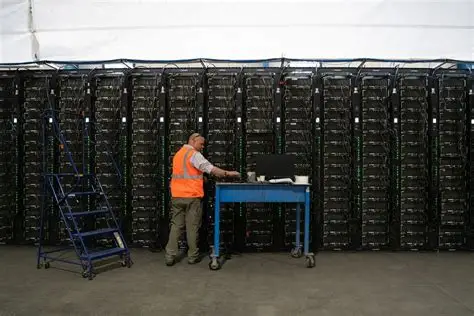
Cryptocurrency mining
Cryptocurrency mining software can use a computer’s processing resources to carry out mining operations.
When criminals install mining software on a system without the owner’s permission, they can consume computing resources while the owner bears the electricity costs and potential performance impact.
A compromised Plex server may therefore become slower, run hotter or consume more power than expected.
However, unusual CPU usage alone does not prove that a system has been compromised. It should be treated as a warning sign that needs further investigation.
Proxy backdoors
A reverse proxy or proxy-related payload can allow traffic to pass through a compromised machine.
In this case, the reported myawesomeproxy payload was associated with outside use of the victim’s internet connection.
That creates another type of risk. A home internet connection may be used to route traffic on behalf of another party, potentially exposing the owner to service restrictions, abuse complaints or other consequences associated with traffic they did not knowingly generate.
Researchers noted that a related domain had been flagged in August 2026 in connection with the AISURU DDoS and proxyware botnet.
Reddit users also reported compromises involving the same cryptocurrency miner, although the supplied reporting does not confirm that every report originated from Plex2Shell exploitation.
Why Plex2Shell Is a Concern for Home Users
Home media servers are sometimes treated as low-risk devices because they are primarily used to stream films, television shows and personal media.
However, a Plex Media Server is still software running on a computer or other host. It may have access to files, network resources and credentials available to that environment.
If the server is outdated or unnecessarily exposed to the internet, it may provide attackers with an opportunity to exploit vulnerabilities remotely.
The risk becomes more serious when a proof-of-concept exploit is publicly available. Attackers may be able to adapt published technical information into automated attempts against vulnerable systems.
In the Plex2Shell case, attacks reportedly began on October 17, just one day after the proof-of-concept became public.
That short interval demonstrates why server administrators should not delay security updates simply because a vulnerability affects a home entertainment application rather than a business-critical service.
How to Protect Your Plex Media Server From Plex2Shell
The most important step is to update Plex Media Server to the latest available version that contains the security fixes.
The supplied reporting identifies version 1.43.3.10861, released on August 3, 2026, as the version that patched the reported chain. Administrators should nevertheless confirm the current supported release and apply any later security updates available for their installation.
1. Update Plex Media Server
Check the version installed on your server and update it through the appropriate official update channel.
Do not assume that a server is protected simply because Plex is installed or because automatic updates are enabled. Confirm the version actually running after the update.
2. Avoid unnecessary direct internet exposure
If possible, do not expose the media server’s port directly to the internet.
Use Plex’s remote access features or a virtual private network (VPN) where appropriate, and review your router and firewall rules to ensure that unnecessary services are not publicly accessible.
Remote access arrangements should still be secured and kept updated.
3. Investigate unusual CPU usage
Cryptocurrency miners can consume substantial processing resources.
If your Plex server suddenly uses unusually high CPU resources while idle, investigate the processes running on the host. Look for unfamiliar programs and unexpected changes in system behaviour.
High CPU usage can have legitimate causes, so examine the evidence before concluding that an attack has occurred.
4. Check the Codecs directory
The reported exploit chain involves writing and executing a file in the Codecs directory.
Inspect that directory for unfamiliar or unexpected files, particularly if the server was running a vulnerable version during the reported attack period.
Do not delete files blindly if you are unsure whether they are legitimate. Investigate suspicious files using an appropriate incident response process.
5. Look for unknown processes and proxy activity
Review running processes, network connections and other system activity for signs of unfamiliar software.
Unexpected outbound connections or proxy-related processes may warrant further investigation, especially when accompanied by unusual CPU consumption or suspicious file changes.
6. Rebuild a compromised system
If you find credible evidence of compromise, updating Plex alone may not remove the malicious software.
The supplied reporting recommends rebuilding from a clean installation and rotating the Plex token and any passwords stored on the affected machine.
Before restoring the system, identify which credentials and files may have been exposed. Avoid copying suspicious executables or compromised configuration files into the clean environment.
Why the Plex2Shell Incident Highlights the Importance of Patch Management
The Plex2Shell vulnerability chain demonstrates how multiple weaknesses can combine to create a serious security problem.
Some of the individual CVSS scores were relatively modest, but the complete chain allowed an unauthenticated attacker to reach remote code execution.
The incident also shows how quickly public technical details can be followed by exploitation attempts. A proof-of-concept published on October 16 was followed by reported attacks beginning on October 17.
For administrators, the lesson is to evaluate the combined impact of vulnerability chains, maintain an accurate software inventory and prioritise updates that affect internet-facing systems.
For home users, it is equally important to remember that a media server remains a computer that needs security maintenance.