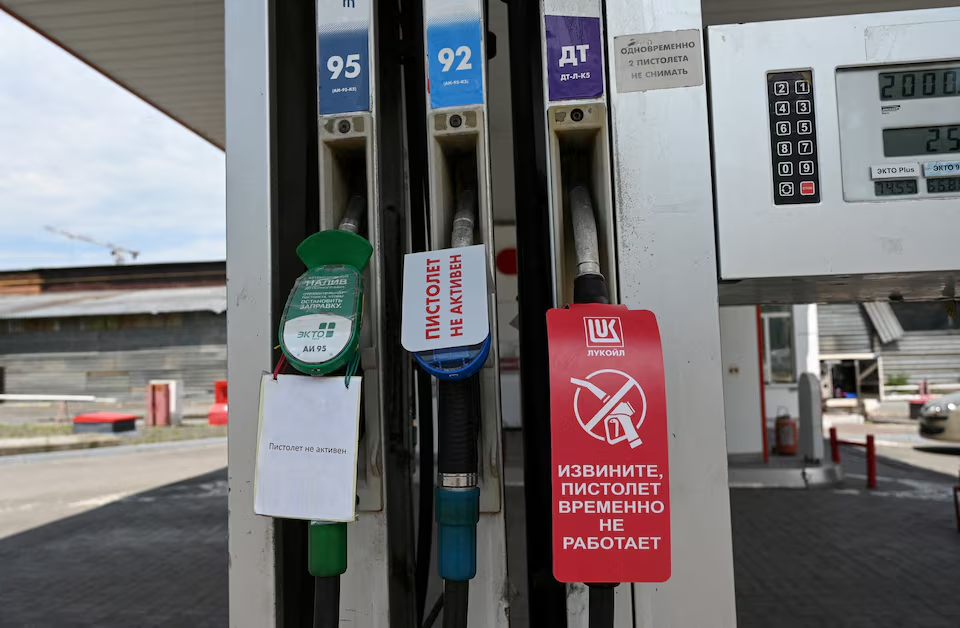
Russia’s Fuel Crisis Deepens as Long Queues and Shortages Frustrate Drivers Nationwide
Russian motorists are facing growing frustration as fuel shortages continue to spread across several regions, forcing drivers to wait for hours at petrol stations amid increasing pressure on the country’s energy infrastructure.
The worsening fuel crisis, which stretches from the region surrounding St. Petersburg to parts of Siberia, comes as repeated attacks on Russian energy facilities continue to disrupt refining operations and fuel distribution networks.
Drivers Struggle as Fuel Stations Run Dry
In Russia’s Leningrad region, many drivers have been forced to spend hours waiting at petrol stations, only to discover that fuel supplies are either heavily restricted or completely unavailable.
Daria, a local driver waiting in a long queue near St. Petersburg, described the situation as increasingly stressful after her vehicle repeatedly stalled due to an almost empty fuel tank.
“I don’t know if I’ll make it to the filling station,” she said while waiting in line. “Since they won’t sell fuel in canisters, I may have to leave my car here.”
Similar scenes have been reported across multiple Russian regions, where stations have placed “Out of Order” notices on fuel pumps due to supply shortages.
Fuel Purchase Restrictions Expand Across Russia
In response to tightening fuel supplies, many regional authorities introduced restrictions throughout June, limiting the amount of gasoline and diesel that individuals can purchase during each visit.
The restrictions have affected millions of drivers and businesses that depend heavily on transportation. Reports indicate that supply disruptions at major refineries have created bottlenecks throughout Russia’s fuel distribution system.
The shortages have become severe enough that long queues at petrol stations are now a daily reality in several cities.
| Fuel Market Situation in Russia | Status |
|---|---|
| Fuel availability | Limited in several regions |
| Purchase restrictions | Implemented across many areas |
| Waiting times | Several hours in some cities |
| Impacted regions | Leningrad, Moscow, Siberia and others |
| Government response | Stabilization measures announced |
Public Frustration Grows Despite Government Assurances
Russian authorities have attempted to calm public concerns by promising measures to stabilize the fuel market and restore supply chains.
President Vladimir Putin recently stated that officials were taking steps to address the shortages. However, many motorists say the disruptions continue to worsen.
Viktoria, another driver affected by the shortages, said residents have become increasingly worried about the situation.
“We really feel that the fuel situation is becoming very difficult,” she said.
In Moscow, driver Nikita described rising anger among ordinary citizens waiting in lengthy queues during the summer heat.
“People are getting very angry,” he said. “Long queues, difficulty refueling, and the heat make everything worse. Some people even become unwell while waiting.”
Fuel Crisis Begins to Affect Public Sentiment
Recent public opinion surveys suggest that the fuel shortages and ongoing attacks on energy infrastructure are beginning to affect public confidence.
A monthly poll conducted by Russia’s independent Levada Center found that concerns over fuel availability and attacks on energy facilities were among the most significant issues facing Russians in June.
The survey also showed a decline in the number of people who believe the country is moving in the right direction, while approval ratings for President Putin fell to their lowest level since the early stages of the war in Ukraine in 2022.
| Public Opinion Indicators | May 2026 | June 2026 |
|---|---|---|
| Citizens believing Russia is on the right path | 61% | 52% |
| Presidential approval rating | Higher | 74% |
| Public concern over fuel shortages | Moderate | High |
Energy Infrastructure Remains a Key Target
Ukraine has continued its campaign of long-range drone attacks targeting Russian energy facilities, arguing that damaging oil and fuel infrastructure increases the economic cost of the war and pressures Moscow to negotiate.
Ukrainian military officials reported new strikes targeting oil refineries in Russia’s Yaroslavl and Leningrad regions.
Meanwhile, Russia has continued its own attacks on Ukraine’s energy infrastructure throughout the conflict, causing repeated electricity outages and heating shortages, particularly during winter months.
As the conflict enters its fifth year, the battle over energy infrastructure appears to be creating growing challenges not only on the battlefield but also in the daily lives of ordinary citizens across both countries.