Africa’s Data-Centre Expansion Accelerates as New Investment Targets AI and Digital Infrastructure

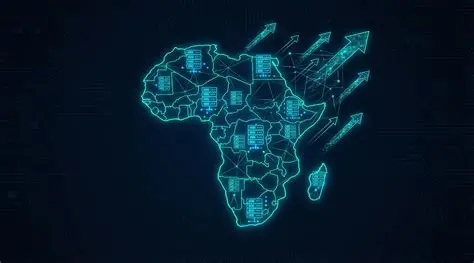
Africa’s digital infrastructure market is seeing another wave of investment as data-centre operators, infrastructure companies and investors expand capacity for cloud computing, artificial intelligence and digital services.
Several developments across the continent during September 2026 highlight the scale of the change.
Projects and investments in Egypt, Kenya and pan-African infrastructure are being announced alongside new funding for African technology startups.
The developments are important because Africa’s digital economy depends on more than smartphones and internet connections. The computing infrastructure underneath those services is becoming increasingly important.
Egypt Targets Hyperscale and AI Infrastructure
In Egypt, newly launched data-centre company Heca Data is discussing plans for an integrated zone designed to support hyperscale data centres and AI infrastructure.
The development follows discussions with Egyptian government officials about expanding international partnerships in data centres and digital infrastructure.
Hyperscale facilities are designed to operate at very large scale and can provide infrastructure for major cloud platforms, enterprises and AI workloads.
Egypt is strategically positioned between Africa, Europe and the Middle East, making international connectivity one of the factors supporting its data-centre ambitions.
AI is adding another reason to expand.
Training and operating large AI systems requires significant amounts of computing power, electricity, cooling and network capacity.
Countries that can provide reliable infrastructure can potentially attract companies that need those resources.
Nairobi Adds 6.4MW
Kenya is also expanding its data-centre capacity.
Digital Realty has opened the 6.4MW Nairobi Two facility, known as NBO2.
The facility sits alongside the company’s Nairobi One site and expands the operator’s campus capacity.
The two facilities can be connected so customers have additional options for distributing workloads and improving resilience.
NBO2 also provides access to more than 100 networks, two internet exchange points and a satellite teleport.
That connectivity is important because a data centre is only as useful as the networks connecting it to customers and other digital infrastructure.
Nairobi has become an important technology hub for East Africa, and additional data-centre capacity strengthens its role in regional cloud and connectivity services.
WIOCC Secures $300 Million
Pan-African digital infrastructure company WIOCC has also secured a combined $300 million investment from Africa Finance Corporation and Vision International Investment Company.
The funding is intended to support expansion across several areas.
These include data-centre deployment, terrestrial fibre networks and selected subsea infrastructure.
That combination is significant because digital services depend on several connected layers.
Data centres provide computing and storage.
Fibre networks transport data across countries.
Subsea cables connect African networks to international internet infrastructure.
Investment across all three areas can therefore strengthen the broader digital ecosystem rather than concentrating only on one part of the infrastructure chain.
Madica Invests in African Startups
The infrastructure story is also being accompanied by investment in software and technology businesses.
Madica has committed up to $1 million across five African pre-seed startups, with each company eligible for up to $200,000.
The startups span several sectors, including human-resources technology, financial services, semiconductor-related technology and the circular economy.
The latest investments also expand Madica’s geographical footprint into Algeria and Cameroon while including startups from Nigeria and Egypt.
That matters because venture funding is another part of the technology ecosystem.
Infrastructure provides the foundation, while startups develop products and services that use that infrastructure.
India Provides a Wider Benchmark
Outside Africa, India’s data-centre market provides another indication of how quickly AI and cloud infrastructure demand can scale.
India’s leading data-centre markets reached approximately 1,789MW of operational capacity during the first half of 2026, with additional capacity already under construction or in planning.
The comparison is useful because African operators are watching similar global trends.
As AI adoption increases, data centres require more electricity and increasingly specialised cooling and networking systems.
African countries therefore face both an opportunity and a challenge.
The opportunity is to attract infrastructure investment and build local computing capacity.
The challenge is ensuring that electricity supply, fibre connectivity, land, regulation and financing can support these facilities sustainably.
Africa’s Infrastructure Story Is Changing
These developments show that Africa’s technology story is becoming increasingly focused on infrastructure ownership and capacity.
The continent is not simply importing digital services.
Companies are investing in the facilities, fibre networks and computing infrastructure required to operate them.
Nigeria, Kenya, Egypt and other markets are competing for a growing share of this investment.
For AI in particular, the availability of computing infrastructure will increasingly influence where applications can be developed and deployed.
The current projects are not all at the same stage, and planned capacity should not be confused with operational capacity.
Nevertheless, the direction is clear: Africa’s technology expansion is increasingly being built around data centres, fibre, cloud computing, AI infrastructure and the financial capital required to scale them.