
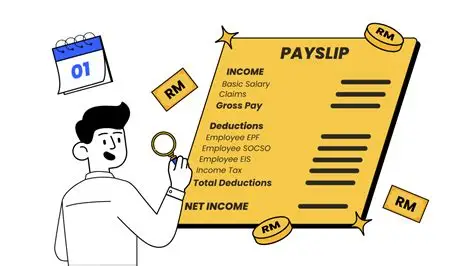
There should be three main sections on your payslip: gross pay, deductions and net pay. Gross pay refers to the amount you’ve earned before deductions, while net pay, sometimes referred to as take-home pay, is the amount that you actually receive after applicable deductions have been subtracted.
Understand Your Payslip Deductions
Between the gross and net figures, you should see a breakdown of the deductions that have been taken out. Depending on your country and employment arrangement, these may include income tax, pension contributions, insurance, loan repayments or other statutory and employment-related deductions.
It is important to check that the basic salary, allowances, overtime, bonuses and other earnings shown on the payslip match what you were actually paid or what was agreed in your employment contract.
Double-check the tax information that applies to you, since payroll errors can result in either overpayment or underpayment of tax. You should also check that pension or retirement contributions are being deducted correctly and that the figures match your employment agreement and applicable rules.
Check for Unusual Changes
Pay particular attention to unusual changes from one month to another. If your net salary suddenly falls without an obvious reason, check the deductions section before assuming that your employer has reduced your salary.
Keep Your Payslips Safe
Keep your payslips safely, ideally as digital PDF copies as well as physical copies where necessary. They can be useful when applying for loans, renting a property, proving income, completing tax-related processes, applying for visas, or resolving payroll disputes.