
The debate between solid-state drives and hard disk drives has changed significantly in 2026.
SSDs have become the standard choice for new computers because of their speed and reliability, while HDDs remain useful for people who need large amounts of inexpensive storage.
How SSDs and HDDs work
The fundamental difference is relatively simple.
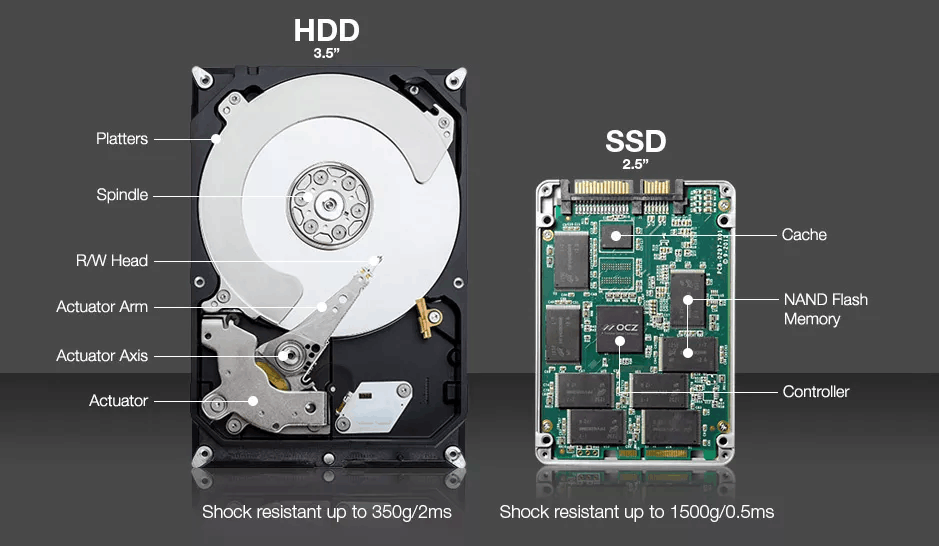
SSDs store information on flash memory chips and have no moving mechanical parts.
HDDs, on the other hand, use spinning magnetic disks and a mechanical read/write head to access information.
That difference has a major impact on everyday performance.
SSDs can load operating systems, applications and files much faster, while HDDs are generally slower.
HDDs still have one major advantage
Despite their age, hard drives remain useful because they offer large amounts of storage at relatively low prices.
Someone who needs several terabytes for backups, archives, videos or other files may find an HDD considerably cheaper than buying an SSD with the same capacity.
This makes HDDs particularly useful for data that does not need to be accessed constantly.
NVMe SSDs are the preferred option for active storage
For a modern computer, an NVMe SSD is generally the better choice for the operating system and frequently used applications.
NVMe drives communicate more efficiently with modern computer hardware and can deliver substantially higher performance than older SATA SSDs.
For many users, the ideal combination is therefore an NVMe SSD for everyday computing and a larger HDD for backups and infrequently accessed files.
The SSD-versus-HDD debate is no longer necessarily about choosing one technology over the other.
Instead, many users can get the best value by using both for different purposes.