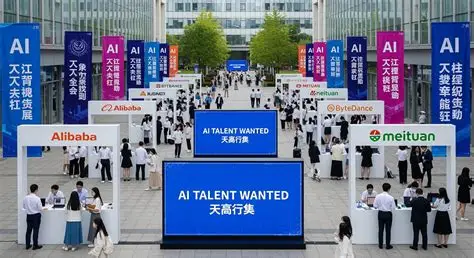
China’s artificial intelligence job market is expanding rapidly as companies move from experimenting with AI models to deploying them in real businesses.
Job openings relating to artificial intelligence in China have spiked nearly eightfold during the first seven months of 2026. The surge is characterised more by roles that deploy models rather than pure research positions, with companies increasingly looking for field engineers, application developers and small-business integrators.
AI Hiring Shifts From Research to Deployment
Hiring platforms point to the strongest demand coming from manufacturing, logistics and enterprise software firms seeking engineers who can fine-tune models on local data and keep systems running on the factory floor.
While base-model researchers still command premium salaries, the volume is skewed towards deployed skills. Companies increasingly need people who can take existing AI systems and turn them into useful tools inside factories, logistics operations, software platforms and other commercial environments.
That shift suggests the AI employment market is becoming broader. Instead of hiring only researchers capable of building foundation models, businesses are creating demand for professionals who understand how to integrate those models into existing systems.
China’s Industrial AI Push
The pattern mirrors the general industrial policy push and Beijing’s latest five-year targets that stress self-reliance in AI, advanced computing and semiconductor supply chains, with an explicit goal of growing the tech manufacturing sector to $4.5 trillion by 2030.
Companies are staffing up the layers that convert models into revenue.
For businesses, the challenge is no longer simply having access to an AI model. They also need engineers who can connect the technology to company data, existing software and physical operations while keeping the systems reliable after deployment.
What It Means for Young Engineers
For young engineers, the message is clear: pure algorithms are still valued, but the fastest opportunities lie at the intersection of software and systems.
Universities and vocational institutions have begun adjusting their curricula to apply AI to edge deployment. This reflects a wider shift in the skills companies require as AI moves deeper into manufacturing and other practical applications.
Engineers who understand both software development and real-world deployment can therefore become increasingly important to companies trying to turn AI spending into measurable business results.
Asia Watches China’s AI Hiring Boom
Outside China, the hiring boom is watched closely by multinationals with R&D operations in the region that value the competition for bilingual talent that understands Chinese data environments.
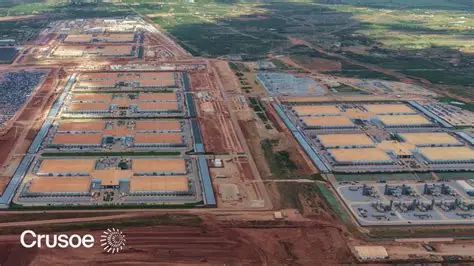
The practical focus also indicates that Chinese AI spending is moving beyond the experimental phase into production budgets. That shift will have implications for component suppliers across Asia because large-scale AI deployment requires servers, networking equipment, chips, storage, power and cooling infrastructure.
The Plain Truth
China’s AI employment boom is increasingly about putting artificial intelligence to work rather than simply developing new models.
The sharp rise in openings for application developers, field engineers and AI integrators shows how companies are building the workforce needed to move AI from demonstrations into everyday commercial operations.
Pure AI research is not disappearing, but the expanding layer around deployment could become one of the biggest sources of technology employment as Chinese businesses continue turning AI investment into practical applications.