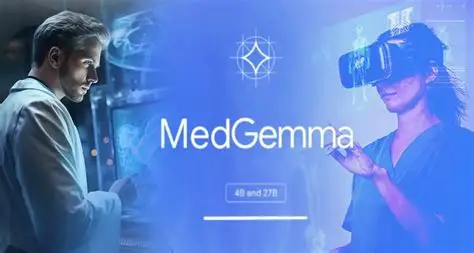
Medical artificial intelligence could create new opportunities for developers building healthcare tools for communities with limited access to specialist services. Google’s MedGemma model, described in the supplied information as an open-source medical vision-language model, is presented as a tool that developers could adapt for healthcare applications.
The reported release is particularly relevant to African technology companies and health innovators interested in creating diagnostic-support tools suited to local needs.
What Is MedGemma?
According to the supplied report, MedGemma is a 7-billion-parameter medical vision-language model. Vision-language models are designed to work with visual information and language, making them potentially useful for applications that involve medical images and written explanations.
The information provided says the model has been benchmarked against GPT-4o in medical specialities and can run on edge devices with as little as 4GB of RAM.
Those technical details should be verified against Google’s official documentation, including the model’s intended uses, hardware requirements, benchmark methodology and licence terms.
How African Developers Could Use Medical AI
The report suggests that developers in Nigeria and Kenya are considering MedGemma for rural healthcare diagnostics.
An adaptable model could help developers experiment with tools that support medical information workflows, image interpretation research or communication between patients and healthcare professionals. Local development may also make it easier to explore language and workflow requirements that differ from those of larger international markets.
However, a model’s ability to generate medical information does not automatically make it safe for independent diagnosis. Healthcare applications require suitable validation, privacy safeguards and oversight by qualified professionals.
Open-Source AI and Local Innovation
The supplied information describes MedGemma as open-source and says its availability could allow African startups to develop language-specific versions more quickly.
The exact licence matters. Open model weights, source code, training information and permission for commercial use are not always the same thing. Developers should review the official terms before deploying or adapting a model.
For startups, the opportunity is to build tools around local healthcare challenges rather than relying entirely on products designed for different languages, resources or clinical workflows.
Could MedGemma Support Rural Healthcare?
Rural communities can face barriers to specialist medical services. AI tools may offer one way to support information access and healthcare workflows, particularly when designed for environments with limited computing resources.
The report states that Nigeria’s Federal Ministry of Health is set to integrate MedGemma into a national e-health records system for remote diagnosis. This is a significant policy claim and should be confirmed through an official announcement before publication.
Any integration with health records would also need strong protections for patient privacy, data security and the accuracy of medical information.
MedGemma could be relevant to developers exploring medical AI, particularly those interested in building tools for underserved communities. Its real-world value will depend on the official model terms, clinical validation, computing requirements and safeguards around sensitive health data.
For African innovators, the priority should be to use medical AI responsibly and build solutions that respond to local needs rather than treating a general-purpose model as a ready-made diagnostic system.