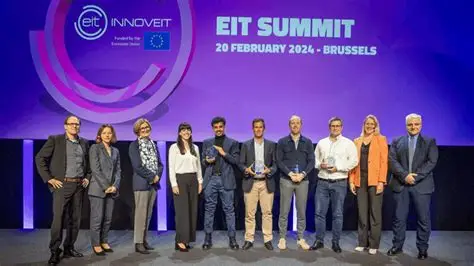
The European Institute of Innovation and Technology (EIT) has expanded its AI Community into the EIT AI & Robotics Community, a pan-European initiative running from 2026 to 2028 and aimed squarely at early-stage founders developing businesses around artificial intelligence and robotics.
Its first programme, the AI Entrepreneurs Lab, is open specifically to Master’s and PhD students, recent graduates and early-career founders with an AI or robotics idea where the technology is the core of the venture. The programme covers areas including industrial AI, autonomous robotic systems and other technology-driven applications.
Up to 15 participants will be selected from individual applicants or teams. The programme is scheduled to run from November 9 to 13, 2026, with in-person sessions taking place in Paris, Brussels and Amsterdam.
Applicants need only submit an application form, a CV and a short pitch rather than a full business plan. The deliberately low barrier is designed to attract younger and first-time founders who may not yet have a polished investor deck or fully developed business plan.
European AI and Robotics Startup Push
The initiative is led by 28DIGITAL alongside EIT Food, EIT Health and EIT Culture & Creativity. A second programme, FactoryX, is also set to open later in 2026 and will focus on manufacturing-linked robotics ventures.
The structure of the initiative reflects a deliberate European push to convert the region’s strong academic AI and robotics pipeline into commercially viable startups. Europe has a large pool of researchers and technical talent, but turning research breakthroughs into companies that can scale internationally remains an important challenge.
By bringing students, researchers and early-career founders closer to industry networks, investors and other European innovation ecosystems, the EIT AI & Robotics Community is designed to help close that gap.
The programme also arrives as AI and robotics become increasingly connected. Modern robots are no longer relying only on traditional programmed instructions, with AI allowing machines to interpret environments, adapt to changing conditions and interact with humans in more flexible ways.
For young European founders, the initiative provides a pathway from an early technical concept towards a potentially commercial AI or robotics venture.