Best Tourist Countries in North Africa 2025–2026 (Full Breakdown)
North Africa has quietly turned into one of the most talked-about travel regions in 2025–2026, not just because of its history, but because of how fast tourism is growing again after years of global slowdown. What makes it even more interesting is how each country is playing its own game — some are chasing massive visitor numbers, others are focused on revenue, while a few are just starting to open up properly.
What we are seeing now is a mix of ancient culture, desert experiences, Mediterranean coastlines, and upgraded tourism systems that are making the region more connected than ever. Morocco is clearly leading the race, Egypt is holding the money crown, and Tunisia is proving that affordability still wins a big audience.
At the same time, technology has changed how tourism works in the region. Most bookings, hotel systems, and even visa processes are now partially digital. This shift has made it easier for travelers and also pushed governments and private investors to improve services. Because of this, countries like Morocco and Egypt are not just depending on history anymore — they are actively building modern tourism economies that compete globally.
In this guide, we break down how North Africa stands in 2025–2026, what is really driving each country, and why Morocco especially has become the center of attention. We also go deeper into tourism business opportunities and what beginners should understand before entering this space.
North Africa Tourism Ranking 2025–2026 (Real Performance Insight)
The tourism competition in North Africa is mainly shaped by arrivals, revenue, and how well each country is expanding its travel infrastructure.
1. Morocco — The Clear Leader in Visitor Numbers
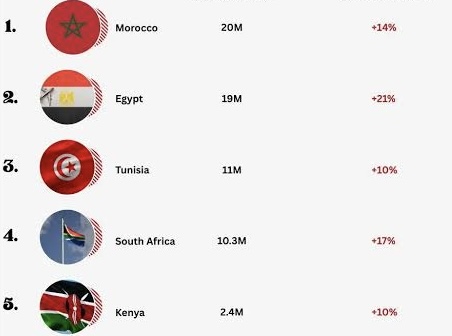
Morocco has reached nearly 20 million tourists in 2025, making it the most visited country in Africa. Growth has stayed strong into 2026, supported by better airline connections, new travel routes, and aggressive tourism campaigns.
What really pushes Morocco ahead is variety. You can move from Marrakech’s busy old markets to Sahara desert camps, then to mountain villages and coastal cities all in one trip. That kind of mix is not common in most destinations.
A major driver is also the country’s strategy of improving tourism quality. Hotels are being upgraded, new eco-lodges are appearing, and cultural zones like Fes and Rabat are getting more attention. Morocco is also benefiting from global sports and events, which keep putting it in international spotlight.
Still, it is not perfect. Some travelers report high pricing in peak seasons and crowded tourist zones, especially in Marrakech. But overall, demand is still very strong.
2. Egypt — Highest Tourism Revenue in Africa
Egypt remains extremely powerful in tourism income, even when compared with Morocco’s higher visitor numbers. With around 18–19 million visitors in 2025, Egypt earns the most revenue in Africa due to higher spending per tourist.
The country’s advantage is clear: pyramids, Nile cruises, Red Sea resorts, and major historical sites. The opening of new cultural attractions has also boosted global interest.
Egypt attracts a slightly different type of traveler, people who are willing to spend more for cultural depth and luxury experiences.
3. Tunisia — Affordable Mediterranean Growth
Tunisia continues to grow steadily, reaching around 11 million visitors in 2025. It is not as large as Morocco or Egypt, but it is very important for budget tourism.
Its beaches, Roman ruins, and proximity to Europe make it a strong short-stay destination. A large percentage of visitors still come from nearby countries like Algeria and Libya, but European arrivals are increasing again.
Tunisia’s main strength is affordability, which keeps it relevant in the region.
4. Algeria — Slowly Opening Tourism Market
Algeria is still developing its tourism identity. It has strong natural and historical attractions, but limited international exposure compared to its neighbors.
Recent changes like easier visa processes and tourism investments suggest long-term growth. It is not yet competing in numbers, but it is slowly building a future tourism structure.
5. Libya — Still Recovering
Libya has potential due to historical sites and Mediterranean coastline, but instability has limited tourism development for now.
Why Morocco is Dominating North Africa Tourism in 2025–2026
Morocco’s rise is not accidental. It is built on strategy, timing, and consistency.
One of the biggest strengths is connectivity. New flight routes and partnerships have made it easier for travelers from Europe, America, and Africa to enter Morocco without stress.
Another strong point is diversification. Morocco is no longer only about Marrakech. Cities like Rabat, Fes, and desert regions are being developed for different tourism experiences like wellness, culture, hiking, and eco-tourism.
The country also benefits from strong branding. International events, football tournaments, and cultural campaigns have positioned Morocco as a safe, modern African destination with global appeal.
However, growth also comes with pressure. Some areas are becoming overcrowded, and service quality struggles in peak periods. Still, compared to most regions, Morocco remains one of the most stable tourism systems in Africa.
Tourism Business Opportunities in North Africa
For beginners, especially from countries like Nigeria, North Africa tourism is not only about travel, it is also a business space.
One of the easiest entry points is travel packaging. This means organizing complete travel plans that include flights, hotels, and tours. Morocco and Egypt are especially strong markets for this.
Another opportunity is partnership-based tourism services. Many successful operators work with local guides, hotels, and transport companies instead of building everything alone.
Hospitality investment is another level, especially eco-lodges, desert camps, and mid-range hotels. These are growing fast due to demand from younger travelers and digital nomads.
But the truth is simple — this space requires planning. Costs, regulations, and partnerships matter more than hype. Most successful operators start small and scale slowly through experience and networks.
Challenges and Reality Check
North Africa tourism is growing, but it is not without issues.
Some regions still struggle with uneven service quality. Tourist-heavy cities perform better than smaller destinations. Also, pricing in peak seasons can feel inflated in places like Marrakech or Cairo.
There is also perception vs reality. Some international advisories create fear, but on-ground experience in major tourist zones is usually stable and well-managed.
Another hidden factor is that a large portion of “tourist numbers” includes diaspora visitors returning home, which slightly changes how statistics are interpreted.
Final Thoughts
North Africa in 2025–2026 is not just growing, it is transforming. Morocco leads in volume, Egypt dominates revenue, and Tunisia remains the budget-friendly option that keeps steady demand alive.
What makes the region important is not only tourism numbers but the way each country is reshaping its identity through travel, culture, and investment.