Nigeria’s Only Subsea Cable Landing Outside Lagos Reaches Uyo as Questions Remain Over Traffic Diversification
Two years after 2Africa came ashore at Qua Iboe in Akwa Ibom State, MainOne has extended its fibre network to Uyo’s Victor Attah International Airport. The development strengthens Nigeria’s second international internet gateway, but important questions remain about how much traffic is actually using the route.
Nigeria has landed eight subsea cables, but the country still has just one cable landing outside Lagos.
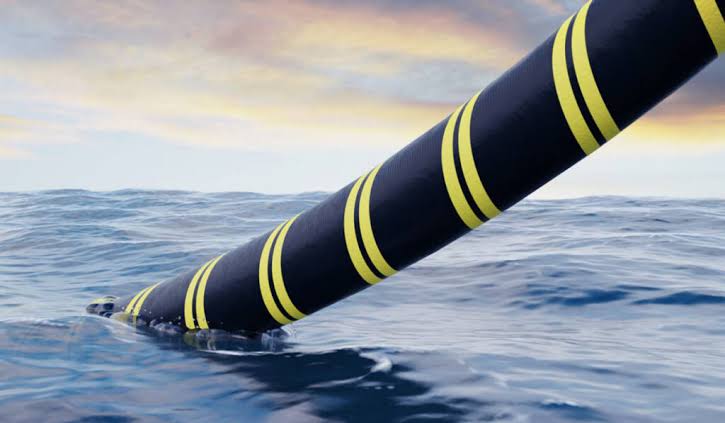
That distinction belongs to 2Africa, which reached Qua Iboe in Akwa Ibom State in February 2024. The landing was seen as an important step towards reducing Nigeria’s heavy dependence on Lagos for international connectivity.
The latest development came on August 10, when MainOne announced that it had extended its metro fibre network to the newly upgraded Victor Attah International Airport in Uyo.
The company said the wider rollout is continuing across Akwa Ibom, extending connectivity into commercial and residential areas across the state.
Why Akwa Ibom’s Cable Landing Matters for Nigeria
Nigeria’s concentration of international internet infrastructure in Lagos has long created a major vulnerability.
That risk became particularly clear in March 2024, shortly after the Qua Iboe landing, when an underwater rockslide off the West African coast damaged several subsea cables simultaneously. Thirteen African countries experienced disruptions ranging from degraded connectivity to severe outages.
For Nigeria, the incident highlighted the danger of having most international connections concentrated around one city.
A separate landing point in Akwa Ibom offers another path into the country’s internet infrastructure. Instead of depending almost entirely on Lagos, traffic could potentially enter Nigeria through a geographically separate coastal route.
2Africa was designed with a capacity of more than 100 Tbps, putting it in the same broad capacity class as Google’s Equiano cable.
The importance of the Qua Iboe landing therefore goes beyond the physical arrival of another cable. Its real value depends on how effectively the connection is distributed inland and whether network operators actually begin using the alternative route at scale.
MainOne’s Akwa Ibom Fibre Expansion
When 2Africa landed at Qua Iboe in 2024, MainOne outlined plans to build a terrestrial metro fibre network across Akwa Ibom and the wider South-South region.
The initial expansion plans included Port Harcourt, Bonny Town and Onne, followed by Uyo, Eket and Oron.
The objective was to move the benefits of the subsea landing beyond the shoreline and into businesses, residential areas and other parts of the country that rely on international connectivity.
The latest Uyo expansion indicates that part of that plan is now taking shape.
MainOne described the development as progress towards Akwa Ibom’s digital future and said the fibre rollout is continuing into the state’s commercial and residential clusters.
The airport connection is another piece of infrastructure linking the coastal cable landing to a major inland location.
Equinix Plans Further South-South Expansion
MainOne has been part of Equinix since the US-based digital infrastructure company completed its $320 million acquisition of the Nigerian operator in 2022.
Equinix has subsequently outlined plans to expand its presence beyond Lagos.
In April 2025, Equinix West Africa Managing Director Wole Abu announced plans for PR1, the company’s first data centre in Port Harcourt. The facility was described as a landing site for 2Africa and as the first Nigerian cable landing outside Lagos.
That description has created some uncertainty because MainOne had already announced the physical landing of 2Africa at Qua Iboe in February 2024.
The distinction appears to be between the physical subsea landing on the coast and the data-centre infrastructure intended to terminate and distribute the cable capacity. However, the two descriptions have not been publicly reconciled.
Equinix has also announced a $140 million regional expansion programme covering new and expanded facilities.
The wider investment comes as Nigeria continues to face a significant gap between its broadband ambitions and existing fibre infrastructure.
Broadband penetration was estimated at around 45% in January 2025, below the national target of 70%. Nigeria also has roughly 35,000 kilometres of broadband cable, while an additional 95,000 kilometres has been estimated as necessary to close the infrastructure gap.
What Nigeria’s Routing Data Reveals
Network routing data provides some evidence of MainOne’s importance to Nigeria’s internet ecosystem, although it cannot answer every question surrounding the Qua Iboe landing.
As of August 10, 2026, MainOne’s main autonomous system, AS37282, had 136 distinct network adjacencies observed through route collectors.
The largest links by the number of prefixes observed involved global carriers Cogent and Lumen.
A wide range of Nigerian providers also appeared behind those major international connections, including Cobranet, Inq. Digital Nigeria, Tizeti, Bitflux, ipNX, VDT Communications and Smile. Angola Cables was also among the connected networks.
The broad profile is consistent with MainOne’s position as a wholesale connectivity provider serving a substantial part of Nigeria’s internet market.
That could allow the benefits of a new subsea landing to extend beyond MainOne itself if capacity is distributed to other network operators.
Routing Data Cannot Yet Prove Traffic Is Leaving Lagos
There is, however, a major limitation.
MainOne operates its Nigerian network under a single autonomous system, meaning public BGP routing information cannot reliably distinguish between traffic entering Nigeria through Qua Iboe and traffic arriving through Lagos.
BGP data can reveal network relationships and routing paths, but it does not necessarily reveal the physical location where international traffic entered the country.
Trying to determine the physical location of a network solely from address registration can also produce misleading results.
As a result, publicly available routing information cannot yet independently establish how much Nigerian internet traffic is actually using the Akwa Ibom landing rather than Lagos.
That distinction matters because having a second cable physically present is not the same as achieving meaningful traffic diversification.
Several Details About the Rollout Remain Unclear
MainOne’s latest announcement about the Uyo airport connection does not state the capacity of the link or provide a specific service date.
It also does not identify an executive responsible for the latest expansion.
There is limited public detail on the wider South-South rollout, leaving several important questions unanswered.
It is still unclear how much of the promised metro fibre network has been completed and activated, how much 2Africa capacity is currently being sold into the South-South region, and when PR1 will become operational.
Those details would provide a clearer picture of whether Nigeria is genuinely beginning to reduce its dependence on Lagos for international connectivity.
For now, the physical infrastructure is expanding.
2Africa has established Nigeria’s first subsea cable landing outside Lagos, while MainOne continues extending fibre from the coastal connection into Akwa Ibom.
The bigger test, however, is still ahead: whether the new gateway will materially change the way international internet traffic enters and moves through Nigeria.
Until operators publish clearer capacity, deployment and traffic information, that question remains open.


One Comment