Richest Countries in North Africa 2026: GDP Rankings, and Economic Power
When you study how economies grow, one truth stands out clearly: sustainable money flow is what keeps everything alive. Not just hard work or opportunity, but consistent access to capital, production, and systems that keep value moving even when global conditions change.
Across North Africa, countries are developing at different speeds. Some are driven by oil and gas, others by tourism, agriculture, manufacturing, and trade. This mix creates a region with one of the most economically dynamic landscapes in Africa.
At the same time, in the broader African story, business figures like Aliko Dangote represent how private industrial success can mirror national economic power. His rise shows that wealth is not only about earning, it is about building systems that produce continuously.
Today, finance has also evolved beyond traditional banking. Digital finance, micro-lending platforms, and structured investment systems are now shaping how both individuals and businesses grow. But alongside these opportunities, understanding real economic strength, whether at country level or business level, has become more important than ever.
North Africa in 2026: Real Economic Strength Beyond GDP Numbers
North Africa includes Egypt, Algeria, Morocco, Tunisia, Libya, and Mauritania. Each country has a different economic structure, and this is what determines its strength, not just GDP figures alone.
To understand real wealth, you must look at what actually produces it.
1. Egypt – The Largest Economy in North Africa
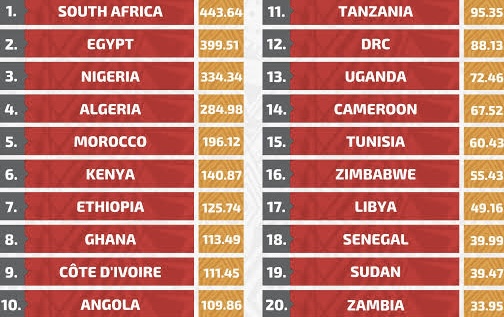
Egypt remains the biggest economy in North Africa in terms of total GDP.
Its strength comes from multiple sources:
- Suez Canal revenue
- Tourism industry
- Manufacturing sector
- Agriculture and food production
- Expanding infrastructure projects
Despite inflation pressures, Egypt’s large population and strategic global trade position help maintain its economic dominance in the region.
2. Algeria – Oil and Gas Powerhouse
Algeria’s economy is heavily dependent on hydrocarbons.
Oil and gas exports remain its primary income source, making it one of Africa’s key energy suppliers. Although there are ongoing efforts to diversify the economy, energy still defines its financial stability and export strength.
3. Morocco – One of the Fastest Diversifying Economies
Morocco stands out for its economic diversification.
Instead of relying on natural resources, it has developed strong industries in:
- Automotive manufacturing
- Phosphate exports
- Tourism
- Renewable energy
This balanced structure makes Morocco one of the most stable and steadily growing economies in North Africa.
4. Tunisia – Small but Structured Economy
Tunisia has a smaller GDP compared to regional giants, but it maintains a relatively structured economy.
Key sectors include:
- Tourism
- Agriculture
- Light manufacturing
- Service-based industries
Its educated workforce remains one of its strongest economic advantages.
5. Libya – High Potential, Unstable Output
Libya has some of the largest oil reserves in Africa.
However, political instability continues to affect consistent production and economic performance. This creates a situation where the country has high potential but unpredictable output.
6. Mauritania – Emerging and Resource-Based Economy
Mauritania is still in the early stages of major economic development.
Its main income sources include:
- Mining (iron ore and gold)
- Fisheries
- Small-scale agriculture
Growth is steady but slower compared to its North African neighbors.
What Actually Drives Wealth in North Africa
If you simplify the economic structure of the region, three main factors determine national wealth:
- Natural resources (oil, gas, minerals)
- Industrial diversification (manufacturing and exports)
- Political and economic stability attracting foreign investment
Countries that rely only on natural resources often experience economic fluctuations. In contrast, diversified economies like Morocco and Egypt tend to grow more sustainably.
Aliko Dangote and the African Wealth Model
Aliko Dangote is not a country, but his business empire reflects how strong economies are built.
Through the Dangote Group, he has built one of Africa’s largest industrial networks covering:
- Cement production
- Sugar refining
- Salt processing
- Fertilizer production
- Oil refining
His most ambitious project, the Dangote Refinery in Lagos, is among the largest in the world and represents a major shift toward local production instead of import dependence.
Net Worth and Business Scale (2025–2026 Perspective)
His net worth fluctuates with market conditions, but he consistently ranks as the richest individual in Africa.
However, his real economic impact goes beyond personal wealth. It lies in building production systems that support entire industries and influence national economies.
What North Africa Can Learn from Dangote’s Approach
There are important lessons that connect private enterprise with national development:
1. Local Production Reduces Economic Pressure
Producing locally reduces import dependency and strengthens currency stability.
2. Long-Term Investment Builds Real Wealth
Major industrial projects often take years before generating profit, but they create lasting value.
3. Diversification Must Be Strategic
Expanding into multiple sectors works best when it follows a controlled and focused plan.
4. Industrial Growth Creates Employment Naturally
Large-scale production automatically generates jobs across supply chains.
Business Opportunities Hidden in These Economic Patterns
Across North Africa and Africa’s industrial model, major opportunities exist in:
- Construction and cement supply chains
- Energy production and fuel distribution
- Agriculture processing and fertilizer production
- Logistics and import substitution businesses
These sectors quietly drive most of the real economic activity in developing markets.
Key Economic Reality in 2026
North Africa’s economies are strong but still heavily influenced by global oil prices, tourism trends, and external demand.
In contrast, private industrial systems like Dangote’s model show a different path—one focused on controlling production internally to reduce external shocks.
Both systems are important, but they function differently.
Frequently Asked Questions (FAQ)
1. Which is the richest country in North Africa in 2026?
Egypt remains the largest economy in North Africa by total GDP.
2. What drives most North African economies?
Oil and gas, tourism, manufacturing, agriculture, and trade.
3. Why is Aliko Dangote important in Africa’s economy?
He represents large-scale industrial growth that reduces import dependence and strengthens local production systems.
4. Can individuals apply these economic principles?
Yes. Many principles apply to entrepreneurship, manufacturing, logistics, and service industries.
Conclusion
North Africa’s wealth is not just about GDP rankings. It is about how each country builds, structures, and sustains its economy over time.
At the same time, the rise of industrial leaders like Aliko Dangote highlights another dimension of African growth, where private enterprise can shape national-level economic impact through production and infrastructure.