Artificial intelligence is becoming a more visible part of smartphone development, with manufacturers exploring features that can recognise objects, understand surroundings and process information directly on a device.
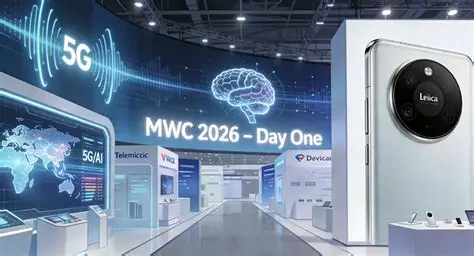
According to the information supplied, vendors at Mobile World Congress (MWC) Barcelona 2026 unveiled smartphones with integrated AI capabilities for real-time image recognition and spatial mapping. The report identifies Samsung and Huawei as leading examples, highlighting 8K cameras and on-device AI for object detection.
What Is On-Device AI?
On-device AI allows certain AI tasks to run directly on a smartphone rather than relying entirely on a remote server.
This approach can reduce the need to send every request to the cloud. Depending on the device and application, it may also improve responsiveness and help users access some features when internet connectivity is limited.
The practical experience depends on the processing power, software, battery use and available memory of each device.
Understanding Spatial Computing on Smartphones
Spatial computing involves using digital technology to understand or interact with a physical environment. In smartphones, features such as camera-based object recognition and spatial mapping can help a device identify objects or interpret aspects of its surroundings.
These capabilities may support new applications in photography, navigation, education and other interactive experiences.
However, the presence of a particular camera specification does not automatically mean that a device can perform every advanced AI or spatial-computing task. Hardware and software capabilities vary by model.
What It Could Mean for African Markets
The supplied report suggests that AI-powered smartphones could find immediate application in African markets.
On-device AI could be relevant to users who need smart camera tools, image recognition or other features while dealing with inconsistent connectivity. Developers may also find opportunities to create applications tailored to local languages, services and user needs.
Affordability remains important. Advanced features are most useful when the devices that support them are accessible to the people expected to benefit.
The reported MWC 2026 announcements point to a smartphone market increasingly shaped by AI and spatial computing. The most meaningful developments will be those that provide practical benefits, work reliably and reach users at a price they can afford.