Fastest Developing Countries in West Africa (2026): Real Growth Rankings, & How to Position Yourself Smartly
If you look closely at how businesses survive and grow in tough economies, one thing always stands out, steady access to money and smart positioning. It’s not always about who has the biggest capital from the start, but who understands where growth is happening and aligns with it early.
Right now, across West Africa, things are shifting quietly but strongly. Some countries are moving faster than others, not just on paper, but in real sectors like agriculture, tech, trade, and infrastructure. At the same time, many people are still struggling because they’re either unaware of these shifts or not tapping into them properly.
The truth is simple, growth is happening, but it’s not evenly spread, and it doesn’t automatically benefit everyone. The people who gain are those who understand where the movement is and take advantage of it early, even if they’re starting small.
West Africa Growth Overview (2025–2026)
West Africa is projected to maintain a steady economic growth range of about 4.1% to 4.6%, driven by:
- Infrastructure development
- Agriculture and export expansion
- Oil and mining activities
- Digital and financial services growth
But here’s what most people don’t say clearly, growth in numbers doesn’t always mean better living conditions immediately. Some countries are growing fast, but citizens still feel pressure due to inflation, currency issues, or uneven distribution of wealth.
So instead of just looking at “which country is growing,” it’s better to understand why they are growing and where the money is actually flowing.
Fastest Developing Countries in West Africa (Rankings & Insights)
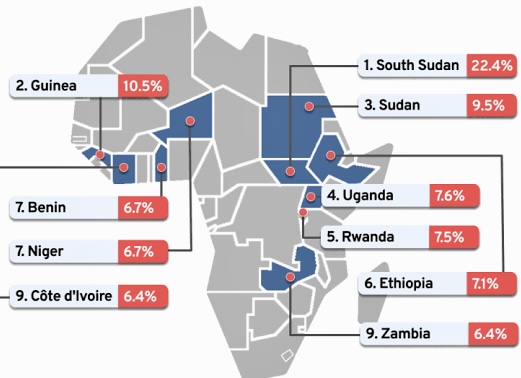
1. Côte d’Ivoire (Ivory Coast) – ~6.2% to 6.4% Growth
Côte d’Ivoire is quietly one of the strongest performers right now.
- Strong cocoa export market
- Expanding oil production
- Heavy investment in infrastructure
- Growing financial sector
What this means:
Money is flowing through agriculture, exports, and construction. Businesses tied to supply chains and trade have strong potential here.
2. Benin – ~6.4% to 6.7% Growth
Benin is not always in the spotlight, but it is growing fast due to:
- Port development and regional trade
- Textile and agribusiness expansion
- Government reforms improving business environment
What this means:
Trade-based businesses and import/export opportunities are increasing steadily.
3. Niger – ~6.5% to 6.7% Growth
Growth here is mainly driven by:
- Oil production ramp-up
- Infrastructure projects
- Agricultural investments
Reality check:
Growth is strong, but risks remain high due to political and economic instability.
4. Ghana – ~4.5% to 4.8% Growth
Ghana continues to stay stable and structured:
- Oil and gold exports
- Digital economy expansion
- Strong policy direction
What this means:
Tech, finance, and structured small businesses have a better environment to scale.
5. Nigeria – ~4.0% to 4.1% Growth
Nigeria is growing, but not as fast as some neighbors.
Growth drivers include:
- ICT and digital services
- Financial sector expansion
- Consumer demand recovery
- Refinery and energy developments
But here’s the deeper truth:
- Inflation is still affecting daily life
- Naira value fluctuations impact purchasing power
- Growth is more visible in cities than rural areas
What this means:
Opportunities are real, but you need strategy, not just effort.
What Is Really Driving This Growth?
Across all these countries, the same patterns show up:
1. Urban Population Growth
More young people are moving to cities, increasing demand for:
- Food
- Housing
- Transportation
- Digital services
2. Digital Expansion
Internet access and mobile usage are creating:
- Online businesses
- Content creation income
- E-commerce opportunities
3. Infrastructure Investments
Roads, ports, and energy projects are opening up:
- Logistics businesses
- Trade expansion
- Real estate growth
How to Actually Make Money From These Trends (Realistic Approach)
This is where many people get it wrong, they see “growth” and think it automatically means easy money. It doesn’t.
You need to align with sectors that are already moving.
1. Agro-Processing (₦500k – ₦2M Start)
Instead of just farming, processing adds value:
- Cassava → Garri or flour
- Cocoa → Local packaging
- Palm produce → Refined oil
Why it works:
Demand is constant, and export potential is strong.
2. Solar & Power Solutions (₦300k – ₦1M Start)
Power issues are still a big gap.
- Selling solar kits
- Installation services
- Small-scale energy solutions
Why it works:
Demand is increasing every year, especially in Nigeria and Ghana.
3. Digital Services (Under ₦100k Start)
This is one of the easiest entry points:
- Content creation
- Freelancing
- Social media management
Earnings range:
₦50k to ₦2M+ monthly depending on skill and consistency
4. Logistics & Mini Delivery (₦200k – ₦800k Start)
With e-commerce growing, movement of goods is key.
- Dispatch services
- Local delivery
- Small-scale logistics
5. Resale Business (Thrift / Imports) (₦300k – ₦1M Start)
Urban demand is high for affordable goods:
- Clothes (okrika/thrift)
- Gadgets
- Household items
Step-by-Step Positioning Strategy (No Hype)
- Identify demand in your environment
Look at what people buy daily, not what is trending online - Start small and test
Even ₦50k test run is better than waiting endlessly - Focus on profit, not appearance
Many businesses look big but are not profitable - Reinvest early gains
Growth comes from consistency, not one big win - Avoid unnecessary loans at the start
Only borrow when you understand your cash flow
Hidden Truths Most Articles Don’t Mention
- Growth is concentrated in specific sectors, not everywhere
- Many “booming economies” still have high poverty levels
- Access to funding is still limited for small players
- Social media success stories often skip the struggle part
Understanding these realities helps you avoid wrong expectations.
Frequently Asked Questions (FAQ)
Which country is growing fastest in West Africa right now?
Countries like Côte d’Ivoire, Benin, and Niger are currently leading in GDP growth rates.
Is Nigeria still a good place to start a business?
Yes, but strategy matters more than ever. Focus on sectors with real demand like digital services, food, and logistics.
How much do I need to start a small business?
You can start small with as low as ₦50k–₦300k depending on the type of business.
What is the safest sector to enter now?
Food-related businesses, digital services, and energy solutions are among the most stable.
Can growth in these countries make people rich quickly?
No. Growth creates opportunity, but wealth still comes from consistency, smart decisions, and time.
Final Thoughts
West Africa is growing, no doubt about that. But growth alone doesn’t change anything unless you understand where it’s happening and how to connect yourself to it.
The people winning right now are not necessarily the richest or the most connected, they are the ones paying attention, starting small, and staying consistent while others are still waiting for the “perfect time.”
If you move smart, stay realistic, and focus on value, there is space to grow, even in this current economy.