
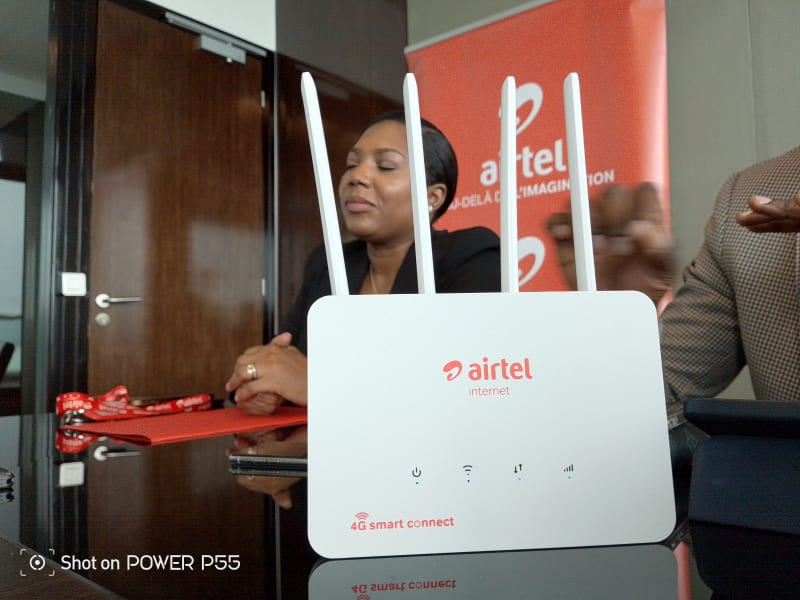
Airtel Gabon and ZTE have reportedly begun the commercial rollout of a hybrid Massive MIMO antenna system designed to improve mobile network performance in Central Africa.
The system combines the capacity of 4T4R and 8T8R antennas in a single base station. According to the information supplied, the approach is intended to increase spectral efficiency and improve coverage in suburban and rural areas where difficult terrain has made network expansion challenging.
What Is Hybrid Massive MIMO?
Massive MIMO is a wireless communications technology that uses multiple antenna elements to send and receive data more efficiently. It can help mobile networks serve more users and make better use of available radio spectrum.
The reported hybrid system combines 4T4R and 8T8R antenna configurations within one base station. This design is intended to balance network capacity with deployment needs across different environments.
Airtel Gabon’s rollout with ZTE could offer a reference point for operators looking to improve network performance while managing the cost of expanding infrastructure.
Improving Coverage in Rural and Suburban Areas
The supplied information says the system can double spectral efficiency in suburban and rural Gabon and Congo-Brazzaville, where challenging terrain had previously limited 5G coverage to 80% of the population.
Improving coverage in such locations matters because reliable mobile connectivity can support digital services, business communications and access to online resources.
The hybrid antenna approach is also reported to enable smoother handoffs between 5G and 4G. This can matter for users moving between areas with different levels of network coverage.
How AI Could Reduce Energy Consumption
The system reportedly uses AI-assisted intelligent element activation to reduce power consumption by 37%.
In this approach, the network can adjust which antenna elements are active according to operating requirements. The goal is to avoid using more resources than necessary while maintaining service quality.
Energy efficiency is an important consideration for telecom operators, particularly when they need to maintain network infrastructure across large or remote areas.
The reported savings, however, should be assessed against real-world operating conditions and independently confirmed before being treated as a general performance guarantee.
Implications for Nigeria and Ghana
The supplied report says Nigeria’s Federal Ministry of Communications is reviewing hybrid MIMO proposals for Lagos and Abuja following the announcement. It also identifies the technology as a possible reference for Ghana’s forthcoming 5G licence process.
For Nigerian and Kenyan operators, the hybrid approach could offer an option for improving coverage in rural locations where fibre backhaul is limited.
The technology may also be relevant to early 6G planning, as operators explore how dense networks of smaller cells could support future connectivity requirements.
Airtel Gabon and ZTE’s reported hybrid Massive MIMO rollout highlights one way telecom operators may improve coverage, spectral efficiency and energy management.
For African markets, the central question is whether the technology can deliver reliable performance at a cost that supports wider deployment. If the reported benefits are confirmed, hybrid antenna systems could become part of the toolkit for extending advanced mobile connectivity beyond major urban centres.